Why Is It So Hard to Imagine That Cruelty Is Right?
What Hume Noticed 250 Years Ago
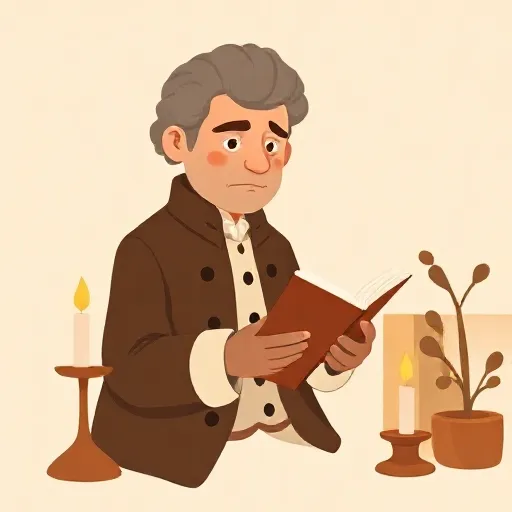
In 1757, the Scottish philosopher David Hume (1711–1776) pointed out something odd. He saw that readers easily go along with all kinds of strange details in stories. If a tale has princesses fetching water from a spring, or kings and heroes cooking their own dinner, we accept it without a fuss. Those are just “innocent peculiarities of manners,” he said. But if a story describes vicious behavior without properly calling it wrong, something shifts. Hume wrote that when a poem fails to mark wicked actions with the “proper characters of blame and disapprobation,” he simply could not go along. He couldn’t enjoy the story, no matter how hard he tried. It took “a very violent effort” to feel anything the author wanted him to feel, because his own deep moral habits refused to budge.
Hume had spotted what is now called imaginative resistance. It’s that squirming feeling you get when a story asks you to imagine that something obviously terrible is morally fine. You can imagine a world where pigs fly. So why can’t you just picture a world where hurting someone innocent is the right thing to do? Two hundred years later, philosophers are still arguing over the answer.
The Puzzle(s): More Than One Strange Thing Happens
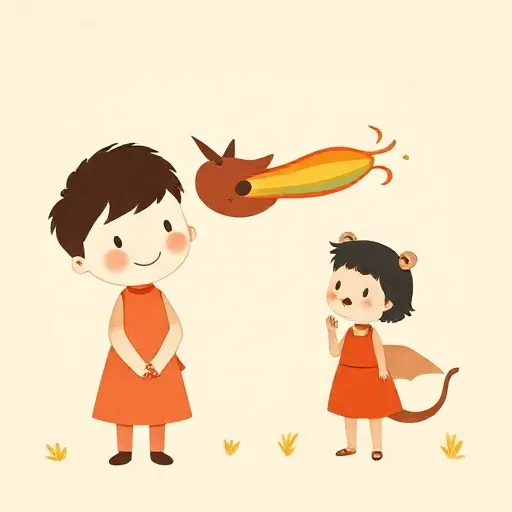
Modern philosophers tightened the question. Imagine a short story like this:
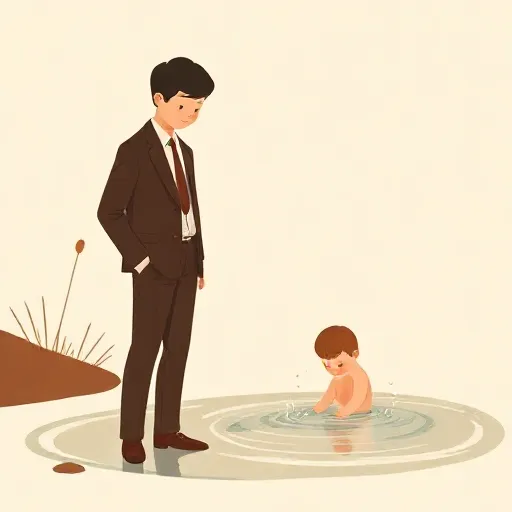
Mia and Leo are arguing loudly in the middle of a quiet library. A stranger gets up, grabs a heavy stack of books, and throws them at Mia and Leo, knocking them down. Then the narrator says, “The stranger did the right thing, because those two were disturbing everyone.”
When you hit that last sentence, at least four puzzling things happen. First, you feel a strong reluctance to imagine that the stranger’s act was right. You can imagine the rest of the story easily, but that moral claim makes you want to stop. This is the imaginative puzzle: why don’t you just play along?
Second, even though an author normally gets to decide what is true inside a story — that there are dragons, that someone can fly — you don’t accept that it is fictionally true that the stranger did the right thing. It’s as if the author loses authority when moral rightness is the topic. That’s the fictionality puzzle.
Third, that sentence pops out. It feels jarring and strange in a way the rest of the story doesn’t. Philosophers call this the phenomenological puzzle — the “odd feel” of the sentence.
Fourth, you probably think the story is worse as a story because of that morally twisted line. The aesthetic puzzle asks why a moral goof damages the work’s quality.
Can’t: When Your Mind Hits a Wall
One camp of philosophers — nicknamed Cantians — says imaginative resistance happens because you can’t do the imagining. It’s not stubbornness; it’s an actual inability. But why can’t you?
A famous answer, first defended by Kendall Walton (20th–21st century), points to the way moral facts depend on other facts. Think of it like this: if I tell you that a table is made of water, you can’t really picture that, because the very idea of “table” depends on solid stuff. In the same way, “being morally right” depends on lower-level facts about actions and their consequences. A story like “Giselda killed her baby because it was a girl, and that was the right thing to do” (a real example from philosophy) asks you to break that dependence. You can’t, because you cannot understand what it would even mean for such an act to be right. The dependence holds in all worlds, fictional or not.
Other Cantians think the blockage comes from a clash inside your own mind. Your brain has a system that stores beliefs, a system that stores imaginings, and a moral judgment system that evaluates actions. When you read “Giselda did the right thing,” the moral system immediately screams “Wrong!” — and a monitoring process cancels out the imagined claim. It’s like trying to imagine a square circle: the parts refuse to fit together, so the imagining crashes.
Won’t: When You Refuse to Go There
The opposing camp, called Wontians, argues that it’s not about inability; it’s about unwillingness. You could imagine the scene if you had to, but you don’t want to.
Tamar Gendler (20th–21st century) gave a vivid explanation. When you read a realistic story, you naturally bring in real-world facts to fill out the world — and you’re ready to take new true facts out of the story into your own thinking, just as you learn from a textbook. But when a story presents a deeply immoral act as right, you sense that the author isn’t just playing pretend; the author seems to actually endorse that view. You feel you’re being asked to export something poisonous into your own store of beliefs. So you resist — not because you can’t imagine it, but because you don’t want that way of looking at the world anywhere near your real opinions.
Another version focuses on desire. Gregory Currie (20th–21st century) pointed out that some imagining is “desire-like” rather than “belief-like.” When you imagine that a character is happy, you’re doing something like wanting that happiness to happen in the story. To desire-like imagine that killing a baby is right, you would need a real-life desire that such an act be right. Since you have no such desire — and very much the opposite — the imagining sputters out.
Maybe There’s No Puzzle: It Depends on the Story
Not everyone thinks imaginative resistance is a real, single phenomenon. Eliminativists argue that what looks like a deep puzzle is just a mix of changing situations and ordinary reactions.
Kathleen Stock (20th–21st century) stressed context. If the Giselda story included extra details — for example, that in Giselda’s town girl babies face a life of unspeakable slavery unless someone ends it — then the claim “she did the right thing” might start to make a grim sort of sense. The resistance fades when you’re given a richer backdrop. So the original reaction wasn’t some mysterious inability; it was just that the story was too thin to make sense of the moral claim.
Cain Todd (20th–21st century) went further. He argued that people resist differently depending on their own values, beliefs, and even what genre they think they’re reading. A sentence like “the stranger did the right thing” might seem totally out of place in realistic fiction, but hardly bother anyone in an ancient Greek myth or a dark science-fiction tale where the rules are different. Because the reaction varies so much, eliminativists doubt there is one special puzzle to solve at all.
Why It Matters When You Pick Up a Book
Every time you open a novel, start a movie, or dive into a video game, you agree to imagine a world someone else built. Usually that’s pure fun. But occasionally, a story asks you to step inside a viewpoint that clashes hard with your sense of right and wrong. Those moments teach you something important: your imagination isn’t a blank slate. It carries your whole moral self — your sense of what people owe each other, of fairness, of cruelty.
Philosophers are still chasing the exact source of that inner resistance. Is it a limit on what your mind can picture? A refusal to let a rotten idea hitch a ride into your real beliefs? Or just the normal human response when a story doesn’t give you enough context? The debate hasn’t settled. But paying attention to when you squirm can help you see your own moral boundaries more clearly — and that’s one of the jobs stories have always done.
Think about it
- Think of a book, movie, or game where a character did something mean and the story seemed to say it was okay. Did you resist imagining that, or did you go along with it? What made the difference?
- If a story set in a completely different world — say, a fantasy kingdom with its own moral code — asks you to accept that a cruel act is right, should you still feel resistance? Why or why not?
- Should authors avoid putting morally uncomfortable claims in stories for kids, or is it valuable to meet such ideas inside the safety of fiction?