Is Everything You Do Already Determined? Baron d’Holbach Said Yes
Paris, 1760s: The Most Radical Dinner Party in Europe

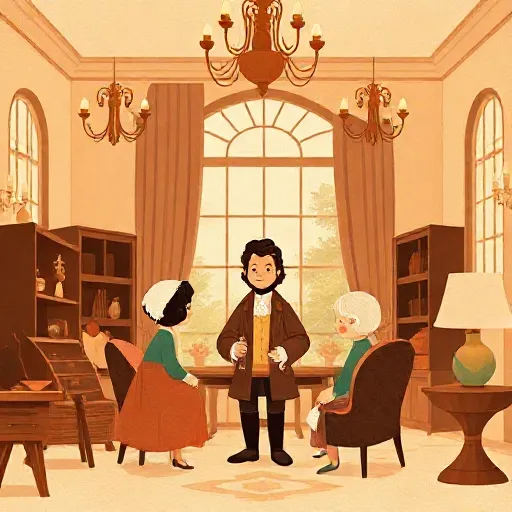
Nearly every Thursday, the wealthiest host in Paris threw a dinner so good that ambassadors, scientists, and philosophers fought for an invitation. His name was Baron d’Holbach (1723–1789), and he was famous for two things: the most delicious wine in France and the most dangerous ideas.
Holbach’s house on rue Royale welcomed a strange mix. You might sit beside the great Scottish thinker David Hume (1711–1776), the American statesman Benjamin Franklin (1706–1790), or the novelist Jean-Jacques Rousseau (1712–1778). The core circle, however, was a group of outspoken atheists and radical reformers — men who thought that religion, kings, and the whole social order needed to be taken apart.
Holbach himself published the most scandalous books of the era, all anonymously. His System of Nature (1770) and Common Sense (1772) were condemned by the Paris parliament and publicly burned. Yet the baron himself was not despised; he was known as le premier maître d’hôtel de la philosophie — the first master of ceremonies of philosophy. How did a man who denied God and attacked the throne remain so welcome? And what was his explosive idea?
The Universe Is Just Matter and Motion — And That Includes You
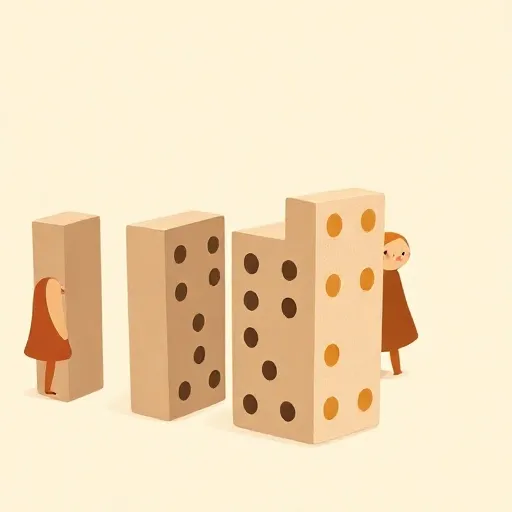
Holbach’s answer begins with a claim so sheer that it still stings: the entire universe is nothing but matter and motion. There is no spirit, no soul, no God standing outside nature. Everything that exists is a physical body, and every change in it is a movement of those bodies.
That means you, reading this sentence, are a particular arrangement of matter that moves, thinks, and feels. Your thoughts are not whispers from a separate realm — they are events in a physical brain, caused by what came before. Holbach writes that the universe offers us only “an immense, an uninterrupted succession of causes and effects.” We would call this view determinism: the idea that every event, including every human decision, is the necessary result of previous causes. Nothing happens by accident or by a free-floating choice that could have gone differently.
Holbach built on the work of the English philosopher John Locke (1632–1704). Locke had argued that all objects have primary qualities — solidity, extension, shape, and motion — that belong to them no matter what. Colors, sounds, and tastes he called secondary qualities, which are not really in the objects themselves but are powers that produce sensations in us. Holbach kept something like that distinction but made a crucial change. For him, secondary qualities like the heat of a fire are just as basic and real as its shape. Fire has the “peculiar property” of being hot and bright, and matter is a genus — a family — whose members can have very different properties.
This makes matter marvelously heterogeneous, not a boring uniform stuff. Some chunks of matter can think. Some can feel pain. Some can fall in love. Holbach never promises to explain how thinking reduces to tiny particles bumping into each other. He simply says that thought is one of the genuine, ultimate properties that certain organized bodies possess, just as fire has luminance.
So you are not a ghost driving a machine of flesh; you are matter that thinks. And because you are made of matter, every shift in your mind is pushed by the world around you and the state of your own body.
Can Meat Think? Holbach’s Surprising Answer
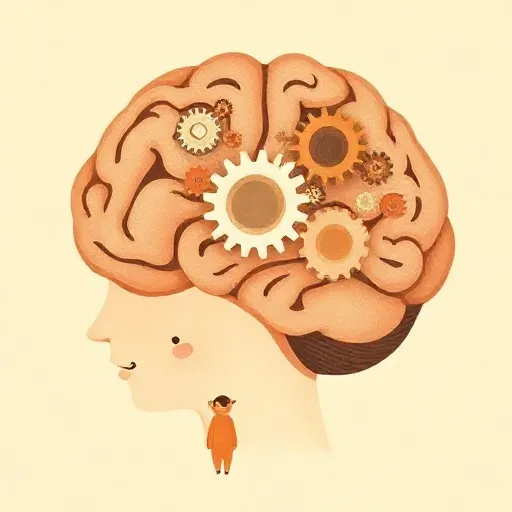
For centuries, most philosophers thought that mind and matter were utterly different. Matter was dumb, passive, and could only be pushed. Mind was active, free, and invisible. Holbach’s boldest move was to say: that is a mistake. Matter is not just the stuff of stones and billiard balls. Human beings, he insisted, are “the result of a certain combination of matter, endowed with particular properties.” The essence of that combination is “to feel, to think, to act, to move, after a manner distinguished from other beings.”
He did not hide from the challenge. The materialist — someone who believes that only matter exists — usually struggles to explain how a brain could produce something as vivid as a daydream or a moral scruple. Holbach’s reply is that matter is not one uniform substance. Some matter has the property of thinking, just as some matter has the property of being magnetic. Asking why a brain thinks is, on his view, like asking why a fire burns: it just does, and science should study the conditions under which it happens, not pretend it needs a supernatural ingredient.
This position was shaped by the sharp criticisms of Locke that Holbach’s friend David Hume had already made. Hume had argued that if you really examine your experience, you never find a solid “self” apart from a bundle of thoughts and sensations. Holbach never goes as far as Hume’s skepticism, but he uses the idea that pain, heat, and color are not “less real” than shape to break down the wall between mind and matter. Thought becomes a natural property, no more spooky than extension.
Critics at the time — and many since — complained that Holbach’s materialism was too vague. He promised to explain everything with matter and motion but offered no detailed mechanism, no equation linking a firing neuron to a feeling of joy. Even so, his view kept the door open for a fully natural understanding of human beings without dismissing the richness of inner life.
Happiness First: Why Be Good When There’s No God?
If there is no divine lawgiver, why not just grab whatever you want? Holbach turned that question inside out. His ethics starts from a single psychological fact: every person seeks their own preservation and happiness. That is not a moral rule; it is a law of nature, like gravity for bodies. The problem is not that we pursue our own interest, but that we are often breathtakingly bad at knowing what will actually make us happy and keep us alive.
Holbach calls ethics enlightened self-interest. The really dangerous ignorance is not forgetting a math formula but misunderstanding the causes of good and evil. When people imagine gods who punish or reward them in an afterlife, they chase phantom security and neglect the real world where their happiness must be built. He writes that “the ignorance of natural causes created Gods, and imposture made them terrible.” Religious fear, he thought, teaches people to crush their own desires and call that virtue, when in fact a sensible love of life and pleasure is the true engine of decency.
The virtues Holbach recommends — temperance, moderation, honesty — sound remarkably like the ones a church sermon might list. The difference is the motive. You should eat and drink with restraint not because pleasure is sinful, but because a wrecked body cannot enjoy anything. You should treat others well because cooperation with other people is the surest route to your own safety and satisfaction. He tells his reader: “If you would preserve yourself, be temperate, moderate, and reasonable; if you seek to render your existence durable, do not be prodigal of pleasure; abstain from everything that can be harmful to yourself or others.” The goal is to enjoy life fully, not to deny it.
That flatly naturalistic picture — morality without a heavenly enforcer — infuriated many readers. But Holbach was not trying to be a destroyer. He believed that religion had stolen people’s chance at real happiness, and that a clear-eyed look at nature would make them both freer and kinder.
The King Must Work for You: Holbach’s Political Warning
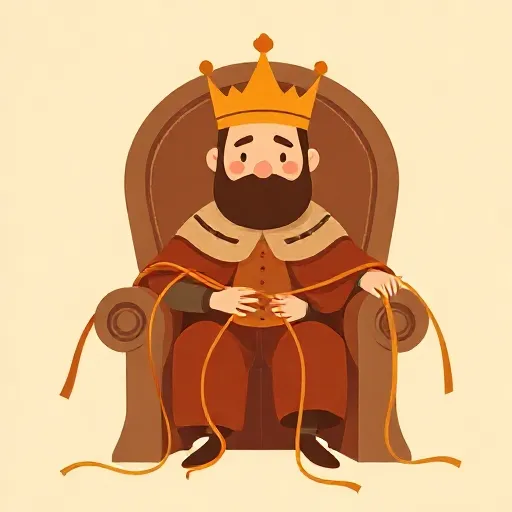
Holbach’s political theory flows directly from his ethics. If every person naturally seeks preservation and happiness, the point of government is not to glorify a monarch but to keep people safe and help them flourish. He called this ideal state an ethocracy — a rule aimed at the general welfare.
He imagined a social contract built in two steps. First, individuals realise that other people are the greatest help to their own interests. So they make a pact: “Help me, and I will help you with all my talents… Secure for me advantages great enough to persuade me to give up to you a part of those which I possess.” This social bond is permanent; we need one another always.
Second, society as a whole strikes a deal with a sovereign power — usually a king, but a king limited by elected representatives. The government promises to protect property and basic freedoms like speech and religion. In return, citizens obey. If the sovereign fails to secure the general welfare, the contract is broken. Holbach even grants a right to revolution, though he describes it less as a call to arms than as a grim warning. When rulers neglect the people’s welfare and education, citizens cease to be guided by reason and become driven by passion; revolution happens, he suggests, as a natural consequence of poor government — much as a dam bursts when it is not maintained.
That caution set him apart from some of his more fiery dinner guests. Holbach’s books may have been burned, but his own political stance was tentative, even careful. He wanted rulers to understand the mechanics of society so that they could prevent disaster, not provoke it.
So, Are You a Machine?
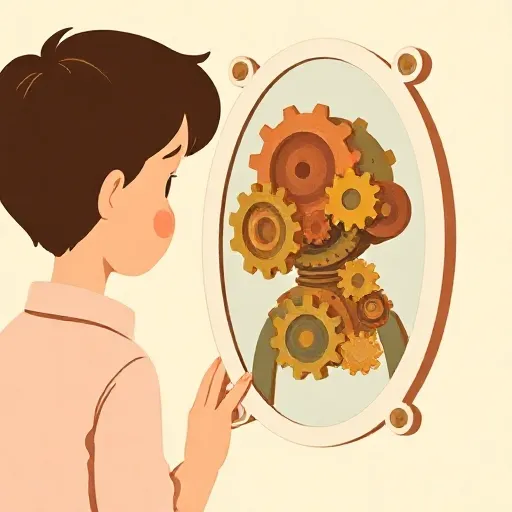
Holbach’s universe is a vast, seamless chain of causes where every twitch of your finger was determined before you were born. That might sound horrifying — a prison of matter and motion. But Holbach would nudge you to notice that you still feel, you still want, you still love your friends and flinch at pain. The chain does not erase your inner life; it is the very thing that makes it possible.
Today, the question has fresh sharpness. Neuroscience maps the brain’s electrical storms and finds that your conscious decision to move your hand may be preceded by unconscious brain activity. Artificial intelligence builds machines that learn, reason, and even appear to want things. If matter can think, as Holbach claimed, then a machine that thinks is not a contradiction. And if everything you do is caused, what sense does it make to praise or blame anyone?
Holbach’s answer was that praise and blame are themselves causes — they steer behavior and help us live together. We can still be responsible, not because we have a magic escape hatch from the causal chain, but because our character and habits genuinely shape what we do. He invites you to see yourself not as a puppet pulled by invisible strings, but as a living piece of nature — fully real, fully determined, and fully capable of happiness.
Think about it
- If a scientist could perfectly predict every choice you will ever make, would it still feel fair to punish someone for a crime? Why or why not?
- Holbach said that being kind is really a smart way of looking after your own long-term happiness. Do you think a truly unselfish act is possible, or is everything we do secretly for ourselves?
- If engineers one day build a robot that thinks and feels exactly like a human, should that robot have the same rights as you? What would Holbach say?