
Do You Really Have a Choice, or Is Everything Already Decided?
The Book That Made Cudworth Furious
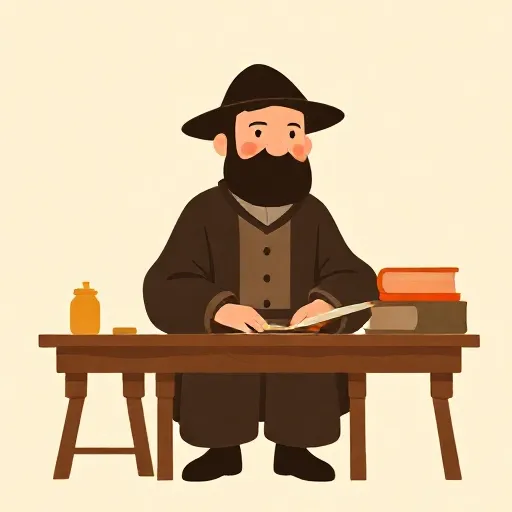
It is 1651. A book appears in London that claims human beings are nothing but “matter in motion.” The author, Thomas Hobbes (1588–1679), says your thoughts, feelings, and even your choices are just tiny movements inside your body—like a clockwork machine. If you throw a rock, it falls because a force pushed it. Hobbes argued that every human action happens the same way: one cause pushes the next, and all of it was set in motion long before you were born.
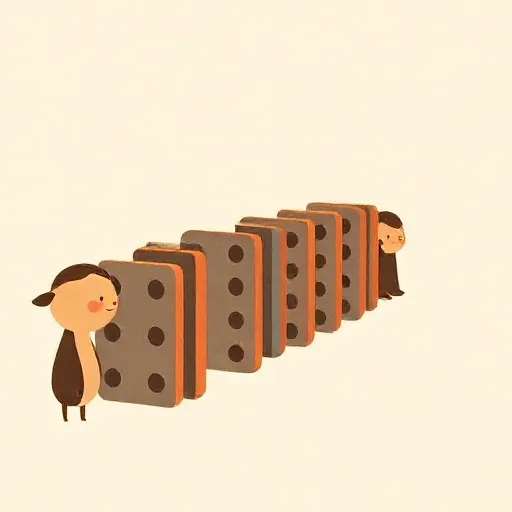
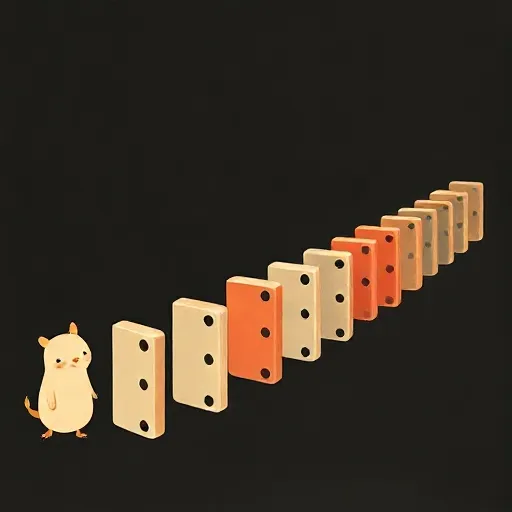
At the University of Cambridge, one philosopher reads this and slams the book shut. His name is Ralph Cudworth (died 1688). He is deeply alarmed, not because he dislikes physics, but because he sees what this view does to right and wrong. If every human decision is just another domino in a chain of physical causes, then nobody can really be blamed for anything. Praise and punishment become pointless. Cudworth will spend the rest of his life trying to show that Hobbes is wrong. He will argue that we have a special inner power that can break the chain—a power he calls self-determination.
A World Made of Mind, Not Just Matter
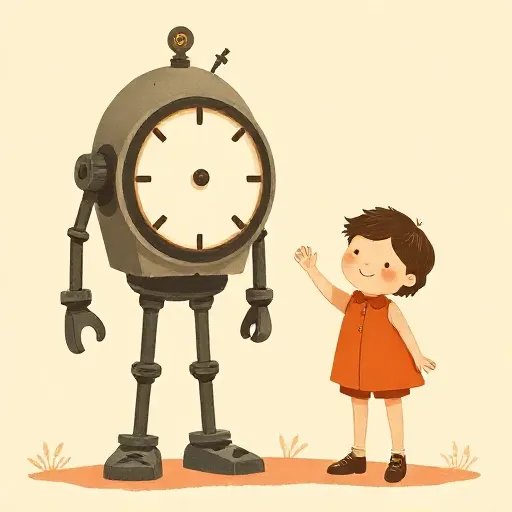
Before Cudworth could defend freedom, he had to overturn the picture of the world Hobbes was using. Hobbes was a materialist—he believed that everything that exists is made of physical stuff, and nothing else. In that world, only matter is real. Since matter only moves when it is hit by something else, determinism seems unavoidable: every event, including your “choices,” must be caused by earlier physical events.
Cudworth reached back to the ancient Greek philosopher Plato for a different starting point. He argued that mind comes first, before matter. The universe is not just a heap of dead particles; it is an intellectual system, shaped by a divine mind. In his view, the physical world is a copy—an “ectype”—of an eternal pattern in God’s intellect. So, if you want to understand what a human being is, you must start not with atoms, but with the active power of the soul.
He used the word energy (from the Greek energeia) to describe the principle of life and thought. An energy is an internal power that can start movement or thinking from within itself. Body, by contrast, is passive—Cudworth defined it as “resisting or antitypous extension,” meaning it just takes up space and pushes back when something hits it; it cannot initiate anything on its own. So, if a person is more than a lump of matter, there must be an immaterial energy within them that can act freely.
Cudworth admired the French philosopher René Descartes (1596–1650) for claiming that mind and body are two different kinds of substance, but he also thought Descartes stumbled in an important way. Descartes said the mind is always thinking, always conscious. Cudworth replied that this is absurd—if that were true, you would be fully awake and aware even in your deepest sleep. Instead, Cudworth insisted that many activities of the soul, like the life-processes that keep you breathing, happen without any conscious thought at all. That insight will prove crucial when he builds his theory of freedom.
The Inner Captain: Cudworth’s Ruling Principle
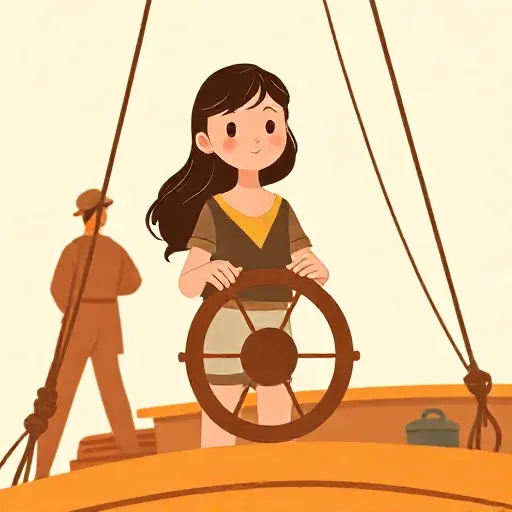
So, if you are not a clockwork toy, how do you choose? Cudworth looked for an answer not in random chance, but in a special part of the soul that coordinates everything else. He borrowed an ancient Greek term and called this the hegemonikon—the ruling principle. Think of it as the captain of a ship. Your feelings, appetites, memories, and bodily impulses are like the crew and the waves, all pushing in different directions. The hegemonikon is the one at the helm that can look across the whole deck, consider where the ship needs to go, and steer accordingly.
For Cudworth, free will is not just the absence of handcuffs or prison bars. It is a positive power of self-determination. You are free not because nothing influences you, but because you can step back from those influences, weigh them, and guide your own actions towards what you understand to be good. The hegemonikon is “that which is properly we ourselves”—the whole person deciding, not just a loudest impulse winning like a shouting contest.
This also explains why we are morally accountable. If a strong wind blows you into someone, you are not blamed; you were merely pushed. But if you deliberately steer into them, you are. Cudworth argued that without a self-determining ruling principle, there would be no real difference between those two cases. A deterministic universe of Hobbes would turn every action into a wind-blow, and justice would become meaningless.
Notice that Cudworth does not say freedom means picking any old thing for no reason. He believed we are all driven by a deep desire for the good—for what we think will make us happy or whole. The hegemonikon’s job is to discern which apparent good is truly worth pursuing and to commit the whole self to that path. So, his view is not that you float above your own personality like a ghost pulling levers; it is that you are capable of reflective self-governance.
Watching Over Your Own Soul
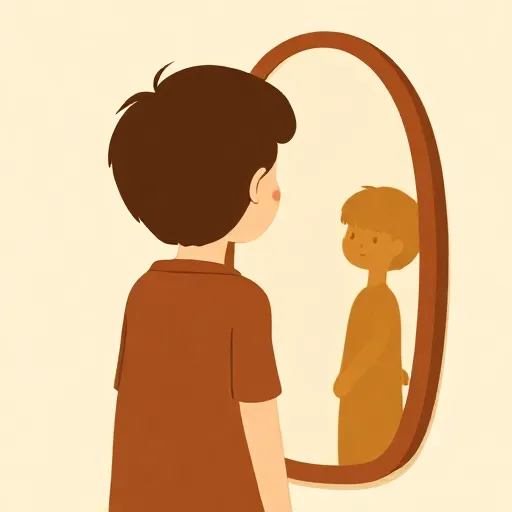
There is one more piece to the puzzle, and it is the one Cudworth thought makes true freedom possible. The hegemonikon cannot steer the ship unless it knows what the crew is doing and what the waves are like. It needs consciousness—not just being awake, but a special kind of inner awareness.
Cudworth described consciousness as the soul being “present with itself, attentive to its own actions.” He followed the ancient thinker Plotinus in calling the highest form of this awareness synaesthesis, or “con-sense.” The idea is that the soul can double back on itself: it can not only think, but also watch itself thinking. It is as if you hold up a mirror not to see your face, but to see the contents of your own mind—your hopes, fears, reasons, and conflicts—all at once.
This “redoubling” is what allows you to deliberate. When you are torn between studying and playing a game, the mere existence of two urges is not a choice. The choice happens when your hegemonikon surveys those urges, weighs them in light of your larger goals, and then commits. Cudworth went so far as to claim that only free-willed beings have this kind of full consciousness. Animals, he thought, might have sensations and even simple awareness, but they do not gather all their inner powers into a single, watchful overview in the way a human soul can.
He even gave the hegemonikon a memorable nickname: the “watchman” of the soul. The watchman does not just sound an alarm when danger appears; it keeps a steady gaze over the whole city of the self. Without it, you might act—like a sleepwalker—but you would not be self-governing. And without self-governance, Cudworth argued, there is simply no room for virtue, guilt, or moral growth.
Why the Battle Over Freedom Still Rages

Cudworth never finished the great three-part book he planned. Most of his ideas on free will and consciousness stayed in handwritten manuscripts until centuries after his death. Yet, once they appeared, they proved astonishingly forward-looking. Today, scientists and philosophers still debate whether our choices are fully caused by brain activity and genetics, and if so, whether we are genuinely free. The conversation Cudworth started with Hobbes has never really stopped.
When neuroscientists say they can detect a decision in your brain before you become aware of it, some claim this proves you are just a biological machine. But Cudworth’s framework pushes back: maybe the conscious “watchman” works at a deeper level than split-second lab tasks can capture. Maybe the kind of self-governance that matters for blame and credit unfolds over time, in reflection, not in the instant of a finger twitch.
Others worry that if determinism is true, the whole idea of responsibility collapses. Cudworth would agree with that worry, but he would also offer a path out. He did not deny that you have strong impulses and a history that shapes you. He simply insisted that there is a genuine difference between being swept along by those forces and gathering yourself up to direct them. That difference, he thought, is what makes you a person and not a puppet.
The next time you are caught between temptations—homework or videos, speaking up or staying silent—pay attention to that gathering movement inside you. That pause, that inward glance over your own competing thoughts, might be exactly what Cudworth was talking about. The watchman is still on duty.
Think about it
- If a supercomputer could predict every choice you will ever make, would that prove you are not really choosing? Why or why not?
- When you act on a sudden impulse without stopping to think, were you still free in that moment, or did your ruling principle fall asleep?
- Can you recall a time when you felt like a captain steering your own decision? What made that experience different from a moment when you just reacted?