
How Much of You Was Decided Before You Were Born?
The Missing 14 Inches
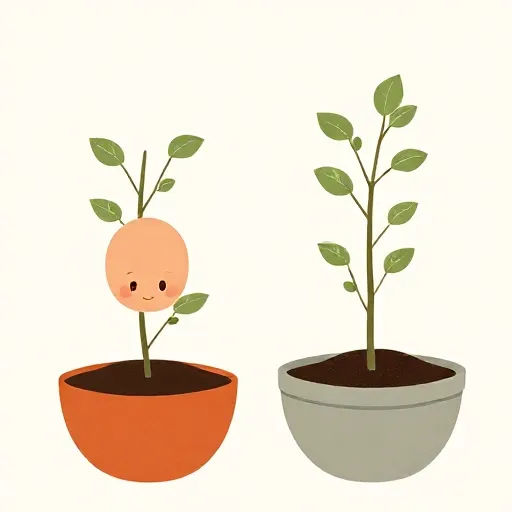
Imagine two students from your class. One is four feet, two inches tall. The other towers at six feet, two inches. That’s a difference of two whole feet—more than a school ruler. On a whim, a scientist clones both students, producing perfect genetic copies. Then the scientist does something strange: she swaps their environments. The clone of the tall student grows up in the short student’s world, eating the short student’s meals, breathing the short student’s air. The clone of the short student does the reverse.
Now, here is the question that has occupied biologists for over a century: How tall does each clone end up? Scientists have a tool for thinking about this, a single number called heritability. But heritability does not answer the question the way you might expect, and understanding why reveals a deep puzzle about what actually causes you to be you.
What Does “Inherited” Even Mean?

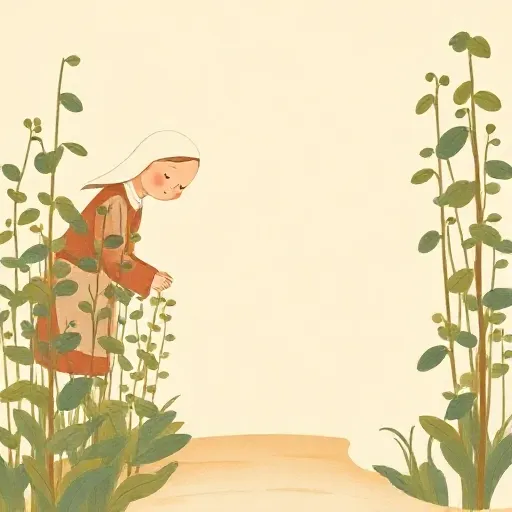
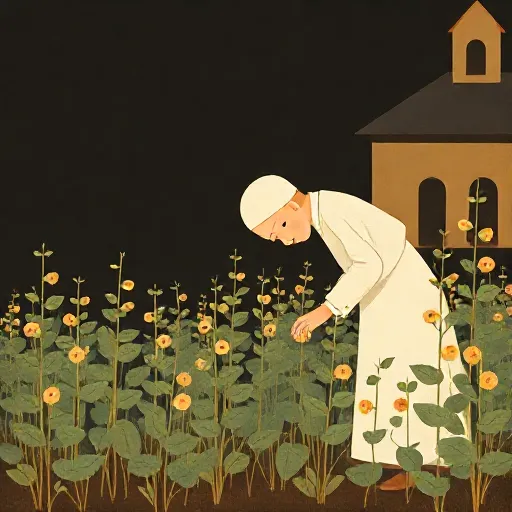
You inherited your parents’ religious beliefs, probably their language, and maybe even their taste in music. But these are not what biologists mean by heritable traits. The traits a geneticist cares about are ones reliably passed on through biology, not through conversation. In the nineteenth century, a monk named Gregor Mendel (1822–1884) worked out basic laws of inheritance by tracking things like smooth and wrinkled peas in his garden. He was studying discrete traits—a pea is either wrinkly or it’s smooth, with no in-between.
But many of the things that make us interesting, like height, weight, or personality, are not discrete. They are continuous traits. They don’t come in just two flavors; they spread across a whole range, graphed as a bell-shaped curve. Heritability was invented to tackle those continuous traits. It tries to answer a single question: In a particular group of living things, how much of the variation in a trait, like height, looks like it comes from variation in genes?
Calculating this involves a statistical method called analysis of variance, or ANOVA for short. The math spits out a number between 0 and 1. A heritability of 1.0 means all of the differences between people in that group seem connected to genetic differences. A 0 means none of the differences do. But what does that number actually mean? That is where the trouble begins.
A Tale of Two Clones

Let us return to our cloned students, whom we will call C-a (the clone of the tall student) and C-b (the clone of the short student). Environment a is where the original tall student grew up. Environment b is where the original short student grew up. If we put C-b into environment a and C-a into environment b, only three general outcomes are possible.
In the first outcome, the clones just become their originals. C-b stays 4’2” even in a “good” environment, and C-a grows to 6’2” even in a “bad” one. The height difference looks like it comes entirely from the genes—heritability seems to be in total control. In the second outcome, both clones meet in the middle, both ending up at, say, 5’8”. Now the environments matter, pulling the clones toward some middle ground that genes alone did not predict. In the third outcome, the environments completely flip the script: C-b shoots up to 6’2” and C-a shrinks to 4’2”. Here, the environment appears to call all the shots.
Philosophers and scientists look at these three possibilities and notice a crucial fact. The heritability number from an ANOVA study cannot tell you which of these scenarios you are actually in. Heritability measures what is in a specific population at a specific time, not what could be if you changed everything around.
The Number That Changes When the World Changes
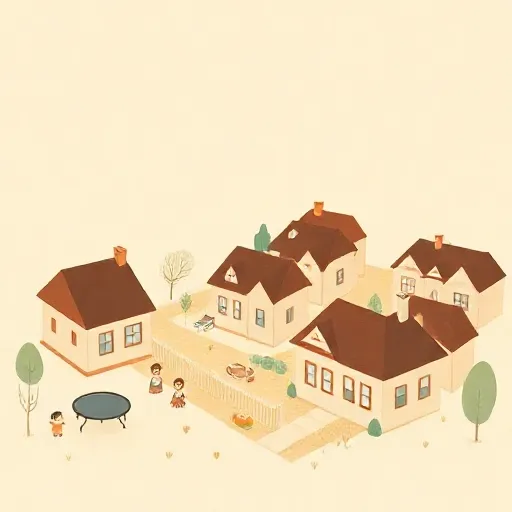
Here is an idea that surprises many people: The heritability of a trait is not a fixed fact about nature, like the speed of light. It is a local report about a particular group. Imagine a field of corn where every single kernel gets the exact same perfect amount of water, sunlight, and fertilizer. In this field, any differences you see between stalks—one is taller, one is shorter—must be overwhelmingly due to genetic differences, because the environments are identical. Heritability for height here will be very high.
Now take a field where the soil is patchy and the water is randomly distributed, but all the seeds are genetic clones of each other. Here, any height differences you see between stalks cannot be blamed on genes, because the genes are all the same. The differences must come from the environment. Heritability for height here will be zero. The same corn, the same genes, the same concept of “height”—but the heritability number swings from near 1 to 0 depending purely on how much environmental variation you allow into the study. This is why a philosopher of science named Kenneth Schaffner (born 1941) reminds us that heritability estimates merely indicate how much of the current variation in a population is due to genetic variation. It does not, and cannot, reveal some deep, permanent power of genes across all possible worlds.
A Confusion Between Cooking and Inheriting
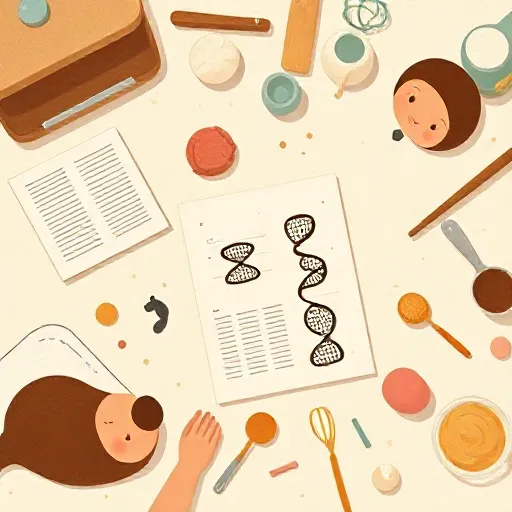
A major philosophical mistake is to mix up the two jobs that genes do. One job is development: building a body from scratch. Your genes help guide proteins that build bones, neurons, and the pigments in your eyes. The other job is transmission: passing a packet of instructions from a parent to a child. Heritability analysis in population genetics is a tool for studying transmission—tracking patterns of traits cruising down the generations in a large group. It provides zero information about the causal, nuts-and-bolts mechanisms of development inside a single body.
A molecular biologist finds a specific sequence of DNA. A population geneticist tracks a trait through a family tree. When they work together, they can do something powerful—they can identify a pattern of a disease being passed down, and then find the actual chunk of DNA that codes for a protein partly responsible for the symptoms. But heritability alone is blind to this. You cannot look at a heritability score and deduce the biological pathway that makes your eyes blue. You can only say that, in the group you studied, some percentage of the variation looks associated with genetic differences. “Genes for” a trait is a much messier claim than it appears in headlines.
So What Is Really Causing You?
The deepest lesson here is not that genes or environment “win.” The lesson is that the tools we use shape the questions we can ask. If a scientist measures the heritability of height in a wealthy town where every kid gets enough food, genes will explain most of the differences. If she measures children across a whole country, where some kids have access to plenty of nutritious food and others do not, environment will roar into the picture. The trait height becomes a different statistical fact in different contexts.
This matters because you live your life inside a single context: your own. When you wonder why you are shy, or quick to laugh, or a lightning-fast runner, you are asking a question about individual development—the particular chain of causes that built the body sitting in your chair. A heritability number from a study of a thousand strangers cannot answer that. It cannot tell you what you could have become if you had made different friends or played a different sport. It can only humbly report on variation in a crowd. Philosophers of science insist on this distinction because words like “genetic” sound final, as if your fate were stitched into you. But biology shows us a world where cooking a person, like cooking a meal, depends on the pan as much as the recipe.
Think about it
- If a study says the heritability of athletic ability is high among students at a school where everyone gets the exact same training, does that mean hard work doesn’t matter? Why or why not?
- Your best friend has a very different personality from their siblings even though they share the same parents and house. What could heritability studies miss about their individual story?
- If someone told you a great artist’s talent was “just genetic,” how would you argue that environmental causes might be hiding inside that statement?