
Henry More Tried to Prove the Soul Was Real. Did He Succeed?
When Descartes Became a Problem, Not a Solution

One afternoon in 1648, a young Cambridge professor, Henry More (1614–1687), wrote an eager letter to the most famous philosopher in Europe. René Descartes (1596–1650) had just published a new account of the natural world, where everything—from planets to the human body—was a giant machine made of tiny particles in motion. More was thrilled. He believed this mechanical philosophy could finally prove the existence of the soul. If matter is just passive stuff that can only be pushed around, then every real action—thinking, choosing, moving yourself—must come from something non-material. That something was spirit, the invisible soul.
But More’s excitement soon soured. He realized that if you took Descartes’s system seriously, you might conclude that animals are just soulless automata, and maybe even humans could be explained without any immaterial mind. Materialists like Thomas Hobbes (1588–1679) were already using the new science to argue that everything, including thoughts, was just matter in motion. For More, this was a terrifying road to atheism. He set out to block it.
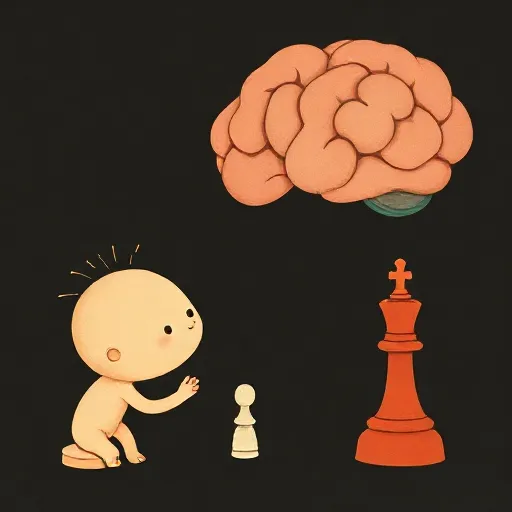
So More built a strict dualism: the universe is split into two totally different kinds of stuff. Body is extended in space, impenetrable, and completely passive—it cannot move itself. Spirit is extended too (a radical idea, as we’ll see), penetrable, and naturally active. Only spirit can start motion or thought. This was the core of his lifelong campaign: to prove that immaterial spirits are real and necessary.
The Spirit of Nature: A Ghost That Runs the World?
If matter can’t do anything on its own, what pushes the planets, pulls things to the ground, and makes flowers grow? Descartes said God set the cosmic machinery going at creation, and now motion transferred mechanically from one body to another. More disagreed. He pointed to phenomena like gravity, magnetism, and the generation of living things—processes that seemed impossible to explain just by bouncing particles. Even Descartes’s vortex theory of planetary orbits, which said planets are carried by swirling whirlpools of matter, looked weak to More: if vortexes spin around equators, shouldn’t planets be cylinders, not spheres?
More’s answer was a huge invisible helper he called the Spirit of Nature. This was not a thinking, personal mind, but a blind, powerful “vicarious power of God” that pervades the whole universe and directs matter toward the best outcomes. Think of it like a universal script: the Spirit of Nature ensures that when certain conditions arise, matter behaves in orderly, life-supporting ways—without needing any conscious thought. It was a secondary cause, a natural force, not a miracle every time.
To show how non-intelligent the Spirit was, More even pointed to experiments with the newly invented air pump. When Robert Boyle (1627–1691) pumped air out of a chamber, the outside air would push a valve shut and lift a heavy weight—acting against its own tendency to fill the vacuum. More saw this “self-thwarting” behavior as proof that blind matter follows necessary laws, but those laws are somehow administered by an immaterial principle. Matter alone would be chaos.
But critics pounced. Robert Boyle himself objected. He had no quarrel with believing in God or spirits, but he found the Spirit of Nature a useless fabrication. Why invent an invisible ghost when the regular laws of nature—the ones God established—could explain everything? Descartes, in an unsent letter, had already warned More against precisely this: inventing pleasant fictions that block the road to truth. More would not be deterred.
Space: The Best Proof of Spirit?
If the Spirit of Nature was hard to prove, More thought he had found an undeniable immaterial thing right in front of everyone: empty space. At the time, most philosophers followed Descartes in saying that space was just the extension of bodies; where there is no body, there is no space. So a vacuum beyond the stars was unthinkable. More said that was nonsense. Try to imagine the end of space. You can’t. There must be an infinite, real, empty container in which everything exists.
More then made a startling claim: space itself is an immaterial substance. It is extended, yes, but it is not made of matter. You cannot cut it or tear a piece of it (he coined the word indiscerpible to mean “un-tear-able”). It is everywhere, immovable, and infinite. Then he listed twenty attributes that philosophers usually assign to God—One, Simple, Immense, Uncreated, Omnipresent, Incorporeal, Pure Act, and so on—and showed that space fits every one of them. Space, he said, is almost a shadow or echo of God’s own nature, an “emanative effect” that flows from God necessarily, like light from a lit candle.
This was a clever move. You cannot deny that space exists. So if space is an immaterial, spiritual thing, then immaterial substance definitely exists. And if that’s true, there’s no reason to doubt that other spirits—like your soul—are real too. More even argued that God himself must be extended, because to exist you must exist somewhere. This made him the first theologian to claim God is spatially extended.
It was a breathtaking idea. It would later influence Isaac Newton (1642–1727), who developed the concept of absolute space and wrote that God “constitutes duration and space.” But in More’s own time, many religious thinkers found the link between God and space too close for comfort—it risked making God a material thing, or even identifying space with God, which bordered on pantheism.
A Student Who Turned the Tables: Anne Conway

One of More’s brightest students was Anne Conway (1631–1679), a philosopher in her own right. More tutored her in Cartesianism, but as she matured, she built her own system that rejected his dualism entirely. In her posthumous book, The Principles of the Most Ancient and Modern Philosophy, Conway argued that the universe is a single, living spirit. There is no dead, passive matter at all. Everything is monistic spirit, with bodies being just “congealed” or dense spirit. So More’s grand dichotomy between inert body and active spirit collapsed.
Conway’s philosophy was a radical alternative. It showed that even among More’s closest admirers, his arguments failed to convince. Another critic, the Calvinist Richard Baxter (1615–1691), attacked More from a different angle. More claimed that matter cannot think or move itself by its very nature, and that not even God could make it do so. Baxter shot back: where is the contradiction? If God is all-powerful, why can’t he endow matter with perception? Limiting God’s power, Baxter warned, might undermine faith just as much as atheism.
These clashes revealed a deeper problem in More’s project. He wanted to use reason to make religious truths absolutely certain. But his reasoning led to a labyrinth of controversial claims—pre-existence of souls, absolute space, a world-soul substitute, and a God forced to create the best possible world. Instead of uniting believers, his system sparked more theological infighting.
Why This Ghost Hunt Still Matters
So did Henry More succeed? He did not convince most of his scientific or religious peers. But his ideas left a deep mark. His notion of absolute space, adopted and refined by Newton, reshaped physics and became a cornerstone of classical mechanics. His distinction between passive matter and active spirit fueled later debates about whether the mind is just the brain or something more. And his insistence that proving the existence of spirits requires showing gaps in material explanations foreshadowed arguments that still appear in discussions of consciousness.
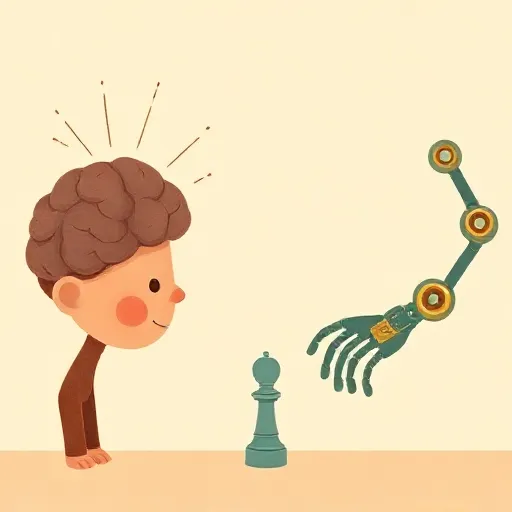
Today, the question haunts us in fresh forms. Can a sophisticated robot ever be truly conscious, or is there an invisible “something” that pure machinery can’t produce? Some neuroscientists believe that once we map the brain completely, we’ll explain all mental life without any ghost in the machine. Others, like More, suspect that first-person awareness—what it feels like to be you—can never be captured by material equations. More’s dualism lives on in these conversations, though few would adopt his Spirit of Nature.
Even ordinary experience poses the question. You move your hand because you choose to. It feels as though an immaterial decision causes a physical event. Is that an illusion, or is there really an active self behind your actions? Henry More would say that feeling is a clue that matter isn’t the whole story. His critics would say it’s just one more claim in need of proof. The hunt, it turns out, goes on.
Think about it
- If scientists someday build a robot that moves, talks, and even writes poems exactly like you, would you consider it to have a soul? What would prove it does—or doesn’t?
- You wake up in a pitch-black, silent room. Can you be absolutely sure that anything exists except your own thoughts? How might More’s idea of space help or hurt your answer?
- Suppose someone argues that our sense of making a free choice is just a trick of the brain, and every decision was determined long before we were born. What evidence could ever show that the choice was genuinely free?