Can You Know Anything Without God’s Help?
A Student’s Fear: Can You Trust Your Senses?
It is the spring of 1277 in Paris. A young student sits on a wooden bench in a lecture hall, gripping a wax tablet. Outside, church bells ring, but inside the air is tense. Bishop Tempier has just condemned a list of dangerous ideas taught at the university. Some masters whisper that you cannot trust your senses at all — so perhaps you can never really know anything. A tall, bearded master named Henry of Ghent (c. 1217–1293) rises to speak. He will spend the rest of his life showing that yes, you can know real things — but the deepest certainty requires a special light from God.
Henry’s huge book, the Summa, does not begin with God. It opens with the skeptic’s question: can a human being know anything at all? He rejects the radical claim that the senses are completely unreliable. Your eyes and ears, he insists, capture genuine information about the world. When you see a horse, your senses deliver true material. Your intellect then performs something remarkable: it abstracts a universal concept of “horse” from all the particular horses you have ever seen. This is what Aristotle taught.
But Henry does not stop there. He mixes in Augustine. The universal concept in your mind is one kind of exemplar, a model. Yet for absolute, unshakeable certainty you need a second exemplar: the eternal idea of “horse” in God’s mind. Divine illumination acts like a seal, certifying that your mental model matches God’s original. So you get two levels of truth. Ordinary truth (veritas) can be reached by your natural powers. But sincera veritas, pure and perfect truth, can only be guaranteed when God’s light stamps your concept as correct.
Think of it this way: your mind produces a pencil sketch of a horse. That sketch is true enough. But only the divine light can press a final, royal seal onto the drawing, confirming it is absolutely accurate. Henry believed this blend saved both the dignity of the human mind and the need for God’s help. Later in his career he simplified this picture, saying God’s image is always quietly present in a hidden chamber of the mind — the abditum mentis — constantly directing us toward truth.
The Double Stamp: Aristotle’s Abstraction Meets Augustine’s Light
So how exactly does this double exemplar work? Henry describes a two‑step comparison. First, your intellect forms a universal concept (the created exemplar) by stripping away the individual details of many horses — an operation Aristotle called abstraction. This gives you a thought‑model of what it is to be a horse. But that model is still imperfect, shadowy, and fallible — Henry calls it “obscure and uncertain.”
For full certainty, your mental model must be compared to its eternal archetype in God’s intellect. God’s exemplar is not just another thought; it is the cause of every real horse’s essence. Divine illumination does not shove new content into your mind. Instead, it certifies what you already have, the way a bank official’s signature confirms that a check is genuine. Without that second stamp, you might still be right — but you could never be completely sure.
This theory allowed Henry to answer a huge worry. If all knowledge starts with the senses, and the senses sometimes trick us, how can we ever be certain of anything? Henry answers: ordinary certainty comes from abstraction; absolute certainty comes from illumination. He refused to say that the senses lie all the time. They give you true building blocks. The intellect builds with them, and God’s light guarantees the building’s blueprint matches the architect’s plan.
Even so, he was careful to say that most of the time we rely on the first, imperfect truth. Pure, illuminated truth is a gift reserved for matters that really need it. This middle way made Henry famous. He could honor Aristotle and Augustine at the same desk — and show that faith and reason are not enemies, but partners.
Before It Exists: The Blueprint of a Horse and Unicorns
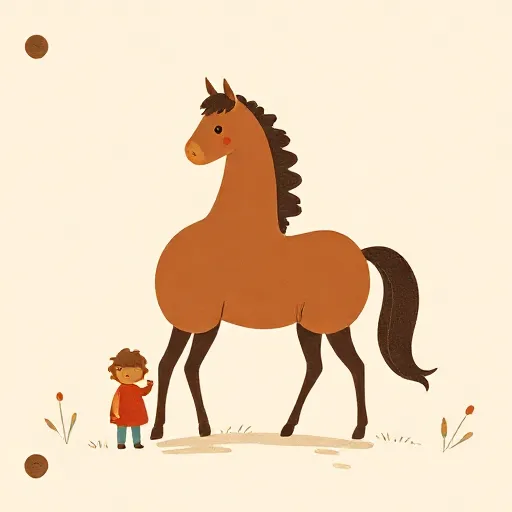
Henry’s quest to understand truth soon led him to an even bigger question: what does it mean for something to be a real thing at all? He realized a horse and a unicorn are not the same kind of “thing.” A horse has what he called esse essentiae — the being of essence. Even before any horse is born, its essence has a stable, objective content in God’s mind. It is not just an idle fantasy; it is a res a ratitudine, a “ratified” thing — one that God’s intellect has recognized as genuinely possible.
By contrast, a goat‑stag or a winged horse made up by your imagination is a res a reor reris, a thing from merely supposing. It has no essential being. It is a figment — never ratified by God as a real possibility. The deep difference, Henry says, is that a ratified essence receives its being by imitating the divine essence, like a mirror reflecting a face. This relation of formal dependence gives it a standing that a figment lacks.
But if essences already have a kind of being, what does actual existence add? Henry’s answer is subtle. Existence is not a separate scrap of material glued onto an essence. Instead, being and essence differ only intentionally — a distinction made by the intellect, not by slicing reality into pieces. An intentional distinction means your mind can conceive one aspect (what a horse is) without conceiving the other (that it is), even though in the real horse they are not two separate things. The same horse can be thought of as “horse” or as “existing horse”; the concepts are different but the reality is one.
To explain how a possible essence becomes an actual horse, Henry imagined three logical “signs.” In the first sign, the essence loses its non‑being; in the second, it hovers in an intermediate state; in the third, it gains actual being. This is not a slow process in time — creation is instantaneous — but it gives the mind a way to understand the change. The blueprint moves from being a mere pattern in the divine mind into the world.
The First Thing You Know: God as the Beginning of Every Thought

Perhaps Henry’s most surprising claim is that God is the very first object your intellect knows — even without you noticing. How can that be? Henry points to the way our minds work. Whenever you perceive any particular thing, say a stone, your intellect first grasps the most indeterminate concept of all: being. Before you register “stone,” you register “something is.” And the most indeterminate being of all is God.
Henry distinguished two sorts of indeterminacy. Privative indeterminacy is what belongs to the general concept of being — it lacks any specific determination, like a blank frame waiting for a picture. Negative indeterminacy belongs to God, the pure, subsistent being that cannot receive any further determination whatsoever. It is so full and simple that nothing can be added.
Because negative indeterminacy is more fundamental than privative indeterminacy, God is somehow woven into every act of knowing. When you see a cat, your mind is already reaching toward the idea of being itself — and at the limit of that idea stands God. This does not mean you have a clear idea of God; it means your thinking would be impossible without that deepest anchor. Henry borrowed this insight from Avicenna and Augustine, weaving it into his own system.
He also warned against a common mistake. Some earlier thinkers, including Plato, thought “being” was one single genus shared by God and creatures. Henry argued that is univocity, and it is false. The being of God and the being of creatures are related only by analogy, not by a common sameness. The concept of being that first appears in your mind is actually an analogous concept, one that contains both God as the source and creatures as products. So the first thing you know is not a bland “stuff,” but a pointer toward the deepest reality.
The Will That Moves Itself: Are Your Choices Really Yours?
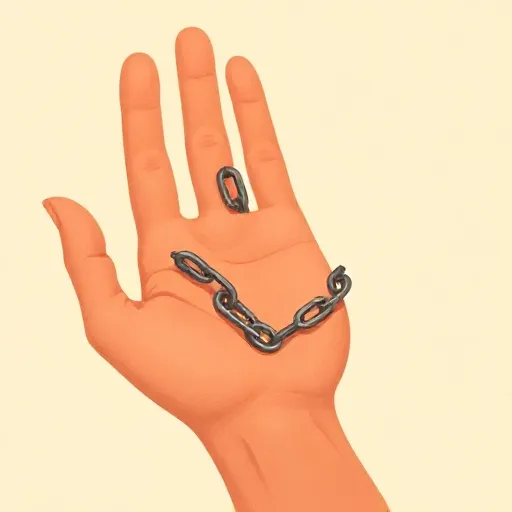
Henry also plunged into a fierce debate about freedom. Can your will genuinely move itself, or is every choice forced by your reason or your feelings? Henry stood firmly on the voluntarist side: the will is superior to the intellect and can move itself.
In 1285, a famous proposition was declared by the theology masters in Paris: “If reason is right, then the will is right.” Many took this to mean that reason controls the will, like a driver steering a horse. Henry disagreed. He argued that the proposition should be read as a statement of simultaneity, not causality. When you choose, your reason presents options and your will freely picks one — but reason does not force the pick. Your will has a built‑in power, a virtus ad movendum, that lets it pass from wanting to acting without any outside shove.
Think of it like a spring that can release its own energy. Material things always need a push from outside, but spiritual powers like the will can activate themselves. Henry placed this self‑moving will just one step below God, who is pure act. So even when your intellect shows you the very best choice, your will can still go another way — and that is what makes moral life genuinely free.
He never denied that you must know something before you can desire it. Knowledge is a condition without which the will cannot act, but it is not the cause that determines the act. Your feelings might rise up from your body, but the will remains free, not chained by passions. This tightrope walk between intellectualists who said reason commands, and extreme voluntarists who said reason is only an advisor, made Henry’s position influential for centuries.
Why Henry’s Questions Still Echo Today
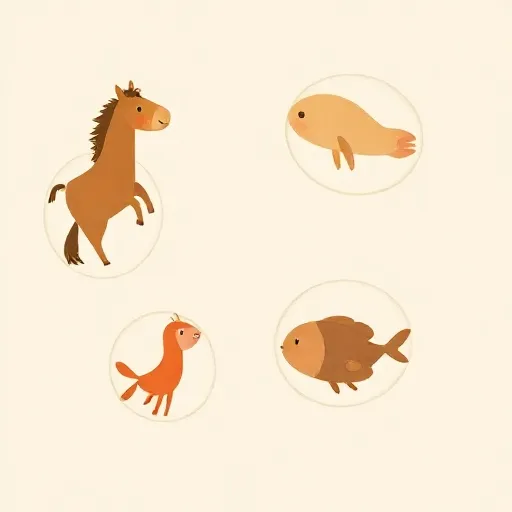
Henry of Ghent died in 1293, but his ideas kept running through medieval and later philosophy. He gave thinkers a vocabulary for talking about possibilities that are never actualized. Today, when we wonder whether a fantasy animal could have been real in some possible world, or what separates a genuine idea from a mere daydream, we brush against Henry’s distinction between ratified essences and figments.
His intentional distinction also opened a new door. By saying that being and essence, or genus and difference, are distinguished only by thought yet still rooted in reality, he prepared the ground for later debates about how many real components a thing has. Thinkers as different as Descartes and Locke would later re‑examine the machinery of concepts and existence.
And his insistence on a self‑moving will never went away. Every time someone argues that a choice was truly free because you could have done otherwise — even when all the reasons pointed one way — they are walking on Henry’s path. He reminds us that a mind that only follows logic might not be free; freedom requires a power that moves itself.
So next time you puzzle over how you can be sure of anything, or whether a storybook creature is “really” possible, or why a decision felt so open, you are thinking alongside a 13th‑century master who believed the mind is built to reach the truth, but needs a light not entirely its own.
Think about it
- If every possible creature already exists as a blueprint in God’s mind, can there be a brand‑new idea that no one — not even God — has ever thought of before? Why or why not?
- Henry believed your will can overrule your reason. Have you ever made a choice that went against everything you knew was sensible? Did that moment feel like your will was moving itself, or were you being pushed by something else?
- Suppose a future machine could perfectly predict every choice you will ever make, all the way to the end of your life. Would Henry still say your will is free? Would you feel free?