
Are Animals Just Machines? A 16th-Century Doctor Thought So
A Shocking Book Arrives in 1554

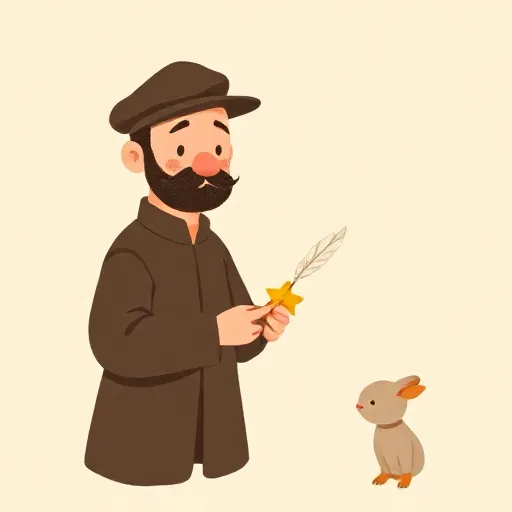
In 1554, a physician named Gómez Pereira published a strange book called Antoniana Margarita. It began with a claim that would have made any pet owner gasp: animals feel absolutely nothing. Pereira argued that dogs, cats, birds, and all beasts are simply biological machines. They move, eat, and run away from danger exactly like a wind‑up toy — without any sensation, consciousness, or thought. To his readers, it sounded like science fiction.
Pereira was a respected doctor in Medina del Campo, Spain, a bustling trade city. He had studied at the University of Salamanca, where brilliant teachers were shaking up old Aristotelian ideas. His book was dedicated to his parents — hence the title Antoniana Margarita — and it mixed medicine, philosophy, and theology into one sprawling argument. But the central shocker was this: if you think your dog feels joy when you come home, you’re wrong. It’s all reflex.
Why He Believed Animals Are Just Machines

Pereira saw a dangerous trap. If animals have sensory perception — the ability to see, hear, or feel things consciously — then you’d have to grant them much more. If a cat can perceive that a mouse is prey, then it must be forming mental “propositions” like that mouse is food. If it can form such propositions, then it has reason and maybe even an immortal soul. And that, he thought, would be ridiculous and cruel. So he denied sensation entirely to avoid that chain.
Instead, he explained animal behavior with mechanics. He called it vital movement, not voluntary action. There was no decision, just a chain reaction. He broke down the causes:
- Movements in response to present objects: light hits the eye, a chain reaction travels along the nerves to the brain, then out to the muscles — pure reflex, no sensation. Just like a magnet pulls iron without feeling anything.
- Memory‑based movements: even after an object is gone, a trace — called a phantasma — stays in the back of the brain. If something triggers that trace, it can rush forward and produce the same reaction as if the object were still there. But for animals, there’s no conscious recalling; it’s all automatic.
- Training: a parrot that repeats words? It’s not imitating with thought. Sound waves vibrate its brain, record a trace, and when activated, the speech muscles replay the sounds like a mechanical instrument. Reward and punishment work by strengthening certain traces, not by conscious learning.
- Natural instinct: the most complex behaviors, like a newborn lamb standing immediately, come from built‑in programming — what Pereira called “occult qualities” that nature arranges. He even compared it to semen moving on its own; no sensation needed.
Pereira’s explanation was remarkably detailed for his time. He described a four‑step reflex arc: stimulus at the sense organ, the nerve signal traveling to the brain, activation of a motor center, then muscle contraction. All this made animals look like incredibly complex wind‑up toys — impressive, but zero inner life.
The Soul That Knows “I Know”
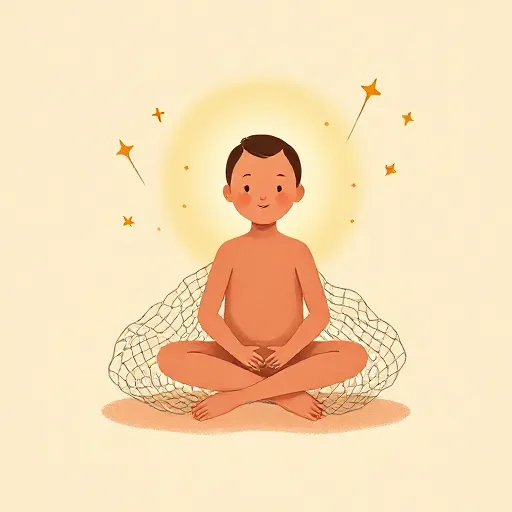
But if animals don’t have conscious souls, what about humans? Here Pereira built a grand theory. He believed the human rational soul is something utterly different — it’s a simple, indivisible substance. It doesn’t have parts like the body does; it can’t be divided into senses, intellect, will. Instead, everything it does is just the soul itself acting. When you think, your soul isn’t using a separate “intellect faculty.” The act of thinking is the soul, just as the act of knowing is the soul.
This led him to a startling statement, tucked deep in the book. He argued that the soul can turn its attention on itself and realize: “I know that I know something: whatever knows, exists: therefore I exist.” This is the first version of what later became famous as Descartes’ cogito — but Pereira wrote it seven decades earlier.
He explained using a vivid allegory. The soul is like a prisoner trapped inside a mesh cage — your body. The prisoner can’t even realize he exists unless the cage is rattled from outside. Those rattles are the physical sensations that happen when light hits your eyes or sound strikes your ears. But those sensations aren’t knowledge; they’re just an “alarm clock” that awakens the soul so it can then look at itself and think. Once awake, the soul discovers its own being by pure intuitive awareness: I know that I am knowing something, therefore I am.
Because the soul never depends on the body for its thinking, Pereira argued, it is immortal. When the body cage crumbles at death, the soul is at last fully awake — seeing clearly, without the fog of physical stimuli. But this also meant that your body is just a set of blind mechanisms, like the animal’s. Only the soul is you.
The Dilemma of the Body‑Soul Union
But there was a tough philosophical problem: how can an indivisible, completely non‑material soul be joined to a physical body? Most thinkers of the time followed Aristotle and Thomas Aquinas, who said the soul is the substantial form of the body — like the shape that makes a block of wax be a figure. But that picture linked the soul and body too tightly. If the soul is the form that makes the body alive, then it’s born and dies with the body. The philosopher Pietro Pomponazzi (1462–1525) had already sharpened this: if the soul needs the body to operate, it can’t survive death.
Pereira agreed with Pomponazzi’s dilemma. So he took the opposite extreme: the rational soul has absolutely nothing to do with the life functions of the body. There are lower “forms” — animal‑like principles — that handle digestion, heartbeat, and reflexes. The human being is a “compound of compounds,” with several forms stacked under the rational soul, which merely crowns the pile and gives you your human nature. But then what is the point of the body? Pereira couldn’t fully explain why a perfect soul would be forced into a prison‑body. His answer was essentially: it’s a brute fact, part of the way things are in this life.
Critics at the time missed his deeper point. Some, like his former teacher Miguel de Palacios, attacked the animal‑machine idea but ignored the immortality argument. A satirical fable even brought animals to court against Pereira! But the core challenge — how to make dualism coherent — never got a satisfying answer.
Why a Doctor From 1554 Still Matters

At first, Pereira’s ideas sank into near‑oblivion. But in the 1600s, the French philosopher Pierre Bayle noticed the similarity to Descartes’ animal‑machine theory. The question arose: did Descartes steal his idea from Pereira? Descartes denied reading the Antoniana, but many suspected he had. Even Leibniz remarked that the two weren’t so different. The controversy made Pereira famous again, though often as a mere footnote.
But Pereira matters for deeper reasons. He stood at a crossroads: either everything is material and mortal, or there is a sharp split between mind and body. Many modern debates about consciousness still face that puzzle. If your brain is just a wet machine, are you a machine? If your dog’s wagging tail is only a reflex, is it wrong to call the dog “happy”? His allegory of the waking soul inside a mesh cage is a powerful image for the feeling that your inner life is something very different from your physical limbs.
Today, scientists study animal cognition and debate whether non‑human animals have consciousness. Pereira’s radical position — that they’re insensate automata — has few defenders. But his question haunts us: if we can build a robot that behaves perfectly like a pet, does it feel anything? And more personally, when you stub your toe and feel pain, that feeling seems so private and immaterial: is it just neurons firing, or is there a simple, indivisible “you” that knows it’s hurting? Gómez Pereira’s 500‑year‑old book makes you wonder.
Think about it
- If a dog you love never actually feels happiness, just goes through automatic motions, would it still be wrong to hurt it? Why or why not?
- Imagine a perfect robot version of yourself that acts exactly like you. Could the robot ever say “I think, therefore I am” and mean it? Why or why not?
- Pereira thought the soul wakes up only when the body is jolted by outside things. Do you ever become aware of your own existence without something outside to spark it? (Try to sit silently and notice: what do you become aware of first?)