Can You Really Know What an Animal Is Thinking?
A Crow Drops a Nut on the Road
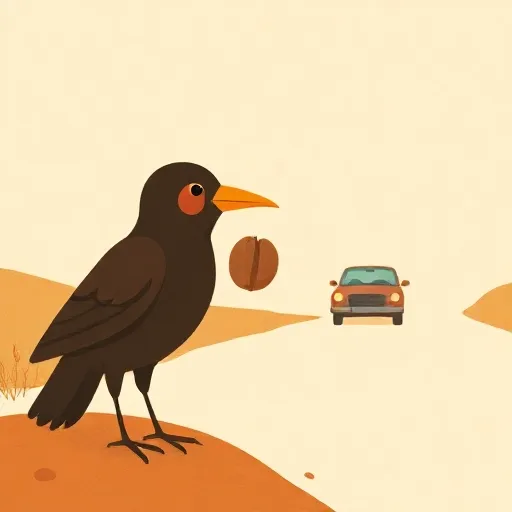
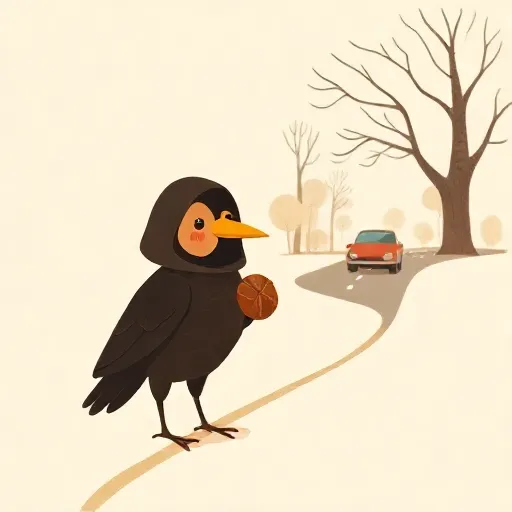
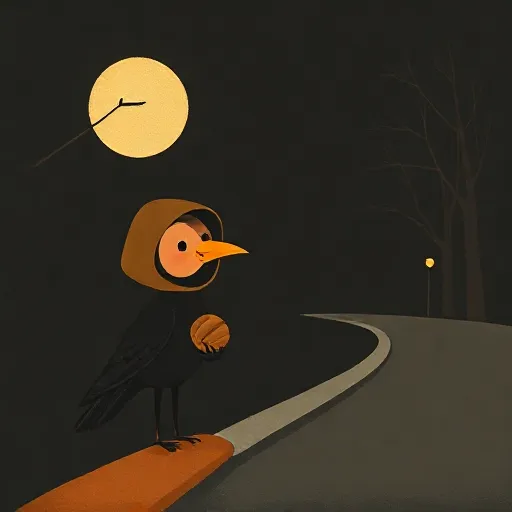
You’re walking to school when you see a crow drop a walnut onto the road, wait for a car to crush it, then swoop down to eat the pieces. The bird seems to have a plan. But does the crow understand that cars are like giant nutcrackers? Or is it just doing something it stumbled upon by accident, repeating a lucky trick?
That question gets at a big puzzle scientists and philosophers face every day: we can’t climb inside an animal’s head to see what it’s thinking. We can only watch what it does. And as the animal behavior expert Sara Shettleworth (b. 1945) notes, the real goal isn’t just to check if an animal is “clever.” It’s to discover how the animal does what it does. That turns out to be one of the hardest problems in science.
Some creatures pull off mental feats that seem surprisingly human. Western scrub jays hide food in dozens of places and remember not just where they put it, but when — they won’t bother searching for a worm if too much time has passed and it has probably rotted. Cuttlefish, which last shared an ancestor with jays over 550 million years ago, appear to do something similar, keeping track of what they ate, where, and when. Seeing the same skill in such distant relatives suggests that nature can build similar mind-tricks from completely different starting points. But before we jump to conclusions, we have to rule out much simpler explanations.
Two Ways to Explain the Same Trick
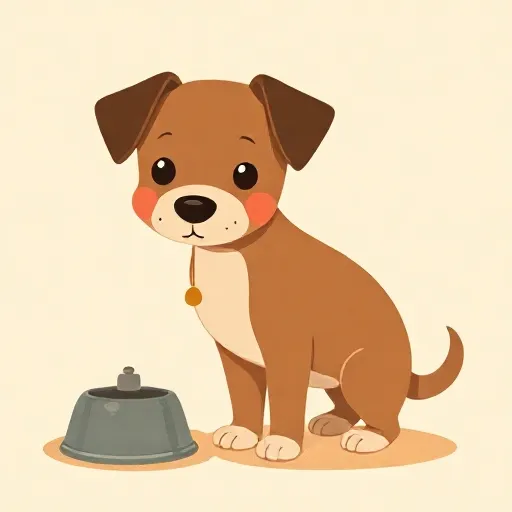
In the early 1900s, the Russian psychologist Ivan Pavlov (1849–1936) noticed that the dogs in his lab didn’t just drool when they tasted food. After a while, the mere sound of the footsteps of the assistant who fed them was enough to make them salivate. By ringing a bell just before giving food, Pavlov could train a dog to drool at the sound alone. This is classical conditioning: an animal learns that one thing (a bell) predicts another thing (food), and its body responds automatically.
Another type of learning, studied by the American psychologist Edward Thorndike (1874–1949), is operant conditioning. A cat locked in a puzzle box will try different moves until it accidentally hits the latch that opens the door. Over many attempts, the successful move gets reinforced, and the cat learns to escape quickly — without ever understanding how the latch works. Thorndike called this the law of effect: behaviors followed by rewards are stamped in.
Here’s why this matters for our crow. The nut-dropping behavior could be the result of operant conditioning. Perhaps once, by chance, the bird dropped a nut near a car, it cracked, and the reward made the action more likely. The crow doesn’t need to know why cars crack nuts — it just knows “dropping near a moving car works.” That’s a simpler story than the crow scheming like a tiny engineer.
But is “simpler” always better? The nineteenth-century biologist Conwy Lloyd Morgan (1852–1936) thought so. Morgan’s Canon says that if a behavior can be explained by a “lower” mental ability, we shouldn’t jump to a “higher” one. Many scientists still follow this rule. Yet philosophers today push back. The philosopher of science Elliott Sober points out that simplicity means different things in different situations, and there’s no universal reason to always pick the simpler explanation. Just because a habit could have been formed by trial and error doesn’t prove it was, especially when an animal’s behavior shows flexibility that conditioning alone can’t explain.
Are We Just Seeing Ourselves in Animals?
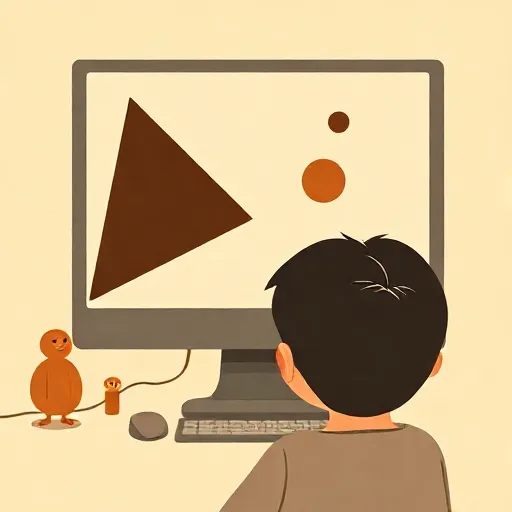
In 1944, two psychologists, Fritz Heider and Marianne Simmel, showed people a short film of geometric shapes — a big triangle, a small triangle, and a circle — moving around a box. Almost everyone described the shapes as having intentions and emotions, saying things like “the triangle is bullying the circle.” This is anthropomorphism: the tendency to give human qualities to things that aren’t human. It’s not just a quirk; recent studies confirm that we’re quick to see minds in anything that moves in a lifelike way.
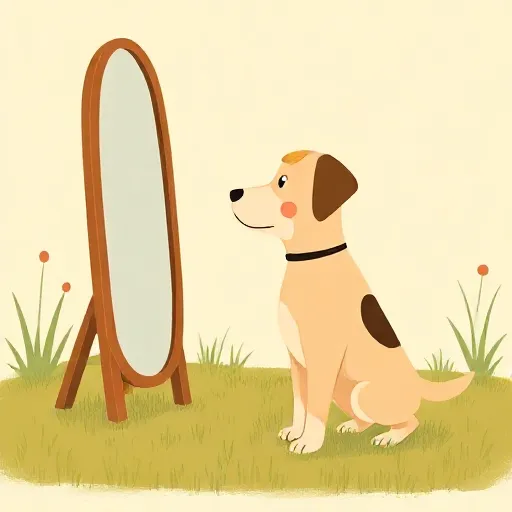
When scientists watch an animal solve a puzzle, the same tendency can creep in. The primatologist Frans de Waal (1948–2024) argued that anthropomorphism isn’t always a mistake. He called his approach heuristic anthropomorphism: you use your own experience of being an animal to guess what another animal might be feeling or thinking, and then you test that guess with experiments. The key is to treat your intuition as a starting point, not the final answer.
The opposite trap is anthropocentrism — the belief that humans are so special that no other creature could possibly share our mental abilities. This can lead to anthropodenial, a false negative where we refuse to see a genuine capacity simply because it looks too human. If we only ever explained crow behavior with simple conditioning, we might miss that crows really do imagine future events. The philosopher Kristin Andrews argues that folk psychology — our everyday human ways of talking about thoughts and feelings — actually helps scientists group behaviors into useful categories to test. The real challenge is to stay alert to both kinds of mistake: seeing too much mind and seeing too little.
How Scientists Tackle the Mystery
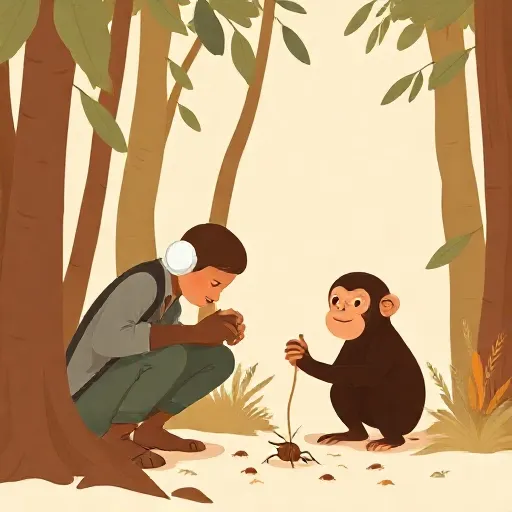
One of the biggest problems is underdetermination: the same behavior can often be explained by very different mental processes. A chimp who follows another’s gaze might be imagining what the other sees, or it might simply have learned that looking in the same direction usually leads to something interesting. The psychologist Michael Tomasello (b. 1951) argues that fieldwork is essential because it shows what animals do in the world where they evolved. But to find out what’s actually going on inside, you need controlled lab experiments — you need to change one piece at a time and see how the animal responds.
To reduce guesswork, some researchers are pushing for signature testing. Instead of only checking whether an animal succeeds at a task, they look at the whole pattern of its decisions, including its mistakes and biases. If two hypotheses predict the same success but different types of errors, the errors can tell you which story is more likely. This way, the space of possible explanations gets smaller.
There’s also a growing awareness that single studies can be misleading. The replication crisis — the finding that many published experiments can’t be repeated with the same result — has hit psychology hard. In animal cognition, failures to replicate are sometimes brushed off as minor differences in setup. Many researchers are now pre-registering their studies, sharing data openly, and running big collaborative projects to see which results hold up. It’s not about finding one heroic experiment that settles everything; it’s about building a body of evidence that narrows the mystery step by step.
Why It Matters: From Courtrooms to Robots
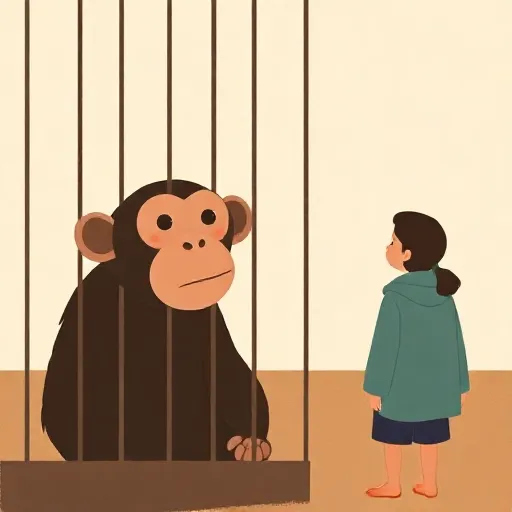
In 2013, lawyers in New York filed a writ of habeas corpus — a legal demand to bring a captive into court and justify their imprisonment — on behalf of a chimpanzee named Tommy. Tommy was living alone in a dark shed, and the case argued that his cognitive abilities made solitary confinement deeply harmful. The court filings drew directly on research into chimpanzee memory, problem-solving, and social awareness. Whether we think an animal can suffer in complex ways depends largely on what we believe is going on in its mind.
The philosopher Jonathan Birch argues that when a decision has real consequences for animal welfare, scientists should set their standards of evidence with those consequences in mind. If a false negative — denying a mental state an animal actually has — would lead to terrible suffering, the burden of proof shifts. It’s not about lowering scientific standards; it’s about being honest that every experiment involves a risk of being wrong, and some wrongs hurt more than others.
Animal minds also matter for artificial intelligence. Engineers trying to build machines that think are turning to animal cognition for inspiration. The Animal-AI Testbed takes puzzles designed for crows and chimps and gives them to AIs, comparing their performance with that of children. Understanding a cuttlefish’s memory or a crow’s planning helps us see what intelligence can look like when it’s not human-shaped — and reminds us that our own brains are just one version of a much larger story.
The crow on the roadside may never tell us exactly what it’s thinking. But the careful, messy, and endlessly surprising work of trying to find out doesn’t just shape how we treat other minds. It shapes what we think a mind even is.
Think about it
- If a dog learns to salivate at the sound of a bell, does that mean it’s just a machine, or could it also have feelings? What kind of evidence would convince you one way or the other?
- Imagine you’re designing an experiment to test whether a chimpanzee knows what another chimp is thinking. What would you watch for, and how would you rule out the possibility that it’s just following learned social rules?
- Some people worry that if we treat animals as having minds too easily, we might waste effort protecting creatures that can’t actually suffer. Others worry that if we’re too skeptical, we might cause real suffering to animals we ignore. Which mistake do you think is worse right now, and why?