Do the Stars Decide Your Life, or Do You?
A Dreadful Forecast from a Quiet Room

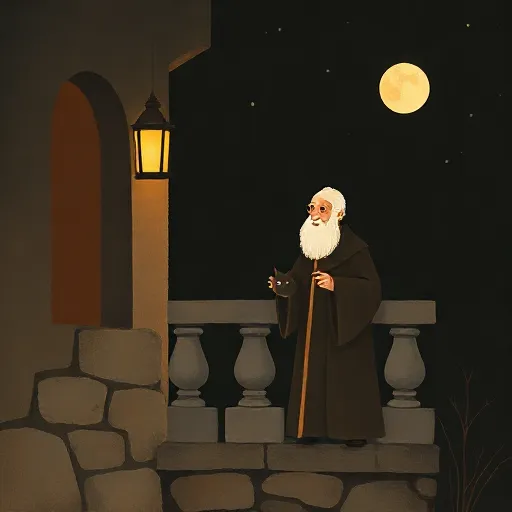
In the spring of 1344, an elderly Jewish scholar named Levi ben Gerson sat in a stone house in Orange, in what is now southern France, and wrote down a terrifying prediction. A rare conjunction of Saturn and Jupiter would happen in March 1345, he said. That meeting of planets would unleash “extraordinary evil,” wars, famine, disease, and death across the inhabited world. He finished his work, sealed it, and died that same year, never seeing the event he had calculated. Three years later, the Black Death arrived in Europe, killing millions. People looked back at the star charts and shuddered.
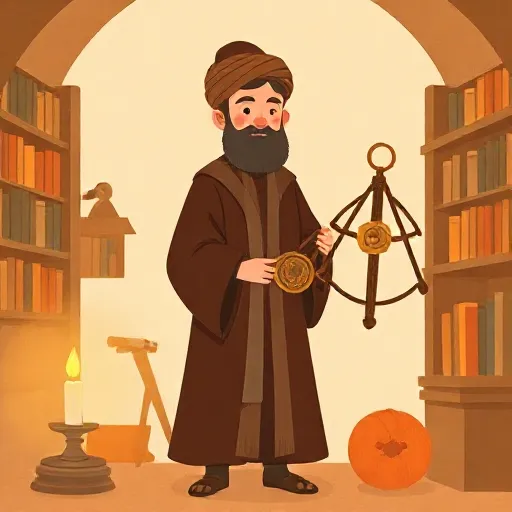
Levi ben Gerson (1288–1344) — known as Gersonides — was not a magician or a street‑corner fortune teller. He was one of the most original Jewish philosophers of the Middle Ages, a mathematician, an astronomer, and a careful reader of the Torah. His whole life was built on a single conviction: reason and religion cannot truly disagree. If the plain words of Scripture seem to clash with what logic and observation tell us, the words must be reinterpreted. He believed that the human mind, a gift from God, can get to the essential truths all by itself.
Gersonides was so serious about reason that he invented a measuring instrument, the Jacob’s staff, to work out the heights of stars above the horizon more accurately than anyone before him. He trusted his own observations over those of the great Ptolemy (c. 100–170 CE) when the two didn’t match. And he dared to ask the hardest questions: Did the universe have a beginning? Does God know what you will eat for breakfast tomorrow? Can the stars force you into a destiny, or can you push back?
Did God Build the World from Scratch?
Most medieval Jewish thinkers, including the towering Moses Maimonides (1138–1204), argued that God created the world out of absolutely nothing — creation ex nihilo. Gersonides disagreed. He thought that position was impossible to square with what we observe about physical reality. Instead, he turned to the ancient Greek philosopher Plato, whose dialogue Timaeus described a divine craftsman shaping the world out of a pre‑existing, chaotic material.
Gersonides found two kinds of matter in the opening verses of Genesis. The first, called geshem, is a primordial stuff — inert, shapeless, unable to move or rest, like a bottomless dark ocean. This, he said, is the “primeval waters” that the Torah describes. The second, homer, is closer to what Aristotle called prime matter: a stuff that always comes joined to some form, like wet clay waiting for a potter’s hands. He compared homer to darkness — not a thing on its own, but simply the absence of light or shape.
From this eternal, messy material, God freely shaped the universe. The act was not a sudden “let there be light” into a total void, but an ordering of what was already there. Gersonides thought this picture made physics and Torah fit together neatly. The leftover formless matter fills the gaps between the heavenly spheres, he suggested, and helps explain how motion gets transmitted across space. His account was more scientist than mystic: creation was a rational process we can partly grasp, not a miracle that shatters all logic.
What if God Doesn’t Know What You’ll Pick?

Here is a riddle that medieval philosophers loved to tangle with. Suppose God is all‑knowing. Then God must already know every choice you will ever make. But if God already knows you will choose the strawberry cake, can you really choose the chocolate one? If the answer is no, you have no free will. If the answer is yes, then God’s knowledge seems limited. Something has to give.
Maimonides tried to hold both sides: God knows everything, he said, but that knowledge doesn’t force your choice. Gersonides found that answer too slippery. He took a much bolder step. He said that God’s knowledge is perfect — but only about the order of things, not about every tiny, specific detail. God knows you as a member of the species “human” and knows the general patterns that humans follow. God knows that some state of affairs will happen, but not which alternative will actually occur until it happens. In philosophical language, God does not know future contingents in their particularity.
Why would he say something so startling? Because Gersonides wanted to protect human freedom with zero compromise. If God did know the future exactly, he argued, then nothing in the world could be genuinely contingent — everything would already be fixed, a chain of dominoes with no gaps. By limiting God’s knowledge, Gersonides carved out a space for real choices. You can surprise the universe. That means your decisions matter in a way they couldn’t if the script was already finished.
The same logic runs through his view of providence and prophecy. Divine care, Gersonides believed, is aimed at groups and species, not at individual people. God does not micromanage the life of a particular farmer or tailor. Instead, somebody shares in the protection that belongs to their broader kinds — as a human, as a philosopher, as a member of a nation. Prophets, in this system, do not receive detailed futures. They receive general, universal messages which they then have to apply to concrete situations using their own intelligence. The prophet is not a loudspeaker; she is a decoder.
Your Life, Written in the Stars?
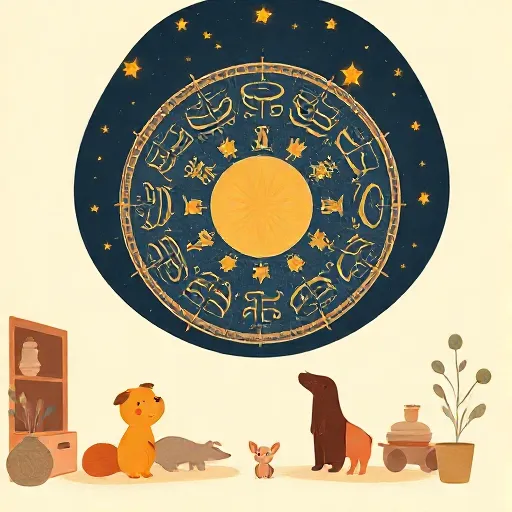
If God doesn’t know your particular future, what does that do to the idea of fate? For Gersonides, the answer was written in the night sky. He was a thoroughgoing believer in natural astrology — the view that the stars and planets really do shape life on Earth through their light, heat, and motion. This was not fringe superstition in the 14th century; it was a mainstream science, as respectable as chemistry is today.
Gersonides held that each celestial body has its own character and power, and that the ever‑changing positions of the planets mix those influences into a vast, shifting pattern. The stars don’t just warm the ground; they bend the course of your personality and your choices. He even laid out six principles for how astral influence works: each planet has a unique effect; its strength depends on how long it stays in one part of the zodiac, how bright it is, how close to Earth it is, and whether it tilts north or south. The closer and brighter and more stable, the stronger the pull.
This sounds like a prison of pure determinism. But Gersonides left a crack in the cosmic machinery. Human beings, he argued, possess an intellect — what he called a sekhel ba’al takhlit — that can, in rare moments, push against the star‑given current. The wise person, to echo a phrase of the time, can rule the stars. Divine design gave us reason precisely so that we could correct and soften the misfortunes that the heavens send our way. True contingency is rare, Gersonides admitted, but it is real.
He also had to explain why astrologers get things wrong so often. His answer was honest: we simply don’t know enough. The heavens are fabulously complex, their patterns repeat only after thousands of years, and the messages they broadcast often arrive blurred in our imperfect imaginations. An astrologer with a muddled mind picks up only the loudest signals; a clear mind catches the finer details. Even so, the full truth of the sublunar world remains mostly out of reach.
Then there is the disturbing example of his own prediction. Gersonides calculated the Saturn–Jupiter conjunction of 1345 using a method from the earlier Jewish scholar Abraham Ibn Ezra (c. 1089–1167). The forecast matched a widespread expectation that this specific meeting of planets carried messianic or catastrophic weight. When the Black Death followed in 1347–1348, the Paris medical faculty itself issued a report blaming the same conjunction. It is a chilling historical coincidence — and it shows why a rational person like Gersonides could treat astrology as a genuine window into the order of the world.
Living Forever Through Your Mind
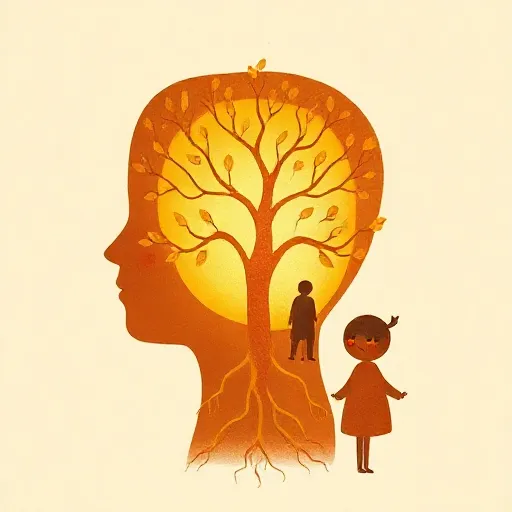
After all this talk of stars and fate, you might wonder: what happens to you when you die? Gersonides’ answer is unexpected. He believed the soul is not a ghostly copy of your body that floats away into another realm. The soul achieves immortality through knowledge.
This is the trickiest part of his system, and it rests on an idea he borrowed from Aristotle and the Islamic philosopher Averroes (1126–1198). They spoke of an Agent Intellect — a kind of cosmic mind that contains the rational order of the entire sublunar world, the blueprint behind all the particular things we see. Your own thinking mind, the material intellect, can develop and grow sharper. When it fills itself with the right sort of knowledge — when it comes to mirror the patterns that exist in the Agent Intellect — it becomes the acquired intellect, and that part of you survives bodily death.
For Gersonides, what matters is not how many facts you have memorized, but whether your understanding has climbed a ladder from mathematics and physics all the way to metaphysics, the study of being itself. He mapped this journey onto the biblical Song of Songs, reading its love poetry as an allegory for the soul’s desire to know God through the natural world. The more clearly your mind reflects the structured, causally connected universe God made, the more permanently you endure. Immortality, on this view, is not a reward handed out; it is a natural result of becoming intellectually alive to reality.
This also meant that most people, simply because of their circumstances or capacity, could not reach such heights. Scripture and its commandments, Gersonides thought, still provide a practical path to moral fitness for everyone else. But the highest goal — union with the divine through the intellect — was open only to a very few. It was a rigorous, almost scientific vision of the life of the mind.
What a Fourteenth‑Century Telescope Tells You Today

Gersonides died over 675 years ago, and much of his philosophy was rejected by later Jewish thinkers, who found it too friendly to Greek ideas and too stingy about God’s knowledge. But his questions have not gone away. In fact, you live inside them.
Every time you read about an algorithm that predicts what music you’ll like or what grade you might get, you are brushing up against the same puzzle Gersonides faced: if something can be predicted, does that mean it was always fixed? When a neuroscientist says that a brain scan can spot a decision seconds before you feel you made it, we are replaying the medieval clash between omniscience and freedom. Gersonides’ solution — that God (or any system) can know the general order but not your exact move — may not satisfy everyone, but it frames the problem honestly.
His life also demonstrates that being deeply religious and boldly scientific did not feel like a contradiction to him. He trusted his telescope and his scriptures because he thought both came from the same source. When the evidence of his eyes disagreed with Ptolemy, he adjusted the theory. When the literal words of the Torah seemed to clash with a demonstrated truth, he reinterpreted the verse. That habit — holding reason and observation as final checks on belief — is very close to how science works, even if his astrological conclusions now look like a dead end.
Next time you feel pulled between what a big system (an app, a prediction, a tradition) says you are and what you think you are free to become, you are standing on the stone balcony with Gersonides, peering up at the stars and wondering exactly how much room there is for a genuine “I choose.”
Think about it
- If a supercomputer could predict every decision you will make in your life with perfect accuracy, would it still make sense to say you have free will? Why or why not?
- Gersonides thought that most of your life is influenced by forces you didn’t pick, like the stars or your biology. If that is true, is it fair to feel proud of your successes or ashamed of your mistakes?
- Why might a person in the 1300s have felt that astrology was just as scientific as astronomy is today? Can you think of something we trust now that might look like a guess in the future?