Why Is It So Hard to See the World Through Someone Else’s Eyes?
A Candle and a Scratchy Mirror
Imagine you are sure a friend is angry at you. They didn’t laugh at your joke and turned away. You replay the moment and feel hurt. Later you learn they were just upset about a fight at home. Why did you jump so quickly to the idea that it was about you?
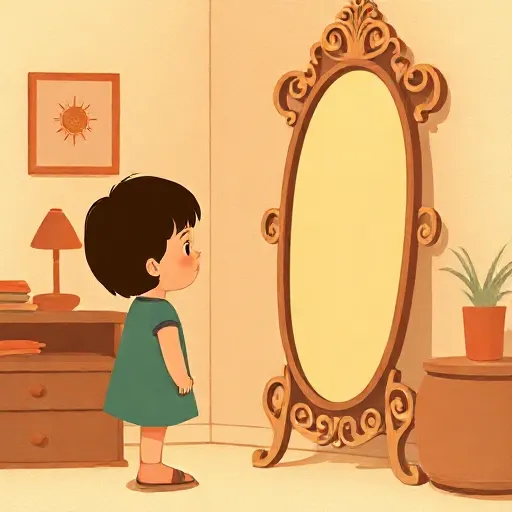
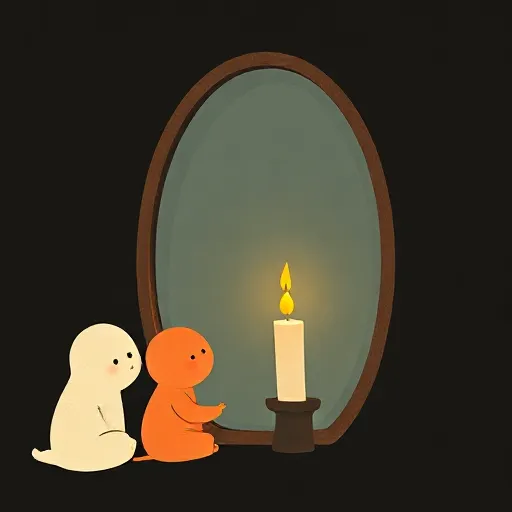
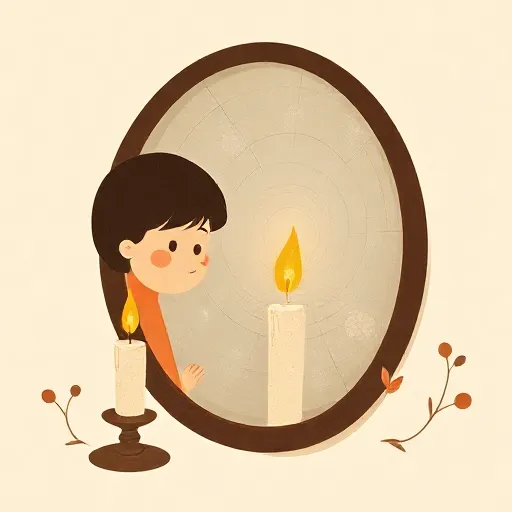
The novelist George Eliot (1819–1880) thought this mistake is built into being human. In her book Middlemarch she describes a scratched old mirror. If you hold a single candle against it, the scratches suddenly seem to form perfect circles around the flame. In reality, the scratches go in every direction. The light just makes it look as if everything arranges itself around that one bright point.
Eliot said this is a “parable” for how our minds work. The scratches are the events of the world. The candle is our own egoism — our natural tendency to put ourselves at the centre of everything. We don’t do this on purpose. It just happens, like an optical illusion.
Who Was George Eliot, and Why Did She Care?

Eliot was not a university professor. She was a writer and a translator who lived in England during the 1800s. As a young woman she taught herself Greek, Latin, German, and Hebrew. She translated daring works of philosophy, including a book by the thinker Spinoza that explored whether we are truly free.
She also co-edited a serious journal. But her reputation was damaged because she lived for many years with a man she was not married to — her partner, the writer and scientist George Henry Lewes. In her time, that was considered scandalous. Even after she became a famous novelist, people judged her harshly. She knew exactly what it felt like to be misunderstood.
Eliot decided to write novels not just for entertainment, but as a way to think with her readers. She once wrote, “I don’t consider myself a teacher, but a companion in the struggle for thought.” Her struggle was about how to live well. Her answer kept circling back to one hard problem: how do we get past our own point of view and truly understand someone else?
The “Moral Stupidity” We’re All Born With
Eliot didn’t think people are evil. But she did think we start life with a kind of blindness. In Middlemarch, her narrator bluntly says: “We are all of us born in moral stupidity, taking the world as an udder to feed our supreme selves.” That phrase moral stupidity doesn’t mean being a bad person. It means being unable to feel that other people have just as much inner life as you do.
Eliot shows this through her heroine Dorothea Brooke. Dorothea is a good, serious young woman. Yet when she marries a much older scholar, she can’t grasp that he might see their relationship completely differently. The narrator explains that she struggled to imagine her husband as having “an equivalent centre of self, whence the lights and shadows must always fall with a certain difference.”
So the problem isn’t just that we are selfish. It’s that we find it strangely hard to picture other people’s feelings from the inside. We know, in a dry way, that others have their own thoughts. But to really feel it — that’s work.
Feeling With Someone: The Hard Work of Sympathy
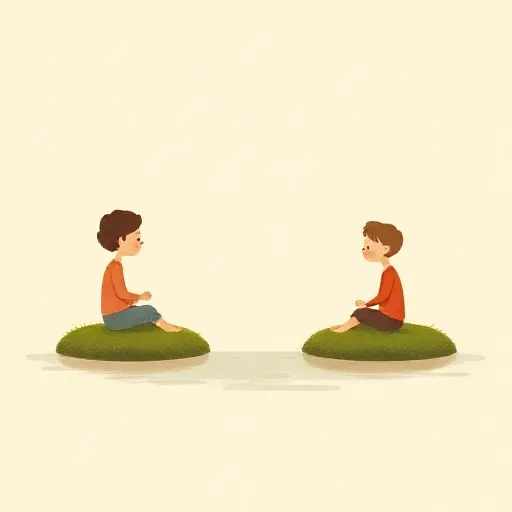
Eliot’s key idea is sympathy. That word literally means “feeling-with.” It is different from pity. Sympathy is imagining your way into another person’s experience so vividly that it almost becomes your own.
But sympathy doesn’t come naturally. It has to be practised. The natural human setting is not sympathy but egoism. Eliot knew this from her own life. In a letter to a friend, she wrote: “We are all islands…and this seclusion is sometimes the most intensely felt at the very moment your friend is caressing you or consoling you.” Even kindness, she noticed, can’t always bridge the gap.
Her novels try to build that bridge. By creating characters with all their faults and longings, she invites readers to step into lives unlike their own. Sympathy, for Eliot, is not just feeling something warm. It is an achievement of attention. It requires looking carefully, letting go of quick judgments, and admitting that other people might be as complicated as we are.
Is Your Personality Already Decided, or Can It Change?
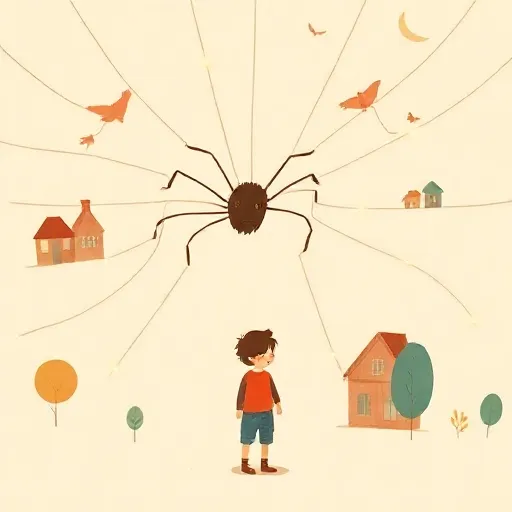
When we talk about someone’s personality, we often use the word character. Eliot spent her whole career thinking about what character really is. Her time was full of debates about determinism: the idea that everything about you, including your choices, was caused by forces outside your control — biology, upbringing, the rules of the universe.
Eliot had studied the philosopher Spinoza, who argued for a very strict form of determinism. She took that seriously. In her novel Silas Marner, a weaver’s life becomes so repetitive that he almost turns into a machine. His body and mind are shaped by the rhythm of his loom. The story seems to say: yes, our surroundings can shape us powerfully.
But Eliot never settled for the simple view that we are just puppets. She insisted that character is “a process and an unfolding.” She used a new word at the time — milieu — to describe the whole environment around a person: family, town, history, even the weather. Your milieu presses in on you. It sets up possibilities and limits. Yet within those limits, small choices and moments of connection can slowly re-form you. Nobody can just decide to be a completely different person tomorrow. But real change, the kind that happens bit by bit through relationships, is not an illusion.
Why Reading a Novel Could Make You a Better Friend

You might think: if the world is full of real people, why practise sympathy on made-up ones? Eliot’s answer is that art can train our attention in a way everyday life often doesn’t. She favoured realism in fiction — showing people as they truly are, not as we wish them to be. She wanted to depict “the peasant in all his coarse apathy, and the artisan in all his suspicious selfishness,” not some heroic fantasy. The point was moral: we can’t care for real people if we only care about idealised versions of them.
When you read a long, patient novel like Middlemarch, you get inside the heads of characters who annoy you, make terrible decisions, and still deserve compassion. That practice, Eliot thought, slowly chips away at moral stupidity. You learn to pause before judging a friend. You get better at asking: “What might this situation look like from their side?”
Eliot didn’t promise easy answers. She wrote that the effects of a good life are “incalculably diffusive” — they spread in ways you can never measure. But the try is worth it. Every time you make an honest effort to feel with someone else, you plant something small. And that, for Eliot, is what a worthwhile life is made of.
Think about it
- Think of a time you were sure a friend was mad at you, but it turned out they were upset about something else. Why do we often jump to the conclusion that someone’s mood is about us?
- If you could read a story written from the point of view of someone you strongly dislike, do you think it would change how you feel about them? Why or why not?
- Eliot said that even in a hug we can feel like separate islands. Do you agree that we can never fully share another person’s feelings? Or is it possible to get close?