Can We Trust Our Own Minds? Francis Bacon’s Answer
A Boy Who Wanted to Know Everything
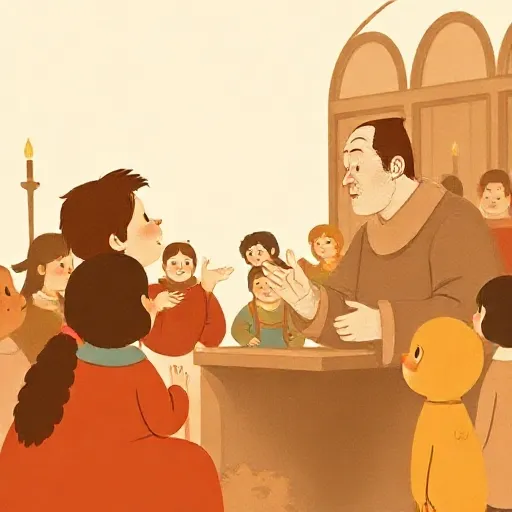
In 1573, a twelve-year-old boy arrived at Trinity College, Cambridge. His name was Francis Bacon (1561–1626), and from the very first weeks he did not fit in. While his tutors drilled students in the old methods — memorizing ancient books, spinning arguments that never touched the real world — Bacon grew impatient. He thought the whole system was like a spider weaving elaborate webs out of its own body, beautiful but useless. He dared to say so out loud.
Bacon never lost that fierce restlessness. Years later he wrote to his uncle, “I have taken all knowledge to be my province.” He did not mean he wanted to learn every fact. He meant he wanted to rebuild the whole way people gained knowledge from the ground up. That ambition would drive him through a life full of political ups and downs, from serving Queen Elizabeth I and King James I to a dramatic fall from power. But the most important thread of his life was not power — it was the fight against bad thinking.
The Crooked Mirror: Bacon’s Four Idols

Bacon believed the human mind is not a clean slate. It is a crooked mirror that bends and distorts everything it reflects. Before we can learn anything new, we have to clean that mirror. That is why he invented the word idols — not statues to worship, but systematic mistakes our brains make without asking permission.
He sorted these mental traps into four families.
Idols of the Tribe come from being human. Our senses are not perfect; our brains love patterns so much they invent them where none exist. It is like seeing a face in the clouds and forgetting it is just water vapor.
Idols of the Cave are the personal biases each of us grows up with — the books we read, the habits we learned, the experiences that shaped us. If you have only ever looked out one window, you might think the whole world looks like your street.
Idols of the Marketplace sneak in through words. A badly chosen word can trick an entire conversation into believing something false, like calling a whale a “fish” and then thinking it must breathe like one. Words, Bacon warned, can react on our understanding, so that language starts bossing reason around instead of serving it.
Idols of the Theatre are the grand, dogmatic systems of philosophy that people accept just because they have been taught them — like an audience that never asks whether the play on stage is fiction. Bacon thought many old theories were exactly that: plays, never put to a real test.
All four idols, he said, must be renounced and “cleansed” from the mind before real science can begin.
The Bee and the Spider: Bacon’s New Logic
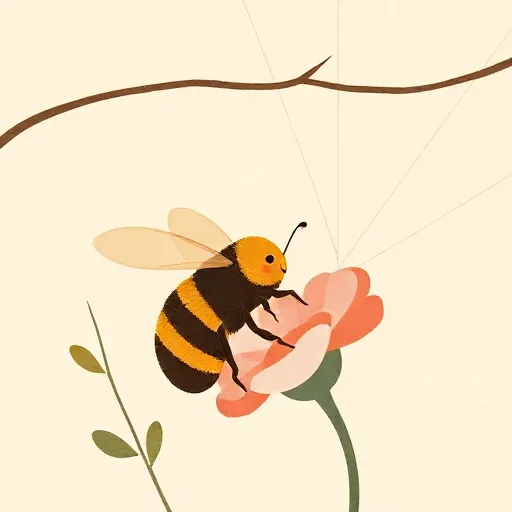
If the old thinkers were spiders, Bacon wanted to turn them into bees. The spider spins threads out of its own insides — that was deductive logic, spinning grand theories from a few assumptions without checking. The bee, by contrast, visits countless flowers, collects raw material, and then transforms it into something nourishing.
Bacon’s own method was induction. Instead of leaping from a few observations straight to a sweeping rule — what he called anticipation of nature — he insisted on a slow, careful climb. He called it interpretation of nature: gather facts, sort them into tables, rule out the wrong explanations one by one.
He gave a famous example with heat. To discover its true cause, you would first list every case where heat appears (Table of Presence). Then you would list similar cases where heat is absent (Table of Absence). Finally, you would list cases where heat varies in degree (Table of Degrees). By eliminating what did not belong, you could isolate the real form — the hidden law that makes heat what it is.
Crucially, Bacon valued negative evidence. He saw that proving a theory requires looking for cases that would kill it, not just confirming ones. This meant knowledge was never a final possession; it was always open to being revised. That was his scientia operativa — a knowing that leads to doing, to making, to improving.
The Great Instauration: Rebuilding Science from Scratch

Bacon named his life’s project the Instauratio Magna — the Great Renewal. He planned six enormous parts, like the six days of creation. Only a few were ever finished, but they changed the future.
The first part mapped what was already known and what was missing. The second was his new logic, the Novum Organum (New Instrument), published in 1620. The rest would have contained a vast collection of natural histories, a ladder for the mind to climb from facts to laws, and a final “Active Science” that put knowledge to work.
He never finished. He was impeached, ruined politically, and died in 1626 after catching pneumonia while stuffing ice into a chicken to test whether cold could preserve flesh. But the dream outlived the man.
Bacon imagined science not as a lone genius locked in a room but as a team of investigators sharing facts and testing each other’s work. In his utopian story New Atlantis, he pictured an island society where a “House of Solomon” gathered researchers who studied nature and used what they learned to heal disease, improve crops, and lift everyone’s condition. He kept religion and science in separate lanes — the Book of God and the Book of Nature were different books to be read differently — but he believed both could coexist without fear.
Why Bacon Still Matters: Your Own Inner Idols

You have never seen your own mind. You only feel its steady stream of thoughts, and often they feel completely true. But Bacon’s warning still holds: even today, we mistake shadows for solid ground.
When you spot a viral rumor and check three other sources before you believe it, you are doing what Bacon begged people to do — refusing to let the idols of the marketplace decide for you. When a scientist designs an experiment that might prove her own hypothesis wrong, she is using Bacon’s insight that negative evidence is the sharpest tool. And when you notice that you really, really want to believe something because all your friends do, you are facing the idols of the cave.
Bacon did not leave us a perfect method. His version of induction was clumsy, and real science has grown far beyond his tables. But his central ideas — that facts must be gathered patiently, that theories must be tested mercilessly, and that knowledge is a shared project meant to improve life — remain the skeleton of every laboratory, hospital, and search engine.
He also left a moral charge. In the preface to the Instauratio Magna he wrote that knowledge should be cultivated in truth and charity, not used for pride, personal gain, or hurting others. Knowledge, for Bacon, was not just power. It was a gift that, used well, could make the world less fragile.
Think about it
- If every human mind has built-in distortions like Bacon’s idols, is it ever possible to know something with absolute certainty? Why or why not?
- Bacon believed science should be a team project. Can you think of a question that science — even a whole team — can never answer? What makes that question different?
- Bacon said knowledge is power. Can you imagine a case where learning more about something could actually make the world worse? Who gets to decide what knowledge should be shared?