
The Knowability Paradox: If You Can Know Everything, Do You Already?
A Detective’s Impossible Discovery

Imagine you are a young detective who believes every mystery can eventually be solved. You trust that for any true fact about a crime — who did it, where the weapon is hidden — somebody, somewhere, at some time, could figure it out. That idea, that every truth is knowable, sounds modest and hopeful. But in 1945 a logician named Alonzo Church (1903–1995) scribbled a proof on a notecard that turned this hope into a puzzle. The proof, later published by Frederic Fitch (1908–1987) in 1963, shows something shocking: if every truth can be known, then it logically follows that every truth is actually known right now. There would be no unsolved cases, no hidden secrets. Since that is clearly false, something must be wrong — either the original idea, or the logic that twists it. This is the knowability paradox, and it is still wide open.
A Tiny Conjunction That Breaks Everything
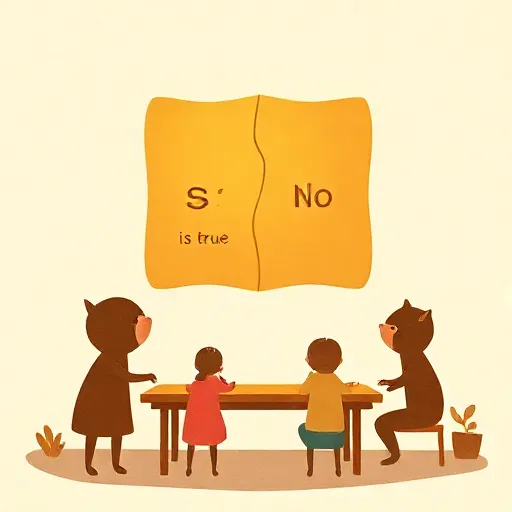
The paradox starts with two simple claims. First, the knowability principle: if a statement is true, it is possible for someone to know it (at some time). Write (p) for any true statement; the principle says: if (p) then possibly known (p). Second, nearly everyone admits there are some truths nobody actually knows — call this non-omniscience. For example, the exact number of grains of sand on a certain beach right now is a truth, but no one has counted them.
Pick any unknown truth, like that sand-grain number (S). Now build a special sentence, the Fitch conjunction: “(S) is true and nobody knows that (S) is true.” If the knowability principle applies to all truths, then this conjunction, if true, must be knowable. So it should be possible for someone to know the conjunction.
But try to imagine someone knowing it. To know a conjunction, you must know both parts. So you would need to know that (S) is true, and also know that nobody knows (S). However, if you know that (S) is true, then somebody does know (S) after all — which flatly contradicts the second part. The conjunction cannot be known by anyone, ever. It is an unknowable truth. And that contradicts the knowability principle. To avoid this contradiction, you must either deny the knowability principle, or deny that there are any unknown truths at all. Accepting the principle forces you to say that every truth is already known — an absurd result.
Fitch’s proof uses only a few tame logical moves: knowledge distributes over “and,” knowledge implies truth, and if a sentence is a theorem, it is necessarily true. Yet it produces a landmine. The question is: where exactly does the reasoning go wrong?
Can Logic Itself Be Changed? The Intuitionist Gambit

One way out is to change the rules of logic. The philosopher Timothy Williamson (born 1955) argued that the proof is valid only if you accept classical logic, which includes the rule of double negation elimination: from “it is not the case that not-(p)” you can infer (p). An intuitionistic logic rejects this rule. It was originally developed for mathematics, but some think it fits better with a view of truth as something we can come to know.
Here’s why it matters. Fitch’s proof ends with “there is no truth that is unknown” — formally, (\neg \exists p(p \wedge \neg Kp)). In classical logic, this is equivalent to “all truths are known.” But in intuitionistic logic, you cannot make that final jump. You only get a weaker claim: for each truth (p), it is not the case that (p) is unknown — which does not outright say (p) is known. An intuitionist can accept that no truth is unknown while still denying that all truths are known, because they can say “not all truths are known” ((\neg \forall p(p \rightarrow Kp))) without contradicting themselves. This logical wiggle room seems to let the knowability principle survive.
But even the intuitionist must accept that there are no undecided statements — no (p) such that neither it nor its negation is known. That also sounds too strong. Williamson and others argued that the intuitionist can still express everyday modesty by using a different, classically equivalent sentence: “not every statement is decided.” Still, many philosophers find this move forced. They worry that the intuitionist is just cleverly rewording a problem rather than solving it. The debate over whether intuitionistic logic is well motivated here continues, and it ties into larger questions about what logic is even for.
Knowing in Another World: Edgington’s Situations

Another path is to rethink what “possible to know” really means. The philosopher Dorothy Edgington (born 1941) pointed out a hidden assumption in Fitch’s proof: that if a truth is knowable, it must be possible to know it in the actual world. She suggested a subtler principle: if a statement is actually true, then there is some possible situation (maybe not the actual one) in which someone knows that it is actually true.
Imagine you’re in your bedroom, and the truth is “there are exactly 47 books on this shelf.” According to Edgington, this truth could be knowable even if no one in your actual house ever counts them. In a different possible situation — a world very much like ours but where a librarian stops by — someone could know that in the actual world there are 47 books. The knowledge happens in another situation, but its content is about the actual world. This means the knowability principle does not demand actual knowledge of the Fitch conjunction. Instead, it might be possible for a non-actual knower to grasp the actual truth “(S) is true and nobody actually knows (S).” Since that knower isn’t in the actual world, their knowing it does not contradict the “nobody actually knows” part. The paradox seems to dissolve.
This approach has striking results. It commits you to the possibility of transworld knowledge — knowledge that crosses the boundary between worlds. Critics push back: how can a thinker in another world have a thought that is precisely about our actual world, not their own? If they say “actually,” it refers to their world, not ours. Edgington and her defenders have proposed ways thinkers could share the right causal history, but the problem remains thorny. The appeal of the solution is that it keeps the knowability principle intact without rewriting logic, but it asks us to accept a very strange kind of knowledge.
Filtering the Truths: Only the Safe Ones Count

A third family of responses keeps classical logic but puts a fence around the knowability principle. The idea is to say: not every truth must be knowable, only those that pass a certain test. The philosopher Neil Tennant proposed that the principle applies only to Cartesian statements — statements that it is not logically impossible to know. The Fitch conjunction “(p) and nobody knows (p)” flunks this test, because knowing it leads straight to a contradiction. So the principle never demands that such tricky truths be knowable, and the paradox can’t get started.
Tennant’s restriction is minimal: it bans only the troublemakers. A more drastic restriction comes from Michael Dummett (1925–2011), who limited the knowability principle to atomic “basic” statements, building up truth for complex sentences from there. Both approaches dodge the paradox by refusing to let the Fitch conjunction count as a legitimate stand-in for (p).
But do these restrictions have a good reason behind them, or are they just an excuse to avoid the problem? Critics argue that saying “only safe truths are knowable” is ad hoc — motivated only by the desire to escape the paradox. Tennant pushed back, pointing out that many conceptual clarifications involve carefully restricting an otherwise overbroad principle. The fight continues with new, clever variants of the paradox. For instance, Williamson constructed a different conjunction — involving the number of books on a desk — that appears Cartesian but still generates a contradiction when plugged into Tennant’s principle. Tennant replied that the conjunction isn’t truly Cartesian after all. The back-and-forth shows how hard it is to draw a clean line that blocks all paradoxes without blocking too much.
Why This Still Matters for a Young Detective
The knowability paradox is not just a dusty logic puzzle. It asks a question that creeps into your own life: are there some truths that we, with our human minds, could never know, no matter how hard we try? If the paradox forces us to accept limits on knowledge, then even the most brilliant detective might face a case where the truth is out of reach — not because of missing evidence, but because the very structure of knowledge makes it unreachable.
That thought can be both unsettling and comforting. It means that some mysteries might stay mysterious forever, and that’s not a failure of curiosity. At the same time, it challenges the optimistic idea that science or careful thinking can eventually unlock every secret. The paradox doesn’t tell us which answer is right; it just shows that our ordinary ideas about knowledge and possibility are tangled. Next time you wonder whether someone, somewhere, could know a particular fact, remember Fitch’s trick. You might discover that some truths hide in a logical blind spot — and that the search for the flaw is itself a kind of philosophy.
Think about it
- If you discovered that a certain truth could never be known by anyone, would that make the world less understandable, or just more mysterious? Why?
- Imagine a library that contains every book about every fact, but one book says “This book has never been read.” Could anyone ever read that sentence without making it false? What does that tell you about the limits of knowledge?
- If science someday claims we can know everything about the universe, does Fitch’s paradox suggest that idea is logically impossible? Why or why not?