Sherlock Holmes Isn’t Real… Or Is He?
The Mystery of 221B Baker Street

You’ve just finished a Sherlock Holmes story. The great detective solved the case, outsmarted everyone, and returned to his rooms at 221B Baker Street. You can picture the fog outside, the violin, the sharp eyes. And then a strange question pops up: Does Sherlock Holmes actually exist?
You’d probably say no—Holmes isn’t a flesh-and-blood person. But then why can you think about him, describe him, even admire his cleverness? If he doesn’t exist, what are you talking about when you say “Holmes is a detective”? Philosophers call this the nonexistence datum: almost everyone agrees that paradigmatic fictional characters don’t exist, yet we talk about them every day as if they do.
That’s where the philosophical fight begins. Fictional realists claim that Holmes does exist, just not in the way a living person does. Fictional antirealists insist that there simply are no fictional things—our words only make it seem that way. The debate isn’t just about Holmes; it’s about what existence really means.
The Other-Worldly Detective: Holmes in Possible Worlds
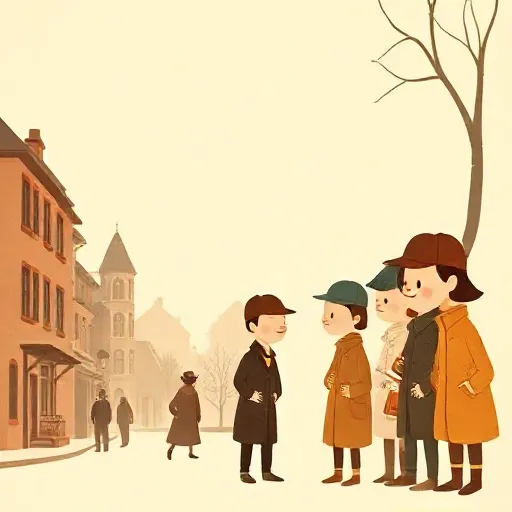
One way to be a realist is possibilism. Possibilists say that Holmes doesn’t exist in the actual world, but he does exist in some other possible worlds. Just as there might be a possible world where donkeys talk, there are possible worlds where Conan Doyle’s stories are fact and a detective named Holmes really does live at 221B Baker Street.
The idea sounds neat, but it runs into trouble. In many possible worlds, there’s a detective who matches everything the stories say—witty, cocaine-addicted, living at that address—but with different childhoods, different parents, different hidden details Doyle never wrote down. The philosopher Saul Kripke (1940–2022) pointed out a puzzle: which of these possible detectives is Holmes? There’s no way to decide. The stories don’t tell us whether Holmes was right-handed or left-handed, so lots of possible Holmes-candidates fit. Possibilism seems to leave us with many Holmeses and no way to pick the one.
The philosopher David Lewis (1941–2001) tried to rescue possibilism with his counterpart theory. He accepted that there are many possible Holmes-candidates, but said each one is a “counterpart” of the others for us readers. When you read the stories, you’re connected to all of them, and any one can count as Holmes for the purposes of your game of imagining. Still, most philosophers found the many-Holmes problem uncomfortable. Kripke pressed further: imagine someone discovered a real sword that perfectly matches the mythical Excalibur described in the King Arthur legends. That sword still wouldn’t be Excalibur, because Excalibur is fictional. If even a real, actual object can’t be the fictional one, why would a merely possible object be any better? Many now think possibilism can’t make fictional characters truly determinate.
The Golden Mountain and the Round Square: Meinong’s Objects That Don’t Exist
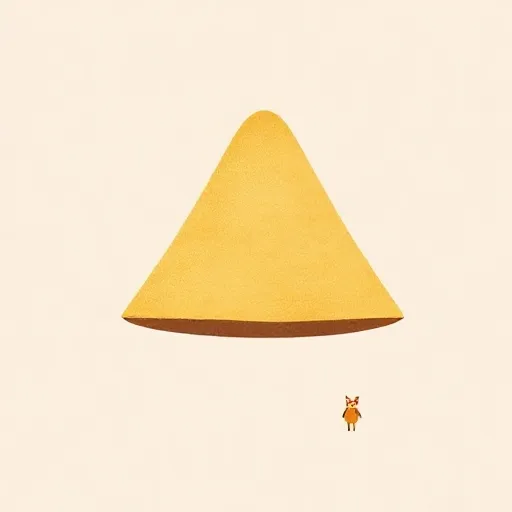
Another realist approach goes back to the Austrian philosopher Alexius Meinong (1853–1920). Meinong thought there are objects that have absolutely no being, no existence in any sense—yet they still have properties. His famous slogan: an object’s Sosein (its being-thus) is independent of its Sein (its being). The golden mountain doesn’t exist, but it genuinely is golden and a mountain, because those are the properties in terms of which it is characterized. The same goes for the round square—it’s round and square even though it can’t possibly exist.
This is the Characterization Principle: whatever an object is characterized as being, it is. For Meinong, fictional characters are just a special kind of such objects. Holmes actually is a detective, actually lives at 221B Baker Street, and actually has a friend named Watson—not just in a story, but in reality (though without existing). This avoids the possibilist’s problem: Holmes really has his cleverness in the actual world, so we can truthfully say “Holmes is cleverer than any real detective.”
Modern versions of Meinongianism, called neo-Meinongianism, try to make these ideas more precise. Some say Meinongian objects are abstract objects, like roles or offices rather than concrete things. (Think of “the U.S. President faces an election every four years”—that’s not about any particular president, but about the office.) Others say they’re concrete correlates of sets of properties. All agree that these objects genuinely possess the properties that define them, though they may possess them in a special way—encoding them rather than exemplifying them like ordinary things do.
But neo-Meinongianism faces a sharp problem. If you can just take a set of properties and get a fictional object, what stops us from generating millions of nonsense characters nobody ever thought of? More seriously, take Jorge Luis Borges’s story idea: what if two authors, completely unaware of each other, write word-for-word identical texts about Don Quixote? Neo-Meinongianism seems forced to say there’s only one Don Quixote—the one that fits that set of properties—yet intuitively Cervantes’s Don Quixote and the other writer’s are two different characters. The theory can’t tell them apart.
Born in the Author’s Mind: Characters as Creations

The difficulty with Borges’s two Don Quixotes pushes many realists toward creationism. The philosopher Amie Thomasson (20th–21st century) argues that fictional objects are abstract artifacts—things created by authors, much like you might create a melody or a plan. They come into existence when an author conceives them, and they depend on the stories that feature them. Cervantes’s Don Quixote and the independent writer’s Don Quixote are two different creations because two separate acts of imagining brought them about.
Creationism makes sense of ordinary language: we say “Hamlet is one of Shakespeare’s greatest creations,” and we might even say “Hamlet is over 400 years old.” It neatly handles the problem of mythical gods like Moloch: since no one ever genuinely wove those properties into a story, there’s no fictional god Moloch, just a confused interpretation of an old word.
But creationism has its own puzzles. If Holmes is an abstract artifact, it can’t literally be a detective—only a concrete person can do that. So creationists say we should not claim Holmes is a detective; rather, Holmes is a detective according to the Conan Doyle stories. The character only possesses those properties from the perspective of the fiction. This frustrates the intuition that Holmes really does have those properties in a stronger sense. Moreover, it’s hard to say exactly when a character is created, or how: what if an author intends Holmes and Watson to be the same person, but abandons the idea before writing it? Most readers would still say Holmes and Watson are distinct, showing that authorial intentions don’t always settle a character’s identity. Creationists admit these challenges, but for many the appeal of an author making something new outweighs the difficulties.
The Antirealist Reply: It’s All a Game of Make-Believe
What if there are no fictional entities at all? The early antirealist Bertrand Russell (1872–1970) developed a famous trick. He argued that a name like “Apollo” is really shorthand for a description, “the sun-god.” Then the sentence “Apollo is young” is false because there is no unique sun-god. But when we say “According to the Greek myth, Apollo is young,” the sentence becomes true: it’s true in the story that there’s a young sun-god. Russell’s approach seemed to avoid commitment to any fictional thing, while still letting us call some fantasy-statements true.
But Kripke and others later showed that names don’t work like descriptions—they are directly referential, pointing straight to their objects without descriptive meaning. If “Holmes” is an empty name, how could a sentence like “Holmes is a fictional character” be true? The most influential modern antirealism, developed by Kendall Walton (20th–21st century), takes a different route. Walton says that when we speak seriously about fictional characters, we are still engaged in a game of make-believe, but an unofficial one. When you say “Mickey Mouse is a pop-culture icon,” you’re not describing an existing object; you’re making a move in a game where certain story-concepts count as real and have properties like being famous. The sentence is fictionally true in that game, and that’s all the truth we need.
Walton’s pretense theory claims that even external sentences like “Anna Karenina is a fictional character” work the same way—they piggyback on a deep habit of pretending. No fictional objects need exist; our linguistic practices do all the work. Critics, however, ask whether this can really explain the logical structure of arguments that seem to quantify over characters, or whether it just pushes the problem one step back.
Why Should You Care? Words, Worlds, and Imaginary Friends
The next time you argue with a friend about whether Sherlock Holmes would outsmart Batman, you’re doing philosophy. The debate over fictional characters isn’t dusty—it’s about how language hooks onto the world, whether existence comes in different flavours, and why some things feel real even when we know they’re not.
Consider an imaginary friend. If you have one, does that friend exist? A creationist might say yes, as an abstract artifact created by your mind. A Meinongian might say it’s a nonexistent object that genuinely has the properties you assign it. An antirealist like Walton would say you’re playing a make-believe game, and “my imaginary friend likes chocolate” is fictionally true in that game. There’s no final consensus—only better and worse arguments.
This matters beyond stories. Historians once believed King Arthur was a real person; now they think he’s legendary. When we say “King Arthur doesn’t exist,” we’re invoking the nonexistence datum just like with Holmes. Understanding how fictional discourse works helps us think clearly about mistakes, myths, and the border between reality and invention. It sharpens your sense of what you mean when you say something is real—and that’s a question that never gets old.
Think about it
- If you have an imaginary friend, do they exist in some sense? How would you argue for both sides?
- Suppose two authors unknowingly write exactly the same story, word for word, about a detective named Reed. Did they create one character or two? What would settle the debate?
- Could a future scientist prove that Sherlock Holmes really existed in a parallel universe? If she did, would that Holmes be the one from Conan Doyle’s stories, or a different person who happens to match the description?