
Could Ancient Books Heal Your Soul? A Renaissance Priest Said Yes
What Do You Read to a Dying Prince?

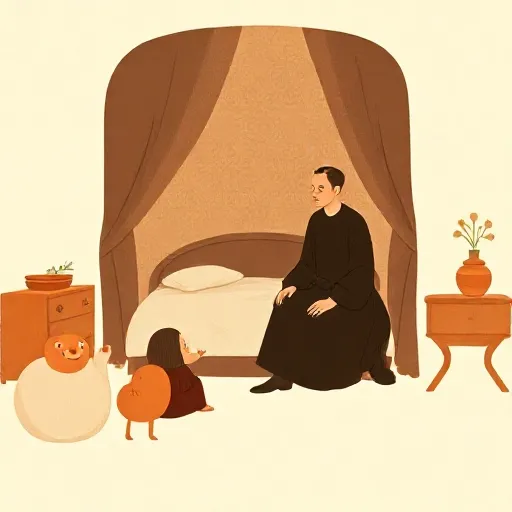
In 1464 the richest man in Florence was dying. Cosimo de’ Medici (1389–1464) had built a banking empire, commissioned palaces, and brought scholars to his city. Now, as he lay in his bed, he asked a young scholar named Marsilio Ficino to read to him. Not prayers, but Plato. Ficino had just finished turning Plato’s Greek dialogues into Latin, so he sat by Cosimo’s side and read aloud from ancient texts about justice, the soul, and the afterlife. That moment captures what Ficino believed his whole life: that old philosophy could speak directly to a person’s deepest needs.
Marsilio Ficino (1433–1499) was a priest, a doctor, and a philosopher. He grew up as the son of a physician in a small town outside Florence. He studied Latin, Greek, and the works of medieval thinkers. But his real passion was the idea that Plato could be a guide for Christians. Many people in his time thought philosophy and religion were separate. Ficino was convinced they belonged together. He saw himself as a healer – not just of bodies, but of souls. And he thought that the words of ancient wise men, if read with the right spirit, could cure doubt, pride, and despair.
That scene with Cosimo also hints at another part of Ficino’s life: the mysterious “Platonic Academy.” Cosimo had given him a house in the countryside and a meeting place for students and friends. Ficino called this loose circle an Academy – not a formal school with rules and exams, but a group of people who wanted to learn to live better. Some were wealthy patrons, some were brilliant young men, and some were fellow intellectuals. Ficino acted like a Socratic midwife: he asked questions, encouraged, and tried to draw out the best in everyone. He thought that learning wisdom and building character had to go hand in hand.
The Ancient Chain of Hidden Wisdom
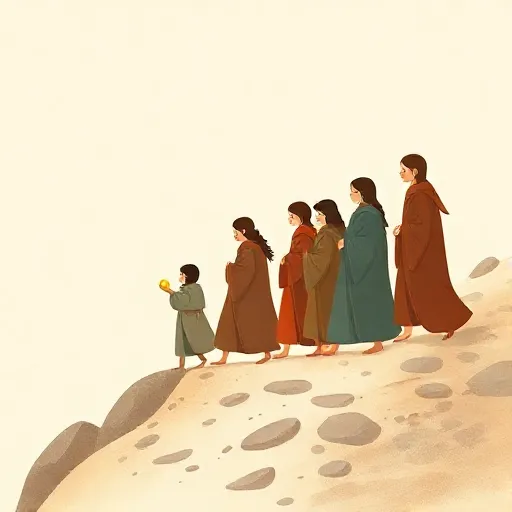
Ficino didn’t think Plato was the first wise man ever. He believed in a chain of prisci theologi, or “ancient theologians.” These were sages who, though they lived long before Jesus, had received special knowledge from God. The chain started with Hermes Trismegistus, a mythical Egyptian teacher, and included Orpheus, Pythagoras, and finally Plato. Ficino even added Zoroaster, a Persian prophet, to the very beginning. He saw this chain as a single united wisdom that had been handed down like a secret message, growing clearer over time.
For Ficino, studying Plato wasn’t about discovering what Plato originally meant. It was about joining a living tradition of interpreters who uncovered deeper truths in the texts. He thought Plato’s works were a treasury filled with divine hints. When he translated Plato’s complete works into Latin (published in 1484), he added short summaries to help readers see the Christian message hidden inside. This way, ancient philosophy became a path toward God, not away from Him.
That also meant Ficino could read pagan philosophers like the later Platonist Plotinus (205–270 CE) and find Christian lessons. He translated the full Enneads of Plotinus, too, and wrote a giant work called The Platonic Theology, subtitled On the Immortality of Souls. In it, he used arguments from Plato, Plotinus, and even the Bible to prove that the human soul never dies. He feared that many smart people in his time were losing this belief. If the soul isn’t immortal, he argued, human beings would be the most miserable creatures alive – always longing for a happiness they can never reach.
A Ladder of Light: The Soul’s Climb Back to God

Like Plotinus, Ficino pictured reality as a great ladder of being. At the very top sits God – overflowing with goodness and existence. From God flows Angelic Mind, then Rational Soul (the level where human beings belong), then a mysterious layer of “Quality” that connects soul to matter, and finally the physical world of bodies and objects. Human souls are stuck in matter, but they are not fully at home here. Ficino believed that each soul feels a natural appetite to return to its divine source. That restlessness you feel when you’re bored or sad? For Ficino, that was your soul remembering its true home and wanting to go back.
But getting back isn’t automatic. You have to train your mind and your feelings. Ficino’s ladder demanded a kind of philosophical exercise – meditation, study, and the right kind of love. He was careful to twist away from one dangerous pagan idea: reincarnation. Plato’s myths sometimes suggested that souls could be reborn as animals. As a Christian, Ficino couldn’t accept that. So he argued that Plato’s words about soul-migration were really metaphors for bodily resurrection, or that they came from Pythagoras, not Plato. He found clever ways to keep Plato while staying true to his faith.
Ficino even spent an entire book of The Platonic Theology arguing against Averroism – a view that claimed all humans share one single mind, not individual souls. To refute it, he borrowed arguments from Thomas Aquinas (1225–1274), the great medieval thinker. Ficino’s blend of old and new sources was his signature move.
Love Is a Vapor, a Hook, and a Fire

For Ficino, the strongest force pulling souls upward is love. But his idea of love was unlike anything you’d hear in a pop song. He defined love as “the desire for beauty.” Why beauty? Because beauty is the shine of God’s goodness in the world. When you see something truly beautiful – a face, a sunset, a piece of music – your soul is hooked. Ficino wrote that beauty works like bait: it excites you, seizes your attention, and draws you upward. The goal isn’t to possess the beautiful thing. It’s to let that beauty lift you until you desire God Himself, the source of all beauty.
Ficino even had a physical explanation for love. He believed in spiritus, a fine vapor made of blood that fills the body and carries the soul’s impressions. When you love someone, your spiritus streams out toward them; if they love you back, their spiritus flows back. Unrequited love, he warned, could be deadly – one person loses their life-giving vapor to another who doesn’t return it. It sounds strange, but it shows how seriously Ficino took the connection between body and soul. He didn’t think the soul was a ghost locked in a machine; the soul worked through the body like a musician playing an instrument.
Why Winning Arguments Is Not Enough

Ficino’s mission wasn’t just to publish books; he wanted to shape whole people. He looked at the schools of his day, where students learned dialectic – the art of arguing and proving points – and he grew concerned. He wrote that teaching logic to young people too early was dangerous. If you give a teenager the power to win any argument before they’ve learned patience and humility, you’re handing them a weapon. He said they would fall into pride, lewdness, and impiety. In other words, sharp minds without good hearts are a recipe for trouble.
Instead, Ficino practiced what he called Socratic midwifery. He didn’t lecture or hand down answers. He asked questions, listened, and encouraged his friends and students to think things through for themselves. In a letter, he said he never wanted to claim he had “taught” someone; he only prodded their fertile minds to give birth to good ideas. That was the true Academy: an inner circle where people became better humans, not better debaters.
Ficino’s holistic vision even led him to write a popular book called Three Books on Life. It gave scholars recipes, health tips, and advice on how to use the stars to stay well. Some churchmen thought his talk of drawing down star powers looked like idolatry, and he had to ask powerful friends to vouch for him. For Ficino, taking care of your body and your soul were never separate tasks.
Why Think About Ficino Today?

Ficino died in 1499, but his influence stretched for centuries. His translations of Plato and Plotinus became the standard versions used across Europe. His ideas about love shaped poets and writers. Later, some philosophers made fun of him for believing in star influences and ancient chains of sages. But in his own time, Ficino gave people permission to read old books with hope instead of fear. He showed that being a person of faith and a lover of philosophy didn’t have to be a conflict.
Maybe the most useful part of Ficino’s story is his insistence that character matters more than cleverness. Today, it’s easy to find brilliant people arguing on the internet, often tearing each other down. Ficino would have hated that. He’d remind us that the goal of learning is not to win, but to become kind, wise, and close to what is true. He’d ask you: when you pick up a book or a phone, are you feeding your soul or just your pride? And he’d remind you that love, in the end, is the real teacher.
Think about it
- If someone gave you a book that promised to help you become a better person, what would you look for inside it to know if it’s true?
- Is it more important to win an argument or to understand the other person’s feelings? Can you do both?
- Ficino believed love works like a physical thing moving between people. If you had to describe what love feels like without using the word “love,” what would you compare it to?