Why Did This Philosopher Say Scientists Should Break All the Rules?
The Shocking Questions on the Blackboard

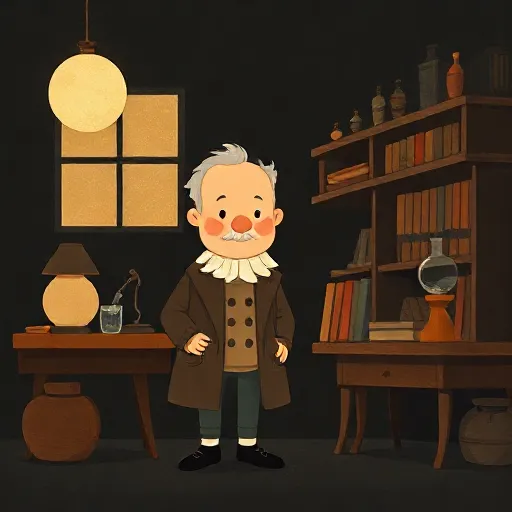
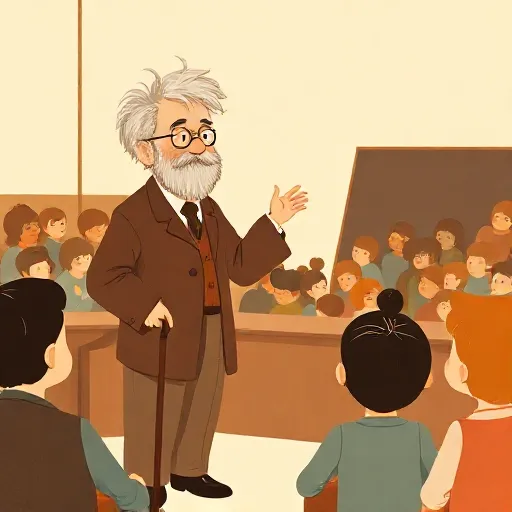
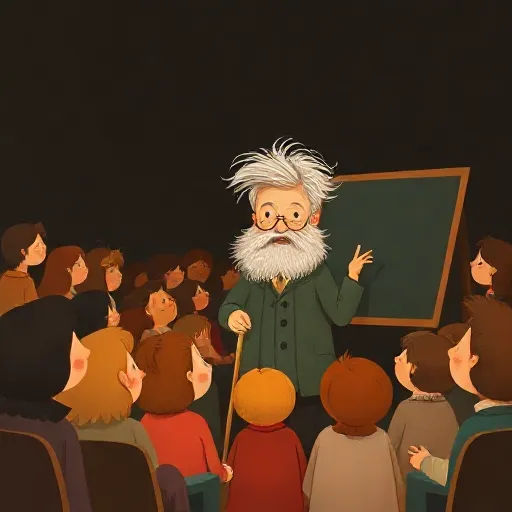
In the autumn of 1974, a packed lecture hall at the University of Sussex waited for a guest speaker. He was late, as usual. Then Paul Feyerabend (1924–1994) burst through the front door, pale and leaning on a metal crutch. Without a word, he limped to the blackboard and wrote three questions:
What’s so great about knowledge?
What’s so great about science?
What’s so great about truth?
The room went silent. A philosopher had just asked whether the things he’d spent his life studying were even worth it. Feyerabend turned to face the crowd and began tearing apart every sacred rule of how we think science works. That night, he started a fight that still hasn’t ended.
From a War-Torn Youth to the Rules of Science
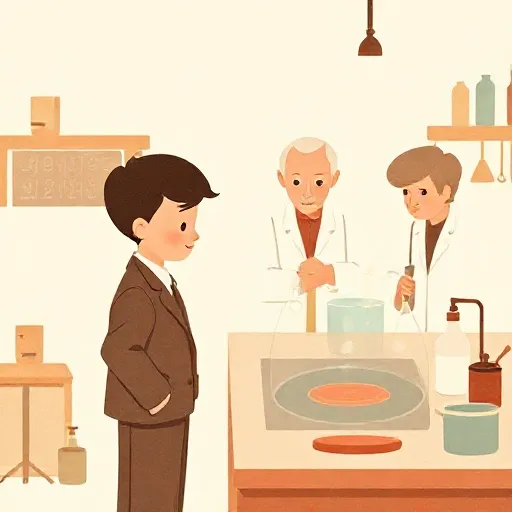
Feyerabend’s path to philosophy was anything but tidy. Born in Vienna, he fought in the Second World War, was shot in the spine, and spent months in a wheelchair. After the war, he bounced between physics, theatre, and opera singing before stumbling into philosophy at the University of Vienna. There he met Karl Popper (1902–1994), whose ideas about science would shape Feyerabend — first as a disciple, then as a rebel.
Popper championed falsificationism: the idea that real science tries to prove theories wrong, not right. A good theory makes bold predictions that can be tested. If the test fails, the theory is discarded. It’s like testing a bridge by driving heavier and heavier trucks over it until it cracks. Feyerabend fell hard for this picture. But a strange experience in a lab planted a seed of doubt.
He worked as an assistant to Felix Ehrenhaft, an experimental physicist who claimed to have found tiny magnetic effects that challenged mainstream physics. When Ehrenhaft presented his experiments, the establishment dismissed the results as “dirt effects” and refused to take them seriously. Feyerabend had set up the equipment himself. The effects were real, yet the scientific community brushed them aside — not because the evidence was bad, but because it didn’t fit the accepted theory. He began to wonder: do scientists really follow the rules they claim to follow?
The Break with Popper: Realising the Rules Were Chains

For years, Feyerabend tried to fix Popper’s falsificationism rather than abandon it. He argued that testing a theory fairly sometimes requires having an entirely different, competing theory on the table. Why? Because the very meaning of words like “mass” or “motion” depends on the theory you’re using. Before Einstein, mass meant something fixed; after Einstein, it meant something that changes with speed. The two theories are incommensurable — you can’t simply line up their sentences and compare them point by point, because the same words mean different things.
Feyerabend realised that if meaning changes when theories change, then Popper’s tidy test-and-reject method often cannot work the way it’s supposed to. In December 1967, while listening to a colleague lecture on Popper’s methodology, he had what he called an “epiphany.” He saw that all general methodological rules have only a limited range where they help. Press them too far, and they choke progress. That night, he wrote to friends announcing his break: he no longer had a “position” except that no single rulebook can govern science. He began to use a shocking slogan: “anything goes.”
Anything Goes: The Anarchist’s Toolkit
In his most famous book, Against Method (1975), Feyerabend stitched together arguments he’d been developing for twenty years. His core claim: history shows that every supposed rule of science has been broken by the greatest scientists. Galileo, for instance, used rhetoric, clever tricks, and even arguments his opponents found logically sloppy to get the heliocentric view accepted. If rigid rules had been enforced at the time, the scientific revolution might never have happened.
So what should replace the rulebooks? Epistemological anarchism — the view that there are no exceptionless methods for gaining knowledge. Scientists, like artists, need the freedom to try anything. Sometimes progress comes from ignoring anomalies; sometimes from inventing wild new theories that seem absurd at first. The only “rule” that doesn’t block progress, he argued, is the useless one: anything goes.
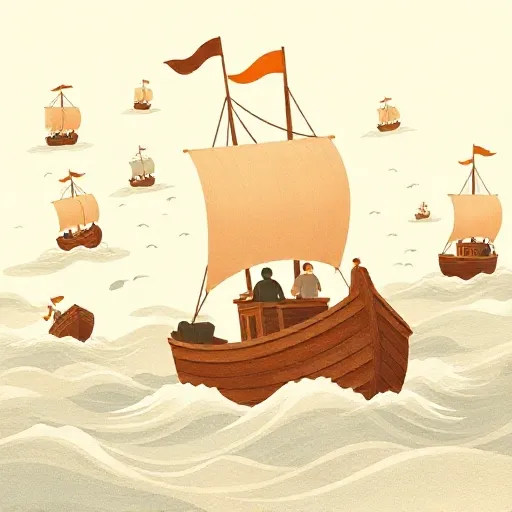
But doesn’t this turn science into chaos? Feyerabend said no. He wanted an ever-expanding ocean of alternatives. The more rival theories there are, he thought, the sharper each must become. They force each other to get better. He compared science not to a single train on a track, but to a fleet of ships sailing in different directions, each testing a different current.
Critics howled. If anything goes, how can we tell science from superstition? Doesn’t this let people believe whatever they want? Feyerabend responded that results still matter — but there is no recipe you can write down in advance that guarantees a discovery. The method must fit the problem, not the other way around. A good scientist, he said, is more like a resourceful cook who tastes and adjusts than a robot following a recipe.
Defending Democracy: Science for the People
Feyerabend didn’t keep these ideas locked in the lecture hall. In the late 1970s and 1980s, he turned to politics. If science has no privileged method, he argued, then it has no right to a privileged seat at the table of society. In a truly free society, all traditions — Western medicine, Chinese herbalism, Indigenous knowledge, even astrology — should get equal access to funding and a fair hearing. He called for the separation of science and state, just as many countries separate church and state.
This made him a hero to some and a villain to others. Environmentalists, counterculture groups, and critics of big technology loved him. Many philosophers and scientists were horrified. They argued that science, for all its messiness, is still our most reliable way of learning about the world. If we treat all beliefs as equally valid, they warned, we risk losing the very tools that cure diseases and build bridges. Feyerabend replied that science already contains plenty of dogma, and the best cure for dogma is to let many voices challenge it — including the voices of ordinary people who have to live with scientific decisions.
Why Does This Still Matter?

You probably ask yourself versions of Feyerabend’s three questions more often than you realise. When you hear that a study says one thing and another study says the opposite, how do you decide? When an influencer claims a home remedy works, and a doctor dismisses it without explanation, who earns your trust? Feyerabend’s answer is not “trust nobody” but “don’t expect a simple rulebook to tell you who’s right.”
His lasting lesson is that being rational isn’t about memorising a list of approved methods. It’s about staying curious, questioning authority — including the authority of science — and never letting any single answer become so comfortable that you stop looking for better ones. Science, he believed, is a fantastic adventure precisely because it has no final map. And maybe, he would add, that’s what’s so great about knowledge after all.
Think about it
- Can you think of a time you got a better result by ignoring a rule? How did you know it was the right call — and who should decide that?
- If a treatment works for many people but scientists can’t explain why, should it be allowed? What might happen if it isn’t?
- Imagine a world where every decision — what to study, what medicine to use — is made by a committee of experts with a strict rulebook. What would that world gain, and what would it lose?