Is ‘He’ Really for Everyone? How Words Can Hide Women
Can a Word Be for Everyone If It Sounds Like “He”?
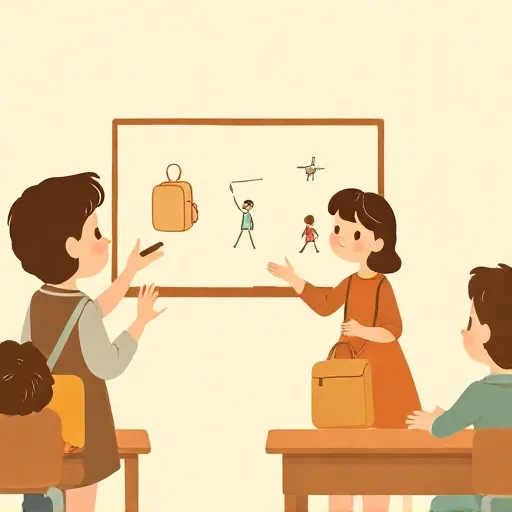
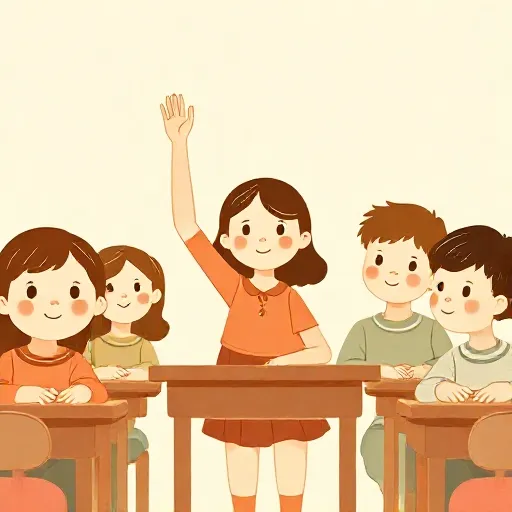
Imagine you’re in class. Your teacher announces, “Each student must leave his backpack outside.” A girl in the back thinks, “What about mine?” The word his seems to point only to boys. But the teacher says it’s meant for everyone. This tiny word sparks a big question: can a word that sounds male ever really be for both girls and boys?
For a long time, English speakers treated he and man as gender‑neutral terms — words that cover all people, regardless of sex. Sentences like “When a student comes into the room, he should pick up a handout” were supposed to include girls. But feminists noticed something strange. In 1981, philosopher Janice Moulton pointed out that this “neutral” meaning falls apart in some sentences. Adele Mercier, in 1995, gave the examples “Man has two sexes; some men are female” and “Man breastfeeds his young.” These sentences sound broken, even though they use the supposed neutral meaning. If man were truly gender‑neutral, they wouldn’t. So something is off: the word isn’t as neutral as it pretends to be.
When Words Make Women Invisible
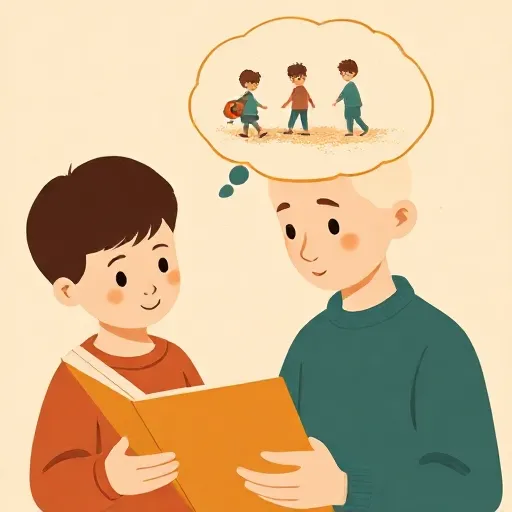
Why should we care if a word isn’t perfectly neutral? Because the way we use words can make whole groups of people seem invisible. Feminist thinkers argue that invisibility of women is a serious concern — when language leads us to overlook women, it becomes harder to notice their experiences and treat them fairly.
Psychologists have tested this. In the 1970s and 1980s, researchers like Wendy Martyna (1978) and John Gastil (1990) ran experiments. They found that when people read sentences like “When a student enters the room, he should pick up a handout,” they were much more likely to picture a boy than a girl. Even though the sentence was meant to include everyone, the word he nudged their minds toward males. If language constantly makes girls and women less visible, it’s not just a grammar mistake — it’s a quiet, everyday unfairness.
Men as the Norm: Why “Manageress” Bothers Feminists
If making women invisible were the only problem, then words that highlight women might seem good. But consider “lady doctor” or the older British term “manageress.” These words draw attention to a woman’s presence in a job — yet many feminists object to them. The deeper issue is maleness as norm: language often treats being male as the standard human type, and being female as a special, unusual case.
Janice Moulton offered a helpful analogy. Think of a brand name like “Kleenex” that becomes the everyday word for all tissues. That sends a message: this brand is the original, the best, the norm. Moulton argued that using he as a generic pronoun works the same way. It takes a male‑specific word and stretches it to cover everyone, which hints that maleness is the standard for humanity. Laurence Horn and Steven Kleinedler (2000) pointed out that historically, the Old English word mann started out gender‑neutral, not male. But the effect today is the same: using he as the default, or calling a woman a “lady doctor,” keeps the idea that men are the real thing and women are a side edition.
How Language Can Shape Thought (and Even Reality)
It’s not just about pronouns. Some philosophers and linguists believe that the language we speak actually shapes how we think — an idea sometimes linked to the Sapir‑Whorf hypothesis. Even if language doesn’t completely control our thoughts, the words we have (or don’t have) can open or close doors.
Until the 1970s, there was no common word for unwanted sexual attention at work. Women who experienced it often felt confused and alone. Then, through feminist discussion groups, they invented the term sexual harassment. Once the problem had a name, it became far easier to talk about, to forbid, and to fight in court. British philosopher Miranda Fricker (2007) calls this kind of gap a hermeneutical injustice — a missing piece in our shared language that makes a whole experience harder to understand and communicate.
Other words carve the world from a male point of view. The term foreplay, for example, treats sex as if the main event is defined by male orgasm, while activities that might lead to a woman’s orgasm are just “preparation.” This can make it tricky for women to describe their own experiences accurately. Some feminists, like Dale Spender (1985), go further and claim that the whole English language is male — built by men to enforce their worldview. Most philosophers today think that’s too sweeping. Deborah Cameron (1998) and others argue there are plenty of biased words, but not every single word is male. The smarter move is to notice specific problems and fix them, rather than imagining we need a totally new language.
Fixing Language: The Quiet Success of “They”
So what can be done? One reform has been a quiet triumph: the rise of singular they. Ann Bodine (1975) showed that people have used they to refer to a single person since at least the 14th century. Only in the 1800s did grammar books start insisting that he was the only correct generic pronoun. Despite centuries of scolding, English speakers kept saying “Somebody left their hat” in everyday conversation. Now, thanks to feminist pressure, even style guides accept it. This reform worked because it didn’t invent a new word — it simply made an old, natural usage official.
Not all fixes go so smoothly. In the late 20th century, many people tried replacing “chairman” with “chairperson.” But researchers Susan Erlich and Ruth King (1992) found that in some workplaces, “chairperson” ended up being used only for women, while men were still called “chairman.” The supposedly neutral word turned into another marker of difference. Eventually, the short form “chair” caught on and now works for everyone. The lesson is that changing words alone isn’t enough — attitudes have to shift too.
Why Words Matter for Everyone (Including You)
The next time you hear “mankind” or “you guys” for a mixed group, try to picture who comes to mind. Does the image include your mom, your sister, your female friends? Language is like the air we breathe — we seldom notice it until it feels stale. Feminists remind us that words aren’t just labels; they help decide who gets to be the main character in the story of humanity.
The good news is that you have a voice in how language grows. Singular they made it into dictionaries because enough people used it. So pay attention to the words you choose. A small change, like saying “everyone” instead of “all of you guys,” can make the world feel a little more fair. The question “Is ‘he’ really for everyone?” is not just about grammar. It’s about who counts.
Think about it
- If a teacher always uses “he” when meaning any student, do you think it changes how girls feel about speaking up? Why or why not?
- Can you think of a time when a word or phrase made you feel left out? What would you rename it?
- Is it ever okay to keep using an old word like “mankind” if everyone knows it’s meant to include women? Why might some still object?