

How Does a Sentence Change What You Know?
The Riddle of the Two Sentences
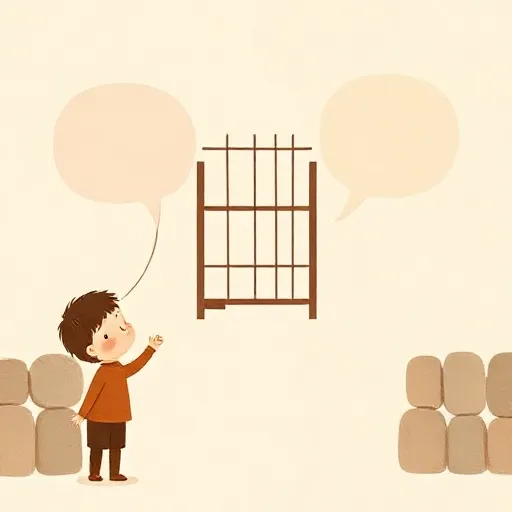
Imagine you’re reading a note. It says: “Mary met a student yesterday. He needed help.” You instantly know that “he” is the student. But your brain just performed a tiny miracle. The two sentences are separate, yet the pronoun reaches back across a full stop like an invisible bridge.
For a long time, philosophers and logicians who studied meaning thought that the job of a sentence was to describe a chunk of reality — a set of truth conditions. “Mary met a student yesterday” is true just in case there is at least one student that Mary met. “He needed help” is true if some male person needed help. But when we conjoin them with a simple “and,” we get a big problem. In standard predicate logic, the existential quantifier “a student” ends up trapped inside the first sentence. The “he” in the second sentence ends up dangling — a free variable that cannot grab onto the student. The two-sentence note suddenly seems to mean something different from the single sentence “Yesterday, Mary met a student who needed help.” That’s bizarre, because you understand them as equivalent.
The philosopher Robert Stalnaker (writing in the 1970s) and others realized that understanding language this way misses something huge. Meaning is not just a picture of the world. It is also an action that changes your mental state. This idea grew into what is now called dynamic semantics.
When Meaning Becomes an Action: Update Semantics
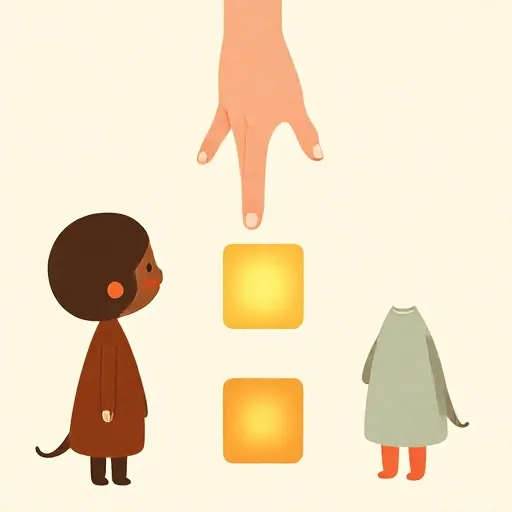
Picture a video game inventory screen. At the start, you know almost nothing about what your character carries. There are eight possible worlds: you could have a hat or not, a sword or not, a key or not. An announcement like “You have a sword” changes that screen instantly. It deletes every world where the sword is absent. The announcement did not just report a static fact — it updated your state of knowledge.
Dynamic semantics takes this as the heart of meaning. A hearer is always in a particular information state — a set of possibilities. When a sentence arrives, it acts like a program instruction, mapping the old state to a new one. The meaning of a sentence is a context change potential: an action type that tells you how to transform any input state into an output state.
This is called update semantics. You can see how it works with even the simplest words. Suppose we boil the world down to three simple claims: “A bird is singing,” “The lights are on,” “It is noon.” There are eight combinations. The atomic sentence “A bird is singing” updates your state by keeping only the four possibilities where that is true. A negated sentence “Not (a bird is singing)” keeps the complement — the four where no bird sings. A conjunction “(Bird sings) and (Lights are on)” first runs the update of the first conjunct, then the second — it keeps the intersection of both. Disjunction keeps the union. So even “and” and “or” become recipes for state change, not just logical glue.
This also makes sense of how computer programs work. The statement z := x updates a machine state by copying the value of register x into register z. Likewise, an existential quantifier like “there exists an x” is like a command: randomly reset the value of x to something new, then test whether a property holds. This comparison comes from the work of Jeroen Groenendijk and Martin Stokhof (1990) and others. In dynamic predicate logic, that reset action is not a simple test — it creates new values that echo through the rest of what you hear.
The Donkey Sentence: A Riddle That Changed Logic

In 1962, the philosopher Peter Geach noticed a strange sentence that breaks classical logic: “If a farmer owns a donkey, he beats it.” This is called a donkey sentence. You understand it instantly: any farmer who owns a donkey beats that donkey. But if you try to translate it into ordinary predicate logic, the pronouns “he” and “it” end up outside the scope of the quantifiers “a farmer” and “a donkey.” You get a logical formula where the variables in the consequent are free, which does not capture the real meaning.
Dynamic predicate logic (DPL) offers a beautiful solution. Instead of treating “a farmer” as a quantifier that lives only inside its little clause, DPL treats it as a reset action that gives the variable x a brand-new value — the farmer — and keeps that value alive for later sentences. The construction ∃x·farmer(x) literally means: take the current context, randomly re‑assign the value of x, and then pass that changed context on to the rest. The word “he” simply tests whether that same x satisfies whatever comes next, like “owns a donkey” and “beats it.” Because the reset is an action, its effect is not confined by brackets. The existential quantifier can bind a pronoun arbitrarily far away. The donkey sentence, in DPL, becomes ∃x·farmer(x)·∃y·donkey(y)·own(x,y) → beat(x,y). This yields exactly the right reading: all possible resets that give a farmer x and a donkey y owned by x are also resets where x beats y.
The pioneer of this approach, Hans Kamp (1981), defined a notion of dynamic entailment: a sentence φ dynamically entails ψ if every updated state that results from processing φ can itself be updated by ψ. So the whole flow of discourse becomes a chain of context changes. This also explains why “Mary met a student. He needed help” automatically means the same as the single sentence — because the existential reset in the first sentence reaches into the second.
Presupposition: The Invisible Baggage Words Carry

Some sentences come with hidden expectations. If I say, “Mary knows that John is late,” I presuppose that John is late. That background fact is not the main point I’m asserting — it is treated as already shared by everyone. But what happens when a presupposition sits inside a larger sentence? Consider “John is late and Mary knows that he is late.” Strangely, the presupposition disappears: the whole sentence does not require that we already believe John is late, because the first conjunct asserts it and updates the context before the second conjunct is evaluated.
Stalnaker thought about this pragmatically: we interpret discourse step by step, and the local context for the second conjunct already contains the information just asserted. But Irene Heim (1983) and others gave this a fully semantic, dynamic twist. In update semantics, the meaning of “and” is not just a logical AND — it is a rule about how to sequence context changes. The local context for the second conjunct is the global context updated with the first conjunct. So the presupposition of “knows” is satisfied automatically. The same goes for disjunction: “Either John is not late or Mary does not know that he is late” has no presupposition because the local context for the second disjunct is the global context updated with the negation of the first disjunct. Dynamic rules for connectives give a clean explanation of presupposition projection — the way presuppositions survive or vanish depending on the larger sentence they are embedded in.
Beyond Words: How Your Knowledge Updates When You Hear a Secret

Once we treat meanings as actions, we can apply the idea far beyond anaphora. Imagine you and two friends are trying to figure out who ate the last cookie. There are many possible worlds: it could be you, your friend Sam, or your friend Alex. Your shared information state contains all those worlds. When Alex announces, “It wasn’t me,” that is a public announcement. It transforms the state: all worlds where Alex ate the cookie are eliminated from everyone’s knowledge, and everyone knows that everyone knows this.
This is the insight behind dynamic epistemic logic (DEL), a framework that combines update semantics with the logic of knowledge. Pioneered by Plaza (1989) and later refined by many, DEL models how communicative actions — announcements, secrets, even lies — change the knowledge of a group. When a presupposition is treated as “it is common knowledge that P,” then uttering a sentence with that presupposition in a context where P is not yet common knowledge can either crash the information state (if the announcement is false) or reveal a hidden mismatch. This shows how dynamics can handle not just grammatical puzzles but the flow of social information.
Why Dynamics Still Matters in Your Everyday Life
Every time you listen to a story, track a conversation, or read a comic, you are doing dynamic semantics without realizing it. You build a mental stage, introduce characters when someone says “a student,” and keep them around even when the next sentence starts. You also notice when someone slips an assumption into a question — like “Why did you stop being so grumpy?” — which presupposes you were grumpy. Recognizing this is a kind of superpower.
Engineers who build chatbots and voice assistants use dynamic ideas to keep track of who “she” refers to across a whole dialogue. Philosophers study how your beliefs and knowledge shift when you hear evidence, and they model those shifts as updates on sets of possibilities. The dynamic turn in semantics shows that meaning is not just a frozen snapshot of the world. It is a live, flowing process that rewrites your mind, one sentence at a time.
Think about it
- If every sentence you hear secretly updates your mental state, what might happen if two people have completely different starting states but both think they understood each other?
- Suppose a friend says, “I’m sorry I forgot your birthday again.” Could their sentence be doing more than one kind of update at once — and how would you detect that?
- Can you design a conversation where one sentence contains a hidden presupposition that the other person is forced to accept just by replying “yes” or “no”? What would that tell you about the power of dynamic meaning?