
How Do You Know What 'It' Means? The Hidden Mental Maps of Language
A Sentence That Makes You Stop and Think

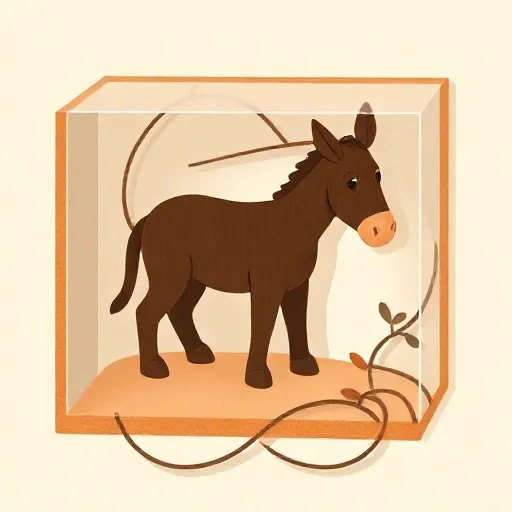
You read a short joke: “If a farmer owns a donkey, he beats it.” You pause. Who is “he”? Who is “it”? You just know: the farmer beats the donkey he owns. Your mind connected the pronouns to the right characters without any effort. But how?
Philosophers have been scratching their heads over sentences like this for centuries. In the Middle Ages they already called them “donkey sentences” — sentences where a pronoun seems to reach back to an indefinite expression like “a donkey,” even though that expression is buried inside an “if” clause. In the 1960s a British philosopher named Peter Geach (20th century) brought the puzzle back, and it refused to go away.
The problem isn’t that we can’t understand these sentences. We understand them perfectly well. The problem is explaining how we understand them. Traditional logic struggles to show the hidden connection between the pronoun and its antecedent. And that struggle tells us something surprising: maybe meaning isn’t just a list of rules about words — maybe it’s a process of building little movies in our heads.
Why Old Logic Couldn’t Catch the Donkey
To see the difficulty, compare two sentences:
- No farmer beats his donkey.
- If a farmer owns a donkey, he beats it.
In (1), the pronoun “his” is bound by the quantifier “no farmer.” Logically, it’s like saying: for every farmer, that farmer doesn’t beat his own donkey. The pronoun works like a variable that gets scooped up by the quantifier. That’s a neat explanation, and it depends on the pronoun sitting in just the right spot in the sentence — inside the same clause, where the quantifier can “see” it.
Sentence (2) breaks that pattern. “A donkey” appears inside the “if” part. The pronoun “it” is in the main part. Old‑school syntax says a quantifier can only bind a pronoun from a position called c-command — roughly, the quantifier must sit higher in the sentence tree than the pronoun. Here, “a donkey” is too deeply tucked away; it cannot c-command “it.” So if we treat “a donkey” as a quantifier, the logical machinery fails to explain how the pronoun gets its meaning.
Worse, the meaning we hear is universal: every donkey the farmer owns is beaten. But “a donkey” looks like an existential (“there is at least one donkey”). Somehow it ends up acting like “every donkey.” A theory that simply declares “a donkey” becomes universal when it’s in an “if” clause is just papering over the mystery. We need a deeper idea about how language unfolds in the mind.
Hans Kamp’s Mental Whiteboard

In the early 1980s a Dutch‑born philosopher and logician, Hans Kamp (20th century), proposed a radical new picture. When you hear a story, your mind doesn’t just store isolated word meanings. It builds a discourse representation structure (DRS) — a sort of mental storyboard. Each time a new character or event is mentioned, you add it to the storyboard, and you update the connections between the pieces.
The basic building blocks of a DRS are discourse referents. Think of them as blank name‑tags for objects under discussion. When you hear “a farmer,” you create a new name‑tag for a farmer. When you hear “a donkey,” you create a name‑tag for a donkey. Then the verb “chased” adds a note that the first name‑tag chased the second.
Now suppose the next sentence is “He caught it.” Kamp’s system first builds a mini‑DRS for this new sentence, with two new name‑tags marked as anaphoric — they need to be linked to something already on the board. Then it merges this mini‑DRS with the one you already had. Finally, you connect the anaphoric tags to the earlier farmer and donkey name‑tags. The result is a single coherent picture: a farmer chased and caught a donkey.
That’s how DRT handles cross‑sentence anaphora. But the truly brilliant move is how it handles donkey sentences inside a single sentence — like “If Pedro owns a donkey, he beats it.” Here the “if” creates a complex condition: a box that contains the farmer‑and‑donkey storyboard, and an arrow pointing to another box where the beating happens. The rule for “if” says: every way of filling in the first box must be extendable to a way of filling in the second box. That automatically makes the indefinite “a donkey” act like a universal quantifier — not because it secretly is one, but because the surrounding structure forces that interpretation. The donkey name‑tag inside the “if” part is accessible to the pronoun in the result part, so the link can be made.
Accessibility is the invisible glue. A name‑tag is accessible only if the semantics of the DRS allow the pronoun’s embedding function to “see” it. If a name‑tag is introduced inside a negation box, like in “Pedro doesn’t have a donkey. It is grey,” the donkey is locked inside a bubble. No way to reach it from outside — exactly what we find: the second sentence sounds broken. Accessibility isn’t a made‑up rule; it falls out of the truth conditions of the representation language. That’s what gives the theory its bite.
Pictures vs. Formulas: A Philosopher Showdown

DRT is a representational theory: meaning lives in the mental storyboards, not directly in sentences. And it is non‑compositional, because the meaning of a complex expression isn’t simply built from the meanings of its parts — it depends on the whole discourse context and on anaphora resolution steps that happen after the pieces are assembled.
This sparked a loud debate in the 1980s. Many philosophers believed that meaning should be compositional — that the meaning of a whole is determined by the meanings of its words and the way they are combined. They worried that DRT smuggled in mysterious mental pictures. A new wave of dynamic semantics showed that you could get the same donkey‑anaphora results without explicit DRSs. For example, Dynamic Predicate Logic (DPL) redefined meaning as a relation between variable assignments — essentially, a set of instructions for updating your stock of information. No mental whiteboard needed, just abstract mathematical objects.
But Kamp’s representationalism refused to vanish. Even if you can do without explicit DRSs for basic anaphora, the extra level of representation turns out to be extremely useful when you tackle trickier phenomena. Handling attitudes like belief and desire, for instance, seems to require structured mental representations — otherwise you can’t explain why someone might believe “If a farmer owns a donkey, he beats it” without also believing everything that logically follows from it. The mental storyboard gives just the right amount of detail, and no more.
So the showdown ended not with a knockout, but with a truce. Both sides agree that something dynamic is going on. The representationalist still thinks the best way to describe that dynamism is by taking the mental‑map metaphor seriously.
Why Your Brain’s Anaphora Tracker Still Matters
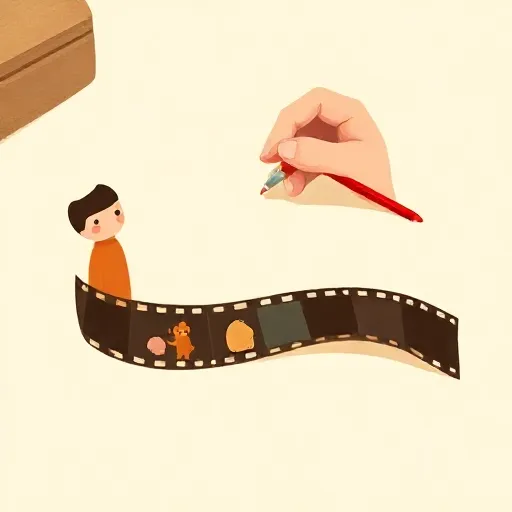
The ideas behind DRT reach far beyond donkeys. When you read a story or watch a film, your brain is constantly building and updating a mental model of who exists, what happened, and when. DRT gave philosophers a precise tool for studying that process.
Tense works like anaphora. “Yesterday, Pedro tried to kiss Maria. She slapped him.” The past tense in “slapped” points back to the event of the kissing attempt, anchoring it right after. Presuppositions do something similar. If I say, “It isn’t in the stable that Pedro beats his donkey,” I still assume Pedro has a donkey — the background information projects through the negation like a pronoun searching for an antecedent, sometimes finding one in the discourse history and sometimes politely creating a new one.
Even more importantly, the theory hints at why understanding language feels like building a world. You’re not just decoding words; you’re keeping score of characters, objects, times, and hidden assumptions. The philosopher Hans Kamp didn’t invent that idea — psychologists had always suspected it. He gave it the kind of logical precision that lets us ask sharper questions: how big is a mental map? what can and can’t be reached from a given point? and what happens when two listeners build different maps from the same sentence?
Next time a joke trips you up with a pronoun, or a friend says “that one” without naming what they mean, you’ll know: your brain just started drawing another picture.
Think about it
- If you build mental maps as you listen, could two people hearing the same story end up with different maps? Would that mean they understood it differently, or that one of them is wrong?
- When you hear a pronoun and can’t immediately find what it refers to, your brain sometimes makes a guess. Does that mean we occasionally invent things that weren’t actually said? Is that a problem for communication?
- Could a video game that tracks characters across scenes teach us something about how human minds handle language — or is a computer’s map fundamentally different from a human’s?