
Does 'I Know' Change Meaning When Someone Raises the Stakes?
A Day at the Zoo: One Animal, Two Answers

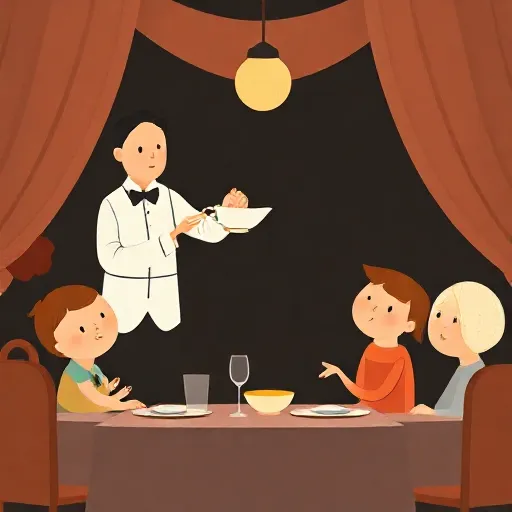
It’s a sunny afternoon and you’re at the zoo with a friend. You point at the striped animal standing in the enclosure. “I know that’s a zebra,” you say with confidence. Then your friend squints. “But can you rule out the possibility that it’s a cleverly painted mule?”
Suddenly you hesitate. You can’t be absolutely certain it’s not a trick. Do you still know it’s a zebra? Something strange just happened: the claim that felt true a moment ago now feels shaky.
Philosophers have noticed that our willingness to say someone “knows” can flip depending on the questions being asked. A word we use every day turns out to hide a puzzle. Some thinkers think this puzzle reveals that “know” is context-sensitive — that what it takes for a sentence like “She knows it’s a zebra” to be true shifts with the conversation. This view is called epistemic contextualism. It doesn’t say knowledge itself is flimsy. It says the truth conditions of the sentences we use to talk about knowledge can change.
The Sliding Scale of “Know”
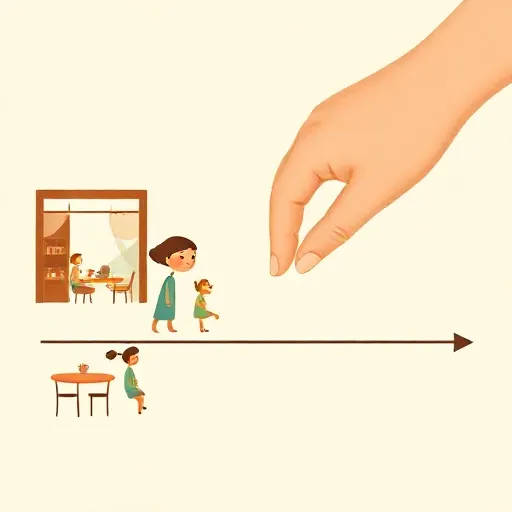
In the 1970s, the philosopher Gail Stine (20th century) suggested that it’s part of our ordinary concept of knowledge that tighter demands are needed in some situations than in others. If we’re just chatting about the weather, the standards for saying “I know it’s raining” are relaxed. If a pilot is deciding whether to take off, the same sentence might require far stronger evidence.
Contextualists compare “know” to words like “tall” or “flat.” If you say “Kansas is flat,” that’s true in a conversation about driving across the United States — you mean there aren’t any serious mountains. But if a geologist joins the table and starts inspecting tiny bumps, suddenly your claim might feel false. The word “flat” doesn’t have one fixed meaning; its truth depends on what yardstick the speakers are using. Similarly, a contextualist says that when you utter “I know the flight stops in Chicago,” the proposition you express depends on the epistemic standards in play. Change the strictness of those standards, and you change what the sentence says.
This is not the same as saying knowledge is just an opinion. It’s a claim about how language works. Just as “I’m hungry” means something different depending on who says “I,” contextualists argue that “S knows that p” means something different depending on the context of the person who attributes the knowledge — their interests, worries, and background assumptions.
The Brain in the Vat: Why Skepticism Feels Unbeatable
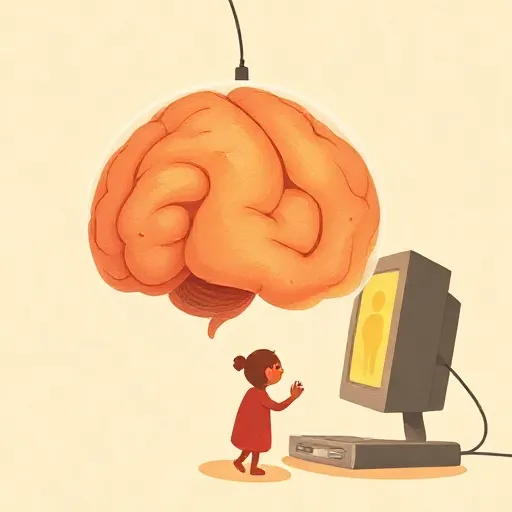
Here’s an argument that keeps philosophers awake at night. Suppose you claim to know something ordinary, like “I have hands.” Now imagine a far-fetched skeptical hypothesis: maybe you are just a brain in a vat, fed experiences by a supercomputer, and none of your body really exists. Can you prove that false? Probably not — any evidence you offer (I can wave my hand!) would be exactly what a brain in a vat would experience. So it seems you don’t know you’re not a brain in a vat.
Next, consider the rule called closure: if you know one thing, and you know it logically leads to another thing, you should know the second thing too. So if you don’t know you’re not a brain in a vat, and having hands would mean you aren’t one, then you can’t know you have hands either. The argument looks like this:
- I don’t know I’m not a brain in a vat.
- If I don’t know that, then I don’t know I have hands.
- Therefore, I don’t know I have hands.
That conclusion feels wildly wrong. But the premises seem airtight. This puzzle — a paradox — is exactly the kind of trouble that epistemic contextualism claims to solve.
According to contextualists such as Stewart Cohen (20th–21st century), Keith DeRose (1962– ), and David Lewis (1941–2001), the skeptic’s argument works by secretly cranking up the epistemic standards. By even mentioning the brain-in-a-vat possibility, the conversation shifts to a context where you need extraordinarily strong evidence — evidence that eliminates every far-out scenario. In that context, the sentence “I don’t know I have hands” expresses a truth. But in ordinary, low-stakes chat, the standards are much lower, and there a sentence like “I know I have hands” expresses a truth too. The two claims do not contradict each other because they are not about the same thing; they express different propositions in different contexts.
The Airport Test: High Stakes, High Standards

Contextualists don’t just rely on wild skeptical scenarios. They find the same pattern in everyday life. Here is a case from Cohen:
Mary and John are at the Los Angeles airport, hoping to catch a flight to New York with a quick stop in Chicago. They overhear a passenger named Smith say he knows the flight stops in Chicago because he checked his printed itinerary. That seems fine. But Mary and John have a crucial business meeting at the Chicago airport. Mary suddenly worries: What if the itinerary contains a misprint? What if the schedule changed last minute? In that high-stakes situation, they agree that Smith “doesn’t really know” the plane will stop in Chicago.
Did Smith’s evidence suddenly get worse? No. Yet many people feel that Mary and John now speak the truth when they deny knowledge, just as Smith spoke the truth a moment ago when he claimed it. Contextualism offers a tidy explanation: the practical importance of being right raised the epistemic standards, so the later denial and the earlier claim both express true propositions — just in different contexts.
Without contextualism, we are pushed into awkward choices. We would have to say either that Smith didn’t know all along (which drags us toward skepticism about everyday knowledge) or that Mary and John are simply wrong when they deny knowledge (even though denying it feels perfectly sensible). Contextualism dodges both horns.
The Blind Spot: Why Don’t You Notice the Shift?

Not everyone is convinced. A major objection to epistemic contextualism is that we don’t feel the shift in meaning the way we do with other context-sensitive words. When you say “Kansas is flat” and I say “Kansas is not flat because look at those hills,” we can quickly clarify: “Oh, I meant no mountains.” The disagreement dissolves. But in the airport case, and especially in skeptical arguments, the two claims still feel like a head-on clash. The skeptic seems to be directly attacking our ordinary convictions, not just using different words.
Contextualists reply that we are often semantically blind to certain hidden flexibilities in our own language — just as many people don’t realize that “summer month” depends on whether you’re in the Northern or Southern Hemisphere. They say the mistake is thinking that because the arguments feel like a fight, there must be a single, unchanged proposition in dispute. They also point out that no theory of knowledge gets off scot-free; every view has to explain why ordinary people find some claims contradictory when philosophers say they aren’t.
Still, the “why-don’t-we-notice?” worry has real force. If speakers systematically fail to track the context-sensitivity of their own words, then the contextualist must walk a tightrope: we are sharp enough to follow the context-dependent practice in daily life, yet deeply confused when we reflect on it. That tension keeps philosophers busy.
So What? The Stakes in Your Own Life

You don’t have to live in a philosophy classroom to stumble over this puzzle. Think about a time you told a friend you knew the movie started at 7. Someone else asked, “Are you absolutely sure? The website might be wrong.” That tiny shift in attention could make you say, “Okay, I don’t truly know — better check again.” Whether or not you are a contextualist, you’ve felt the pull of sliding standards.
The debate matters because it shapes how we handle disagreement. If Mary and John are just using a tougher yardstick than Smith, their “disagreement” isn’t a real clash — it’s more like two people using different radio frequencies. The contextualist says that clears up a lot of bickering. The invariantist — someone who denies that the truth conditions of “know” shift — thinks that view papers over genuine conflicts and ignores the fact that some evidence really is too weak.
Philosophers haven’t settled this fight. They keep sparring over the data: everyday conversations, courtroom standards, lottery tickets, and even how we store information in memory. But the question at the heart of it all is one you can explore yourself: When you say you know something, are you reporting a stable fact in the world, or are you — without realizing it — tuning the meaning of your words to the conversation around you?
Think about it
- Imagine you tell a friend you know your class starts at 9:00 because you saw the schedule yesterday. They reply, “But what if the schedule was updated overnight?” Would that change what you count as knowing? Could both your original claim and your later hesitation be reasonable?
- If different situations really call for different standards of “knowing,” should a courtroom require the same proof as a casual conversation between friends? Why or why not?
- Have you ever walked away from a discussion thinking, “I thought I knew, but now I’m not so sure”? What made you change your mind, and does that tell you anything about how the word “know” works?