Can a Plant Feel? The Scientist Who Made the Universe Alive
A Blind Philosopher Steps into the Light
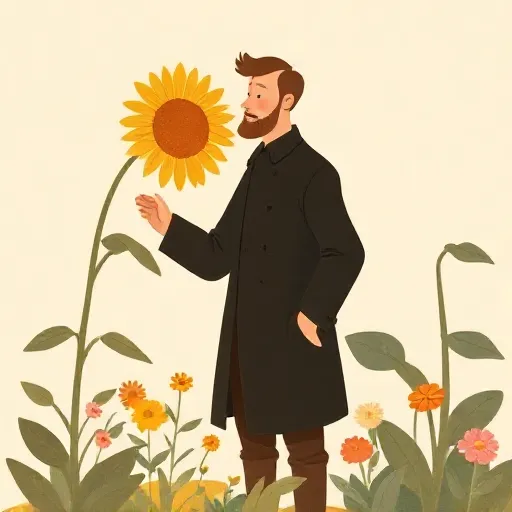
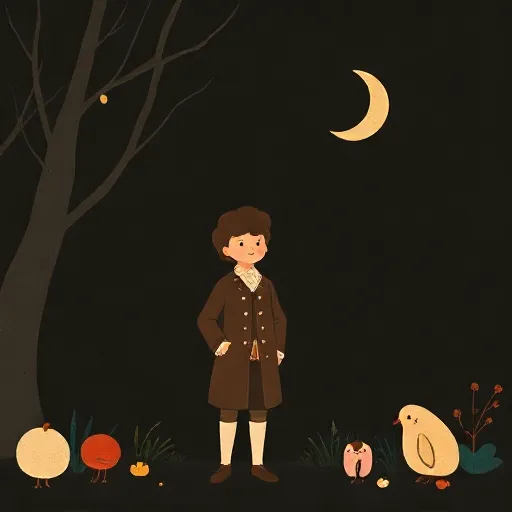
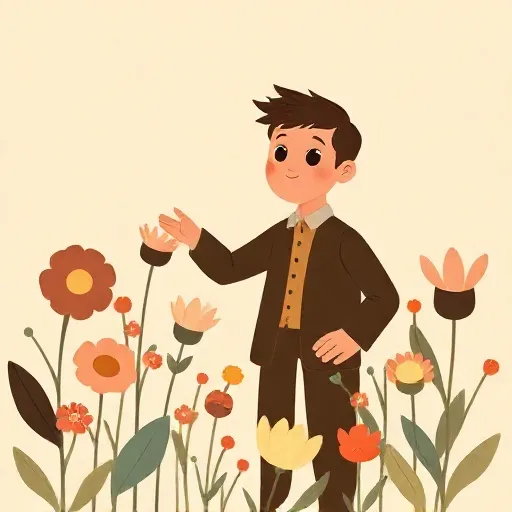
On October 5, 1843, Gustav Theodor Fechner (1801–1887) did something that seemed impossible. For nearly four years he had lived in a darkened room, his eyes too sensitive for even the faintest light. He couldn’t read, couldn’t work, could barely speak to anyone. Yet on that autumn afternoon he willed his eyes open, wrapped himself in a coat, and stepped into his garden. What he saw — and felt — would change his life. The flowers seemed to shine from inside, as if they carried their own sun. Later he wrote: “The whole garden seemed to me transformed, as if not I but all of nature were arisen anew; and I thought, it is only a matter of opening my eyes again to allow a nature grown old to become young again.”
Fechner was a physicist, a scientist who had spent years measuring electricity and the tricks light plays on the eye. But from that day on he was also a fierce believer that the world is not just a machine. He became convinced that everything alive — plants, planets, even the whole universe — has a kind of inner life. He called this idea panpsychism, the view that consciousness exists all through nature, not only in brains.
The Double Life of Gustav Fechner

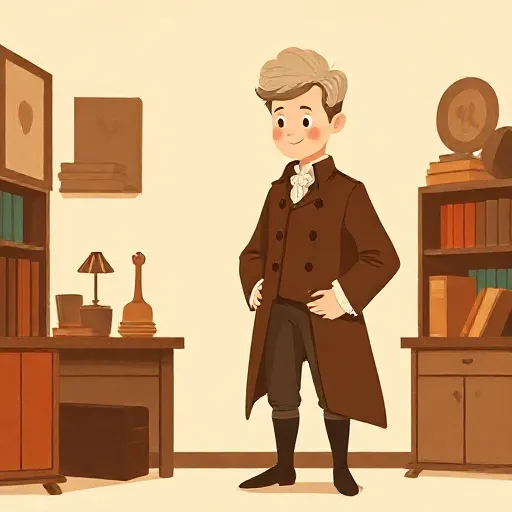
Fechner grew up with a foot in two worlds. Born the son of a village pastor, he devoured science at the University of Leipzig. He translated French physics textbooks, studied electricity, and helped prove Ohm’s law. At the same time he was enchanted by the romantic Naturphilosophie of his age — big, sweeping ideas that tried to capture the whole cosmos in one vision. During his twenties he even wrote satires under the pen name “Dr. Mises,” poking fun at doctors and philosophers who made grand claims without ever running an experiment.
This tug-of-war never let up. One half of Fechner demanded hard numbers and careful observation. The other half craved a complete picture of reality, a story that could connect stars, soil, and souls. His mental breakdown in 1839 was partly the result of that strain — years of overwork, translating and editing just to earn a few coins, left him physically and emotionally shattered. But when he emerged from his dark room in 1843, he was determined to settle the argument inside himself. He would use the tools of science to build the very metaphysics he had been warned against.
Why Shouldn’t Plants Have Souls?
Fechner’s first big step was a book called Nanna, or On the Soul Life of Plants (1848). He asked a simple question: what evidence do we actually have that plants are not conscious? Most people believe that other humans have minds because they talk and act like us. We even allow that a worm or a beetle has a rudimentary mind, because it moves and responds to the world. So why do we draw a hard line at the plant kingdom?
Fechner argued that the usual reasons don’t hold up. One common objection is that plants have no central nervous system. But Fechner pointed out that nature often finds more than one way to solve a problem. If you cut all the strings of a violin, it makes no music — yet you can still make music with a flute. Maybe plant fibers do the same work that nerves do in animals, just in a different form.
Another objection is that plants don’t move on their own. They sit in one spot and grow upward. But Fechner replied that moving from place to place is not the only kind of activity that goes with a mind. Plants grow toward light, their roots seek water, and their leaves fold at night. Besides, even animal movements obey physical laws — being physically caused does not rule out being felt on the inside.
Fechner admitted a weak point in his own argument: he never spelled out exactly what he meant by “soul” or “consciousness.” Sometimes he talked about feeling and desire, other times about purposing toward a goal. But he insisted the safer guess was that plants have some inner life, even if it is very different from ours. Analogies, he said, don’t demand that two things be exactly alike — only alike in the important ways.
Is the Earth a Giant Living Thing?
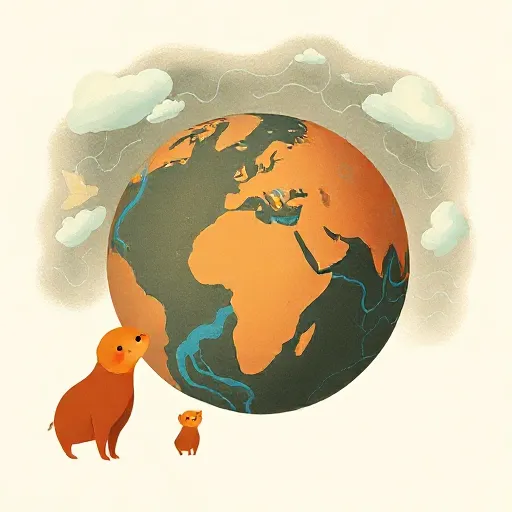
Three years later, in Zend-Avesta, Fechner took the argument much further. If plants have souls, what about the planet they grow on? He began by comparing the human body to the Earth. Both are self-contained systems of solid, liquid, and gas. Both go through cycles and develop over time. The Earth even has something like a circulatory system, with rivers and ocean currents and winds that move water and air around the whole globe. Because the Earth is an even more complicated, more self-sufficient whole than a human body, Fechner reasoned, it is an organism — and if an organism, why shouldn’t it have a soul too?
He then climbed the ladder all the way up. The Earth is just one body in a solar system, which is part of a galaxy, which is part of a universe. If each smaller whole has an inner life, then the largest whole — the cosmos itself — must be a single, vast mind. Fechner called this ultimate mind God, but it was a god who lives inside space and time, whose body is the entire natural world. He insisted this was not a leap of blind faith, but a conclusion built step by step on analogies drawn from everyday experience.
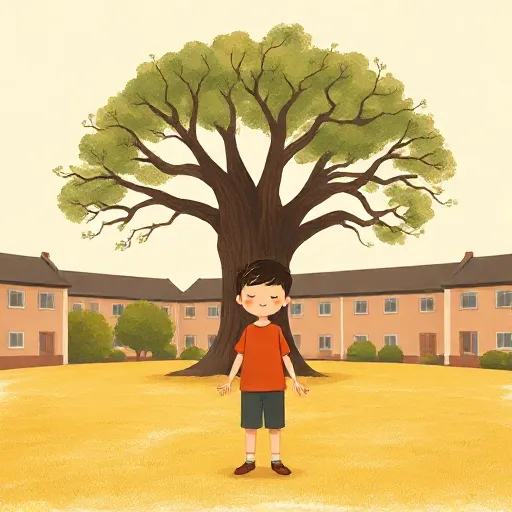
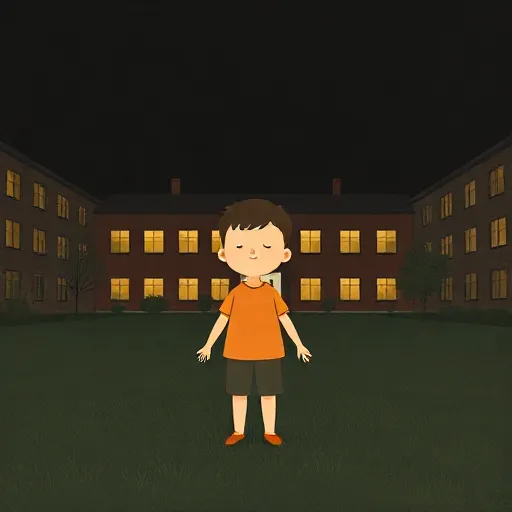
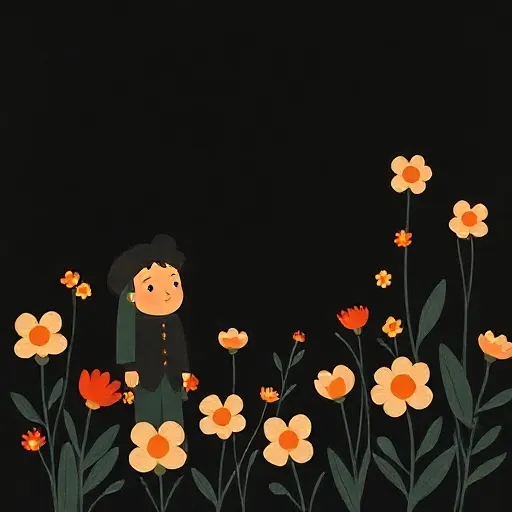
Critics rolled their eyes. Materialists of the time thought Fechner had let his childhood religion sneak back in through the laboratory window. Fechner shot back that materialism was a night view that drains the world of color and meaning, while his own day view made sense of both scientific data and the deepest human longings.
One Thing, Two Views
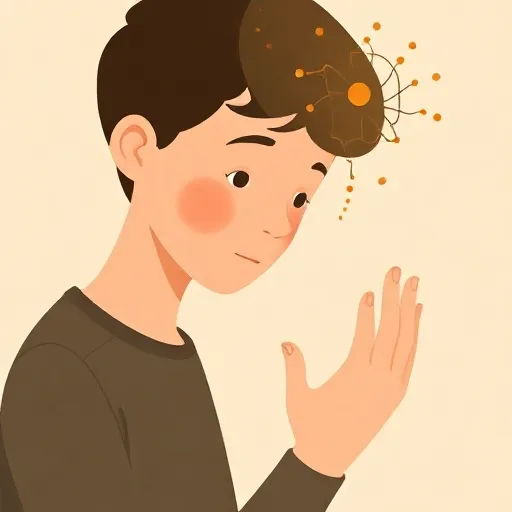
Fechner also offered a clever theory about what a mind even is. When you look at a friend, you see a body — a face, a voice, a set of movements. When you look at yourself from the inside, you experience thoughts, feelings, and sensations. Fechner believed these are not two separate things, but two aspects of one and the same reality. The physical body is how a person appears to an outside observer; the mind is how that same reality appears to itself.
This dual-aspect theory meant Fechner didn’t have to choose between being a scientist who measures brains and a philosopher who believes in souls. He could study the laws that connect the two sides without pretending one is more real than the other. His massive book Elements of Psychophysics (1860) tried to do exactly that — to find precise mathematical rules about how changes in the physical world match changes in what we feel. He even proposed a psychophysical law: every mental event has a physical expression. Some later readers thought this sounded awfully close to materialism, but Fechner called himself “very idealist” on the very same page. He wanted a balance.
Why a 19th-Century Idea Still Echoes
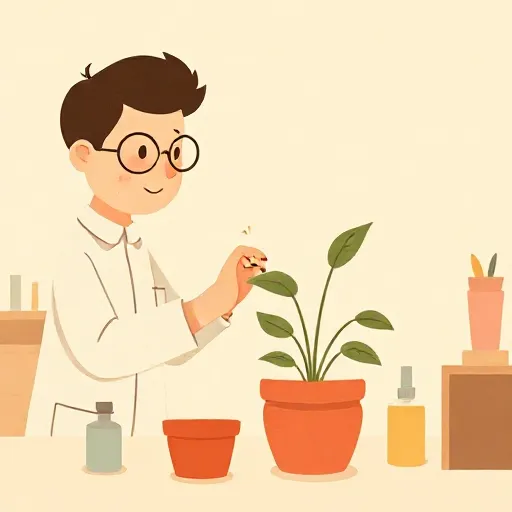
Fechner’s panpsychism was often treated as a curiosity, the kind of thinking you get when a brilliant mind spends too much time in the dark. But his core question hasn’t gone away: where does consciousness stop? For a long time, the answer seemed obvious — only animals with complex brains count. Yet a growing number of biologists and philosophers are now trying to test whether plants might have something like perception, memory, or even a primitive form of awareness. Leaves can distinguish between the touch of wind and the nibble of a caterpillar. Root tips make choices about which way to grow. None of this proves plants are conscious, but it makes Fechner’s demand for a careful analogy look less like fantasy and more like foresight.
The deepest move Fechner made was to treat science not as a cage for experience, but as a ladder. He believed you could start with careful observations of what things look like from the outside and work your way, rung by rung, toward a guess about what they might feel like from the inside. Whether or not we buy the whole ladder — from leaf to planet to cosmos — his method still invites us to wonder. The next time you sit under a tree or watch morning glories twist toward the sun, you are standing inside Fechner’s old question. And it’s still wide open.
Think about it
- If you could know for certain that plants feel pleasure and pain, how would that change the way you garden, eat, or treat the trees in a park?
- Fechner thought the Earth might have a mind of its own because its parts work together like a body. What do you imagine it would be like to be the Earth?
- How could someone design an experiment to test whether a plant is conscious? What clues would you look for?