What Happens When Philosophers Start Running Experiments?
The Armchair and the Intuition

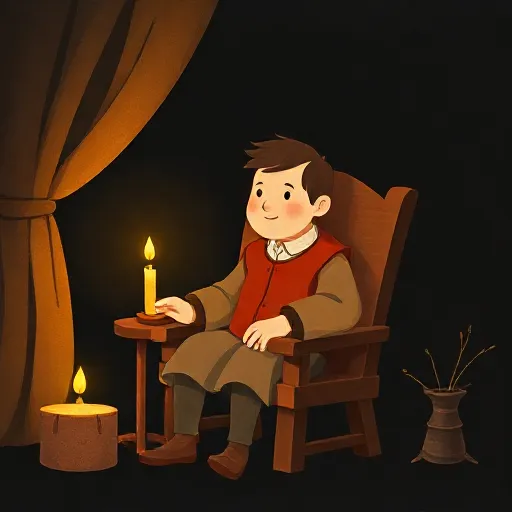
It is a sunny afternoon in Athens, around 399 BCE. Socrates (470–399 BCE) is sitting with a young mathematician named Theaetetus. “What is knowledge?” Socrates asks. The two of them start tossing out answers: knowledge is true belief, knowledge is true belief with an explanation. Each time Socrates offers a scenario — a courtroom lawyer persuading a jury to believe something true, but not really knowing — and Theaetetus feels the pull. “No,” he agrees, “that wouldn’t count as knowledge.” They are using their gut feelings, or what philosophers call intuitions, to test a definition. Socrates never asks, “What do most Athenians think?” He expects the right answer to hold everywhere, because knowledge itself has one nature.
For more than two thousand years, many philosophers worked this way. Inside epistemology (the study of knowledge), ethics, and metaphysics, they built thought experiments and checked their own intuitions. If a proposed rule about right and wrong clashed with a strong gut feeling about a situation, they took that as a reason to revise the rule. The method seemed natural: why would we trust anything else to guide us toward the truth about concepts like knowledge, free will, or happiness?
Then, in the early years of the 21st century, a group of philosophers decided to stop sitting in the armchair and start collecting data. They called their approach experimental philosophy, and their first big move was to test whether ordinary people’s intuitions actually lined up with what the tradition expected.
The Surprise in the Data: Intuitions Don’t Always Agree

Experimental philosophers began by running simple surveys. They gave volunteers short stories — the same kinds of cases that had been argued about for decades — and asked questions like “Does the character know the bank will be open?” or “Is the person morally responsible?” The results were unexpected.
One early study by Weinberg, Nichols, and Stich (2001) suggested that East Asian students and Western students gave different answers to famous puzzles about knowledge. Another by Machery and colleagues (2004) found cultural differences in how people thought about the meaning of names. Some studies even turned up differences between men and women. If such diversity was real, it posed a problem. The traditional method assumed that intuitions about knowledge point toward a single, universal truth. But if different groups have opposite intuitions, which ones should we trust? You can’t just pick your own culture’s answers without a reason.
A second kind of trouble came from sensitivity to silly things. Swain, Alexander, and Weinberg (2008) discovered that the order in which people read cases changed their judgments. Other researchers found that even the mood you’re in can shift your intuitions about morality or knowledge. The negative program in experimental philosophy uses these findings to argue that the armchair method is unreliable. As the philosopher Jonathan Weinberg (working in the early 2000s) and others argued, if you can’t tell from your armchair which of your gut feelings have been twisted by an irrelevant factor, then relying on them is shaky ground.
Not everyone agrees, of course. Some later studies failed to replicate the big cultural differences, and some effects turned out to be tiny — the difference between a 2.2 and a 2.5 on a seven-point scale. A few philosophers even suggest that sensitivity to context might not be a mistake; hearing one case could give you legitimate new evidence about the next. The debate is still very much alive.
Do Professional Philosophers Have Special Gut Feelings?

If ordinary people’s intuitions are a mess, maybe that doesn’t matter. Perhaps what counts are the intuitions of trained philosophers — people who have spent years wrestling with hard cases. This is called the expertise objection. The claim is that professional philosophers develop a special sensitivity, so their gut feelings are more trustworthy than the snap judgments of someone who has never opened a philosophy book.
Experimental philosophers took this challenge seriously and ran studies on philosophers themselves. The results were sobering. Schwitzgebel and Cushman (2012) found that professional philosophers, just like everyone else, gave different answers to moral dilemmas depending on the order in which the scenarios were presented. Other studies showed that philosophers’ ethical judgments were influenced by their personality traits and by whether they were imagining themselves as the actor or the observer in the story. So far, the evidence suggests that philosophical training does not create a bubble of protection against the kinds of biases the negative program highlights.
Defenders of the expertise objection have a reply, though. They say the value of expert intuitions doesn’t come from the person who has them but from the process of sustained reflection — thinking carefully about a case for a long time, not just answering a survey. On this view, what experimental philosophers measure is something quick and surface-level, while real philosophical insight comes from slow, careful judgment. That argument pushes the question back: can experiments ever capture the kind of reflective intuition that matters?
Are We Really Free? The Experiments That Split Common Sense
One area where experimental philosophy has done more than critique the old method is the free will debate. For centuries, philosophers have argued about whether free will is compatible with determinism — the idea that every event, including your choices, is completely caused by prior events and the laws of nature. Compatibilists say yes, we can still be free and morally responsible even in a deterministic world. Incompatibilists say no, if your actions were fixed by the past, you can’t be truly responsible.
Experimental philosophers like Shaun Nichols and Joshua Knobe (both working in the early 2000s) wondered: what do regular people actually think? They gave volunteers vivid stories set in a deterministic universe. In one, a supercomputer can perfectly predict all future human behavior, and a man robs a bank. Surprisingly, most participants said the man was still morally blameworthy — a compatibilist answer. When other studies emphasized that in a deterministic world every action is inevitable given the past, people still tended to blame a specific criminal.
But when asked the abstract question “Is it possible in general for anyone in such a universe to be morally responsible?”, many flipped to an incompatibilist answer. It seems people hold both kinds of intuitions at once, depending on how the question is framed. One theory is that some people misinterpret determinism as “your mental states don’t matter” — a confusion called bypassing. If you think your thoughts have no effect on what you do, of course you’ll deny free will. But experiments using statistical models have suggested the opposite order: people first judge that there is no free will, and then they infer bypassing.
The back-and-forth has not settled the ancient dispute, but it has shown that the ordinary understanding of freedom is more tangled than either side assumed. That matters, because legal systems and everyday blame practices rest on some notion of responsibility that even a twelve-year-old can feel — and yet, our gut reactions might not be tidy.
When Right and Wrong Warp What You See

Among the most surprising findings in experimental philosophy is that moral judgments seep into judgments that look purely factual. Take a classic study by Joshua Knobe (2003). Participants read about a CEO who is deciding whether to start a new project. In one version, the project will harm the environment; the CEO says he doesn’t care about that, he just wants to make profit. The harm happens. In another version, the project will help the environment, and the CEO again says he only cares about profit. The help happens.
When the outcome was harmful, most people said the CEO brought it about intentionally. When the outcome was helpful, they said he did not bring it about intentionally. The only difference was whether the side-effect was morally bad. This effect shows up for many concepts: people are more likely to say someone knew something, was truly happy, or caused an outcome when a bad action is involved.
Why does this happen? That question has sparked a small industry of rival theories. Some researchers think the effect is just a mistake — we are so eager to blame the CEO that our judgment of the plain facts gets distorted. Others think it’s a subtle effect of language, not of thinking: we use words like “intentionally” differently when strong moral reactions are in play, but our deeper concepts stay clean. A third family of views argues that morality is actually part of our understanding of concepts like happiness or causation. On that picture, you can’t fully grasp what it means to be happy unless you factor in whether the life is a good one.
No consensus has emerged, but the debate is forcing philosophers to re-examine how the human mind carves up the world. And it reveals something directly relevant to you: when you judge whether a friend did something on purpose or whether a classmate really knows an answer, your moral feelings might be quietly doing some of the work.
Why Should You Care? Your Own Intuitions Might Be Tricking You
Experimental philosophy doesn’t just matter to people in university offices. It matters every time you think, “She knew that would happen,” “He did it on purpose,” or “That’s not fair.” These judgments shape who gets punished, who gets forgiven, and even how you see yourself. The experiments show that such judgments are not just pure, objective readings of the facts — they can be pushed around by the order you hear things, by your mood, and by the moral weight you attach to an action.
That doesn’t mean you should stop trusting yourself entirely. But it does mean you have a reason to pause. When you feel absolutely sure that someone knew a secret just because the outcome was bad, you might ask: Would I still say they knew it if the outcome were good? The same question Socrates asked — What is knowledge? — is still alive in your own hallway conversations and online arguments. Experimental philosophy suggests that answering it well requires more than a quick gut check. It requires noticing that your gut has its own history, its own biases, and maybe its own hidden sense of right and wrong.
So the next time you hear a philosophical question that seems obviously true or obviously false, remember those survey-takers at the computer. The answer that pops into your head might not be the universal voice of reason. It might be, at least in part, the voice of the armchair you didn’t know you were sitting in.
Think about it
- If a scientist could perfectly predict every choice you will ever make, would it still be fair for your parents or teachers to praise or blame you for those choices?
- Think of a time you thought someone did something “on purpose.” Would your judgment change if the outcome had been wonderful instead of upsetting?
- Suppose two cultures disagree completely about whether a ghost story counts as knowledge. Can both be right, or must one be wrong — and how would you decide?