Are There Things That Don't Exist? The Ronald McDonald Puzzle
The Mystery of the Missing Clown

It’s a rainy afternoon, and you’re at McDonald’s with a friend. You look at the colorful plastic figure of the restaurant’s clown mascot and say, “Ronald McDonald doesn’t exist.” Your friend raises an eyebrow. “Then who exactly are you talking about?”
That simple question opens a door to one of philosophy’s stickiest puzzles. A sentence like “Ronald McDonald does not exist” seems perfectly true and easy to understand. But if Ronald McDonald really doesn’t exist, how can we use his name to say something about him? What does the name even point to? Philosophers call these singular negative existentials: sentences that deny existence to a particular individual. They have been arguing about them for more than a century, because they force us to ask: What does it mean to exist at all?
Frege and Russell: Existence Is Not a Property of Things
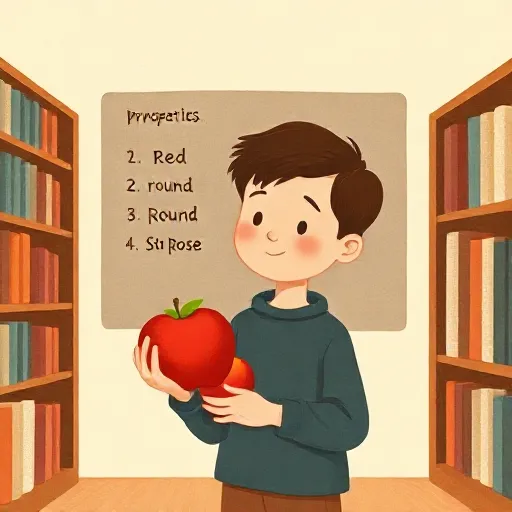
Imagine a shiny red apple. Now imagine a shiny red existing apple. Your mind draws a blank — any red apple already exists, otherwise it couldn’t be red. Adding “exists” seems to say one thing too many. This intuition led two great logicians, Gottlob Frege (1848–1925) and Bertrand Russell (1872–1970), to claim that existence is not a property of individual objects, like being red or being round. Instead, existence is a second-order property: a property of properties. Saying “foxes exist” is not pointing to some thing called “foxes” and slapping an “exists” label on it. It’s saying that the property being a fox has at least one real example. In logical terms: there is some x such that x is a fox.
Russell took this idea further to tackle the Ronald McDonald puzzle. He argued that ordinary names are actually disguised definite descriptions. “Ronald McDonald” isn’t a direct label for a clown — it’s short for “the happy hamburger clown from McDonald’s advertisements.” Then “Ronald McDonald does not exist” doesn’t ascribe nonexistence to a mysterious entity. Instead it says: It is not the case that there is exactly one happy hamburger clown. The property being a happy hamburger clown is not uniquely instantiated. That solves the puzzle neatly — we never have to find a non-existent clown to make the sentence true. The same trick works for dragons, Pegasus, and any other fictional character. They’re not things that don’t exist; they’re properties that nothing fits.
But this solution rests on a big assumption: that every name can be swapped with a description without changing meaning. The philosopher Saul Kripke (1940–2022) thought that was dead wrong.
Kripke’s Challenge: Are Names Really Descriptions?
Suppose “Bill Gates” really means “the richest person alive.” Then the sentence “If anyone is richer than everyone else alive, then Bill Gates is richer than everyone else alive” would be true just by knowing the meaning of the words — you wouldn’t need to check any facts. But that’s absurd. To know whether Bill Gates is actually the richest, you need to investigate the world, not just understand English. This is the semantic argument against descriptivism: names don’t behave like descriptions in our minds.
Kripke also pressed a modal argument. It seems absolutely impossible that Bill Gates is not Bill Gates. But it is possible that Bill Gates was never the richest person — he might have been a teacher. So “Bill Gates” cannot be equivalent to “the richest person alive,” because one holds in all possible scenarios and the other doesn’t. Kripke called a name a rigid designator: it picks out the same individual in every possible world, regardless of their changing properties. Descriptions, by contrast, can pick out different people in different worlds. That suggests Russell’s descriptivism fails. If names aren’t descriptions, we’re back to the puzzle of how a name like “Ronald McDonald” can be meaningful when there’s no person to pick out.
Meinong’s Bold Answer: There Are Things That Don’t Exist

The philosopher Alexius Meinong (1853–1920) took the opposite route. He accepted that sentences like “Ronald McDonald does not exist” are true singular negative existentials. That means there is an object — the referent of “Ronald McDonald” — and that object has the property of not existing. Reality, on this view, includes things that don’t exist. This position is called Meinongianism.
The simplest version starts with a comprehension principle: for any set of properties you can describe, there is an object that has exactly those properties. So “being a winged horse” picks out an object, Pegasus, and “being a happy hamburger clown” picks out Ronald McDonald. But this naive principle creates chaos. Consider the “round square.” If there is an object that is both round and square, then — since being square entails not being round — that object violates the law of non-contradiction. Or take “the existent winged horse”: the principle forces there to be an existing winged horse, which seems like creating real animals just by thinking about them.
Later Meinongians, such as Terence Parsons and Edward Zalta, refined the view with crucial distinctions. Zalta proposed that objects can have properties in two different ways: they can exemplify them (the usual way — a red ball exemplifies redness) or encode them (the object’s internal story, like a character’s profile). The comprehension principle only says which properties an object encodes, not which it exemplifies. So the winged horse encodes existence but does not exemplify it — it doesn’t actually walk around. The round square encodes roundness and squareness but never exemplifies both together, so no contradiction happens in the real world. Sherlock Holmes encodes being a detective; he exemplifies being a fictional character. This escape hatch allows Meinongians to keep a straightforward grammar — “Ronald McDonald does not exist” uses a name for a real object, just one that fails to exist — without logical meltdown. The cost? Accepting a universe overflowing with non-existent objects.
Holding the Line: Everything Exists
Many philosophers reject Meinongianism’s overpopulation. They insist that absolutely everything exists, and there are no non-existent objects. But then what do we do with “Ronald McDonald does not exist”? Thinkers like Saul Kripke, Peter van Inwagen, Nathan Salmon, and Amie Thomasson offer a revised picture: empty names actually refer to abstract objects — fictional characters that really do exist, though they aren’t physical people you can bump into. Ronald McDonald is an abstract advertising creation. When you say he doesn’t exist, you’re being sloppy; what you really mean is “Ronald McDonald is not a concrete person.” This view is called fictional realism. It keeps the metaphysics neat: everything is actual; nothing fails to exist.
But a new puzzle arrives. Could there have been a brother of yours who never actually existed? Intuitively yes, but if everything actual exists, then your possible brother must be something that actually exists right now. Linsky and Zalta proposed that this possible brother is a currently nonconcrete object (an abstract “blueprint”) that could have been concrete. Yet that means the same individual can change from abstract to concrete — a transformation that many metaphysicians find too strange, like a statue turning into a live person. The same difficulty appears with time: when you think “the first child born in 2150 doesn’t exist yet,” the view suggests that child already exists as a nonconcrete object, forever. The debate hasn’t settled whether existence is a temporary, contingent property or an eternal one, and it ties directly to how we talk about the future and about stories.
Why It Matters: The Words We Use for What Isn’t There

You don’t need to be a philosopher to bump into this. Every time you read a novel and talk about a character, every time you imagine a future sibling or a child you’ll have someday, every time you say “unicorns don’t exist” — you’re using the machinery that makes this debate light up. Do you need a realm of non-existent objects to make sense of your words? Or is it enough to say those words are about abstract story-characters or uninstantiated properties? The question isn’t just about clowns and dragons; it’s about whether the way we talk commits us to a world bigger than the physical one.
Philosophers keep arguing because none of the three big answers — descriptivism, Meinongianism, or fictional realism — is completely satisfying. Each trades simple logic for odd metaphysics, or tidy metaphysics for strange twists in meaning. The next time you point to a picture of Ronald McDonald and say he doesn’t exist, you’re holding a problem that has puzzled the sharpest minds for over a hundred years — and it’s still wide open.
Think about it
- When you say “Sherlock Holmes is a detective,” are you talking about something that exists? If so, what kind of thing is it?
- Imagine a friend you might have but never will. Is it possible to say something true about them? What makes your statement true if there is nobody to make it true?
- If a name like “Ronald McDonald” refers to an abstract fictional character, then the sentence “Ronald McDonald does not exist” is false. Does that bother you? Why or why not?