
Is Your Mind a Swiss Army Knife? The Evolutionary Psychology Debate
A Fear You Didn’t Choose: The Module Idea

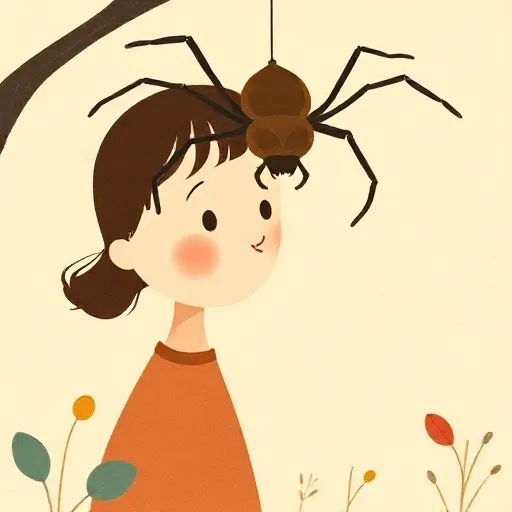
Imagine you are walking through tall grass and you suddenly freeze. A snake lies coiled just ahead. Your heart thumps before you can think the word “snake.” You didn’t decide to react; your body simply took over. Many people have these instant, powerful responses. Evolutionary psychology — a way of studying the mind shaped by Charles Darwin’s theory of natural selection — tries to explain why. It says your brain might contain a special mental program, or module, that spots snakes and jolts you into action. That module, the idea goes, was built by evolution because our ancestors who noticed snakes quickly were more likely to survive and have children.
The snake-fear module is one tiny example of a much bigger claim: that your mind is not one do-it-all thinking machine but a collection of many specialized tools. This is the massive modularity thesis. If it is right, your mind is less like a general-purpose computer and more like a Swiss Army knife — dozens of separate blades, each shaped by evolution to solve a specific ancient problem.
The Brain as a Computer: Evolutionary Psychology’s Big Claims
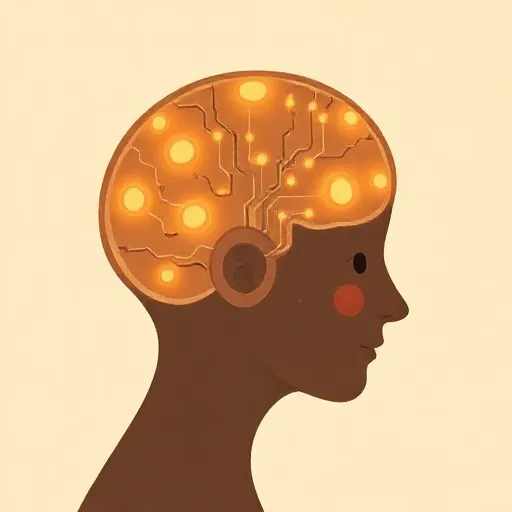
Two leading evolutionary psychologists, Leda Cosmides (born 1953) and John Tooby (1952–2023), laid out the field’s core ideas. They started with a bold metaphor: the brain is a computer designed by natural selection. Just as a computer runs programs, your brain runs many psychological mechanisms — hidden mental routines that shape what you perceive, feel, and do. Those mechanisms are adaptations: traits that exist because they helped your ancestors survive and reproduce. A catch is that a mechanism might have been useful long ago but not be particularly helpful today. A craving for sweet foods, for example, might have kept early humans alive in a world of scarce calories. In a modern supermarket, that same craving can lead to too much sugar.
These researchers insist on one more dramatic claim. Natural selection, they say, does not build a single “think anything” mind. It builds many narrow, domain-specific programs — one for spotting cheaters, one for judging faces, one for detecting movement in the grass. They call this the massive modularity thesis. The mind is a collection of task-specific modules, like separate apps on a phone rather than one big, blank slate. That idea sets evolutionary psychology apart from many other approaches in biology and psychology.
The Swiss Army Knife Argument: Why Your Mind Might Be Modular
Why would anyone believe the mind comes in so many separate pieces? Supporters of massive modularity use three main families of argument.
The first is a biological argument. Your body has specialized organs: a heart pumps blood, a liver detoxifies, kidneys filter. No one expects a general-purpose organ to do everything. Evolutionary psychologists argue the same must be true of the mind. Since the mind is a biological system shaped by evolution, it too should be built from specific parts that each solved a specific survival problem.
The second is a computational argument. Imagine a machine that tries to solve any problem at all with no special know-how. It would be hopelessly slow and confused. Real problem-solving succeeds because different challenges — finding a mate, avoiding poison, reading a friend’s mood — require different types of information and different mental tricks. So a mind that actually works must be full of specialized problem-solving modules.
The third draws on an old idea from linguistics: the poverty of the stimulus. A child learns language even though the sentences she hears are messy and incomplete. She must have some built-in wiring for language. Evolutionary psychologists generalize this. Across many domains — spotting faces, understanding social rules, detecting danger — there is neither enough time nor enough information for a person to learn everything from scratch. They conclude that a swarm of innate, domain-specific modules is the only way to explain our abilities.
Jerry Fodor (1935–2017), a philosopher who studied the architecture of the mind, threw cold water on this picture. He argued that parts of the mind that handle incoming information — vision, hearing, language — might be modular. But the central thinking that pulls everything together, he said, cannot be split into isolated boxes. That inner core engages with beliefs across the whole mind, which a sealed-off module could never do. The debate is far from settled.
But Is That Really Evolution? Philosophers Push Back
Many philosophers of biology say evolutionary psychology tells a too-narrow story about how evolution works. The field loves to reverse engineer the mind: look at what a modern human does, guess what ancient problem that solved, and then declare a module an adaptation for that problem. But Stephen Jay Gould (1941–2002) and Richard Lewontin (1929–2021) famously warned that not every trait is an adaptation. Some are byproducts, like the redness of blood, which is a side effect of its oxygen-carrying chemistry rather than a purpose-built design. Elisabeth Lloyd (born 1950) and others argue that evolutionary psychologists often ignore alternative evolutionary processes — chance, genetic drift, or changes that are merely side effects of other adaptations.
A deeper worry is about the very idea of adaptation that evolutionary psychology uses. For Cosmides and Tooby, a true adaptation is a well-designed organ that is universal across the species — like a heart. But many biologists see adaptation more broadly. A flexible response to the environment, such as a type of learning, can itself be an adaptation without being a single fixed module. David Buller (born 1959), a philosopher of science, argues that evolution did not stop acting on human minds. Psychological traits could still be under selection and show plenty of variation, rather than being identical in everyone. If that is right, looking for a single, unchanging “snake-fear module” in all humans might be a mistake.
Testing is another battleground. An evolutionary psychologist might give surveys to people from many cultures and find they all rate certain waist-to-hip ratios as attractive. That seems to suggest a universal mate-preference module. But critics point out that a shared preference says nothing about whether it is an adaptation built by ancient natural selection. Many other explanations — social learning, culture, general learning mechanisms — could also produce the same result.
What Makes Us Human: Nature or Variety?
Evolutionary psychology offers a picture of human nature. For Tooby and Cosmides, human nature is the set of universal psychological adaptations we all share — a collection of species-wide mental programs. But that idea has a problem: humans differ enormously. We vary in size, personality, talents, and behavior. If human nature names only what is fixed and the same in everyone, it seems to ignore almost everything interesting about real people.
Some evolutionary psychologists now embrace that messiness. Clark Barrett (born 1960) says human nature is not a crisp list of fixed modules. Instead, it is “a big wobbly cloud” — the whole, varied collection of human traits, from bipedalism to language to the countless ways we learn and differ. This account tries to keep an evolutionary perspective without flattening human diversity. Philosophers still argue about whether such a cloud can truly explain anything or whether it simply lists everything we are capable of.
Why the Debate Matters in Your Own Mind

You have never seen a saber-toothed cat, but you still flinch at sudden movements in the dark. You probably feel a rush of unfairness when someone cuts in line. Evolutionary psychology says ancient pressures carved these reactions into your mental hardware. If that is right, understanding your modules might help you make sense of your strongest feelings — why certain smells, faces, or rules trigger you before you can think clearly.
But the critics’ lesson is just as powerful. If the mind is more flexible than a set of fixed modules, then you are not a prisoner of your deep past. You can learn new fears and unlearn old ones. You can decide that a gut-level reaction — however ancient — does not have to control your choices now. The question of massive modularity is not just a puzzle for scientists. It invites you to ask: how much of what you think and feel is your own, and how much was written long before you were born?
Think about it
- If your fear of snakes is a built-in module, could you ever train yourself not to be afraid? What would that mean about how fixed your mind really is?
- Some people love scary movies even though their body reacts as if danger is real. Is that using the same ancient fear program for a new purpose, or does it show our reactions are not just modules?
- If scientists told you that your choice of friends is guided by ancient mate-selection programs, would that change how you see your friendships? Why or why not?