
Is Your Friend Just Being Friendly — or Pulling Your Strings?
Your Friend Just Won’t Take No for an Answer
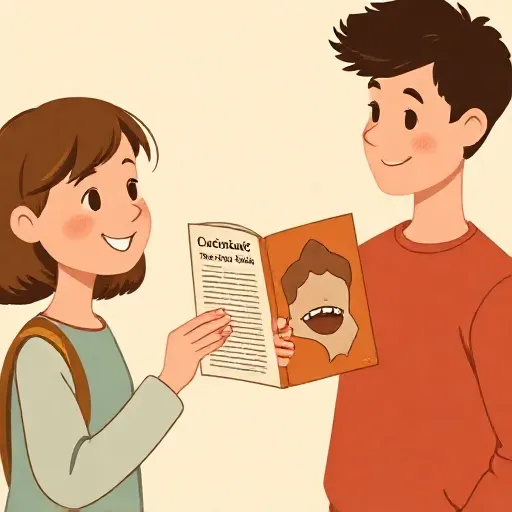
Your friend Alex wants to borrow your prized signed comic book. You say no. But Alex doesn’t give up. First, Alex lays out perfect reasons why it would be a fair swap. Then Alex flatters you: “You’re the most generous person I know.” Next, Alex reminds you, “Everybody else lets their friends borrow stuff.” Later, a guilt trip: “I let you use my skateboard last week.” Finally, a straight-up emotional threat: “If you don’t, I won’t save you a seat at lunch.”
You feel pulled. Which of these moves is just friendly persuasion, and which is manipulation? Philosophers get curious about exactly this line. They want to know what makes some influence feel sneaky, and whether all sneaky influence is wrong.
Three Ways to Spot a Sneaky Influence

Rational persuasion is the honest way to change someone’s mind: you give the person good reasons and trust them to decide. Coercion is the opposite extreme: a bully’s threat (“Give me your lunch money or I’ll hit you”) doesn’t even pretend you have a real choice. Manipulation lives somewhere in between. But what makes it different from both?
Philosophers have identified three main signs. The first is bypassing reason. The idea is that manipulative influence sidesteps your thinking altogether, going straight for automatic reactions. A subliminal ad — the kind that flashes a drink logo for a split second so you don’t consciously see it — would be a pure example. Closer to real life, a sudden emotional appeal that makes you feel sorry for someone before you even think might count. Political theorist Alan Ware (20th century) argued that influence becomes manipulation when it is covert — hidden so you don’t realize how you’re being nudged.
The second sign is trickery. This theory says manipulation is about getting you to adopt a faulty mental state: a false belief, an outsized emotion, a desire that doesn’t match what you really value. Philosopher Claudia Mills (born 20th century) describes the manipulator as someone who offers “bad reasons, disguised as good.” Think of a friend who tells you that everybody will be at a party — when they know that’s untrue — just to get you to go. Or someone who plays sad music to make you feel guiltier than the situation calls for. Philosopher Robert Noggle (born 20th century) put it this way: manipulation tries to make your beliefs, desires, or emotions fall short of their proper ideals — false, out of place, or blown out of proportion.
The third sign is pressure without coercion. This view treats manipulation as a kind of force, but not enough force to count as a threat you can’t resist. Ruth Faden, Tom Beauchamp, and Nancy King, in their 1986 book on informed consent, described the space between rational persuasion and coercion as a continuum. On one end, no pressure at all; on the other, a gun to your head. In the middle lies manipulation: the doctor who sighs heavily and looks disappointed if you don’t take the pill, the classmate who says, “Fine, but I’ll remember this.” It’s awkward to refuse, but nobody has made it impossible.
When You Can See the Strings — Does It Still Count?

Here’s the puzzle. If manipulation bypasses reason by being hidden, what about tactics so obvious everyone can see them? Nagging, peer pressure, and guilt trips are transparent. Yet we call them manipulative all the time. That makes the “bypassing reason” idea look too narrow.
Some philosophers try to solve this by focusing on the intent behind the influence. Even if you spot the tactic, maybe the manipulator’s true goal is still hidden. Radim Belohrad (born 20th century) argues that a manipulator always projects one intention while hiding another. But the teenager nagging for a phone isn’t hiding much — their goal is obvious. So that fix doesn’t cover everything.
A more honest move is to admit that “manipulation” might actually be a catch-all term for two very different things. Joel Rudinow (born 20th century) offered an early disjunctive definition: manipulation is influence by deception or by playing on a supposed weakness. Trickery and pressure, side by side, under one umbrella. Many philosophers accept this two-part picture. The clean theories — pure trickery or pure pressure — each capture important cases, but neither captures all of them alone. It’s a bit like “art” or “sport”: the word covers things that don’t look much alike, and that’s just how our language works.
Is It Always Wrong to Pull Someone’s Strings?
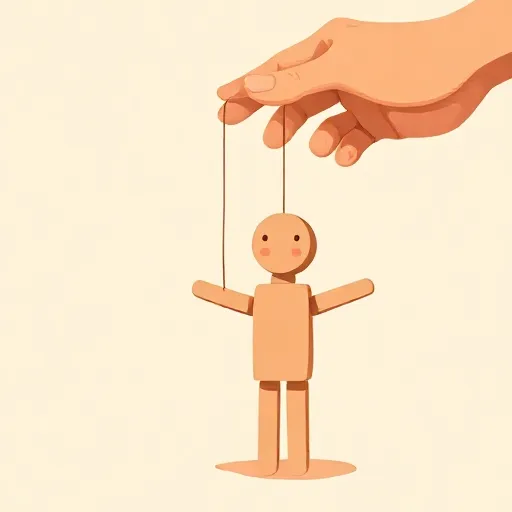
Most people think manipulation is usually bad. But is it always wrong, even when it helps the person? Imagine a teacher who gently manipulates a shy student into taking a class that ends up boosting their confidence. Or a parent who uses reverse psychology to get a toddler to brush their teeth. The hardest case from the philosophical literature is the FBI interrogator who manipulates a captured terrorist into revealing a hidden bomb. Saving hundreds of lives seems to outweigh the “yuck” of manipulation.
So if it isn’t always wrong, why is it wrong when it is? One obvious answer is harm. Manipulative advertising can trick you into wasting money. A manipulative friend can damage your sense of trust. But harm can’t be the whole story — the teacher who helps the student isn’t harming them, yet many people feel a tiny moral squeak even so.
A more powerful answer is autonomy. Autonomy means making choices that come from your own values and understanding. Manipulation — especially trickery — puts faulty information in your head, so the choice you make isn’t truly yours. Even emotional pressure can warp your decision-making, making you act from fear or guilt rather than from what you think is right. Philosopher Marcia Baron (born 20th century) adds that manipulation often shows a vice: an excessive desire to control other people’s actions, which disrespects them as beings who deserve to steer their own lives.
Some philosophers, like Sarah Buss (born 20th century), push back. Buss argues that manipulation rarely destroys your ability to choose — it just changes your options. And she points out that romantic life, from flirting to love letters, is full of behavior we might call manipulation but don’t want to ban. So the link between manipulation and autonomy isn’t airtight.
Another classic idea is that manipulation treats a person like a thing — a device to be operated rather than a mind to be reasoned with. Claudia Mills writes that a manipulator sees reasons as “causal levers,” not as honest justifications. Pull the right lever, and the person moves. The problem, thinkers like Mills say, is that you’re using someone as a tool for your own purpose, bypassing their standing as a fellow reason-giver. But this raises a sticky question: is it okay to treat someone as a thing if it’s for their own good? And what about everyday nudges that don’t feel like tool-use at all?
The Great Salad Bar Experiment — and Your Lunch Line

In the last few decades, the debate about manipulation has spilled into real-world design. A nudge, in the language of Cass Sunstein and Richard Thaler, is a small change to the way a choice is presented, aimed at making you pick the healthier, safer, or smarter option — without forbidding anything. Put salad at eye level in the cafeteria, and students grab it more often. Tell a patient that a surgery has a “90% survival rate” instead of a “10% fatality rate,” and consent rises.
Is that manipulative? Some defenders say no — because choices always have to be framed somehow. The cafeteria manager must put something at eye level. Since nudging is inevitable, deliberately choosing a helpful nudge isn’t sneaky. Philosopher Thomas Douglass (21st century) fights back with this analogy: on a crowded subway car, bumping into people is inevitable. But if you deliberately bump your rival job candidate out the door just as it closes, that’s wrong — even though some bumping was going to happen anyway. You used the inevitable to get an unfair result.
So not all nudges are innocent. Which ones cross the line? The tricky ones seem to be those that exploit psychology in ways you can’t easily notice — like framing that plays on loss aversion or defaults that you never change because you forgot to uncheck a box. When the influence works outside your awareness, the alarm bells for manipulation start ringing.
The nudge debate shows why the question of manipulation matters beyond philosophy classrooms. It’s baked into how apps, schools, and governments design your choices. The next time you feel a guilt trip from a friend or notice the healthy snacks sitting right at your eye line, you can ask yourself: is this influence giving me better reasons, or is it just pushing my buttons?
Think about it
- If a friend uses a guilt trip to get you to attend their party, is that manipulation even if they genuinely believe the party will be good for you?
- Should a school cafeteria be allowed to place junk food in less visible spots so more students choose the fruit? Would your answer change if they hid the fruit instead?
- Think of the last time you wanted a parent or teacher to change their mind. Did you try to convince them with reasons, or did you find yourself pressing their emotional buttons? Where would you draw your own line?