Can You Be Free Even in Chains? Epictetus Says Yes
The Lame Slave Who Taught an Emperor

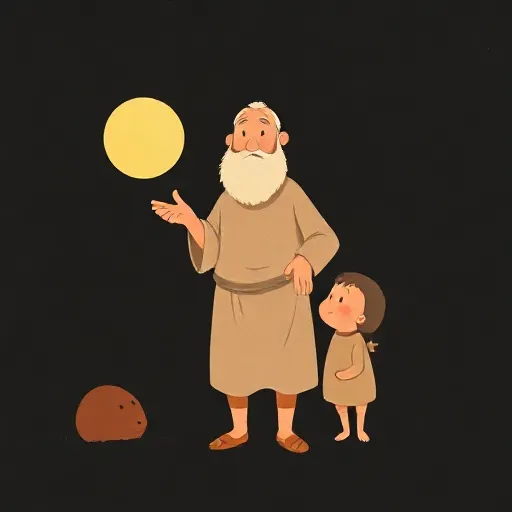
Imagine a philosopher who began life not in a library, but in chains. Epictetus (c. 50–135 CE) was born a slave in the Roman Empire. As a young man, he served in the household of a powerful administrator, and at some point he was crippled—some say by arthritis, others by harsh treatment. Yet this same man grew up to become one of the most influential teachers of the ancient world. His ideas would later shape the private diaries of a Roman emperor, and they still echo in modern self-help and therapy.
Epictetus never wrote a book himself. What we know comes from his student Arrian, who carefully recorded his lectures in a work called the Discourses. Arrian tried to capture his teacher’s bracing, no-nonsense voice. Later, someone boiled those lessons down into a pocket-sized handbook, the Encheiridion. Epictetus didn’t want students who merely memorized arguments. He wanted them to test every idea against their own lives. And the first test, the one that opens the Encheiridion, is shockingly simple: figure out what you really control.
The Single Most Important Question: What’s Really Yours?
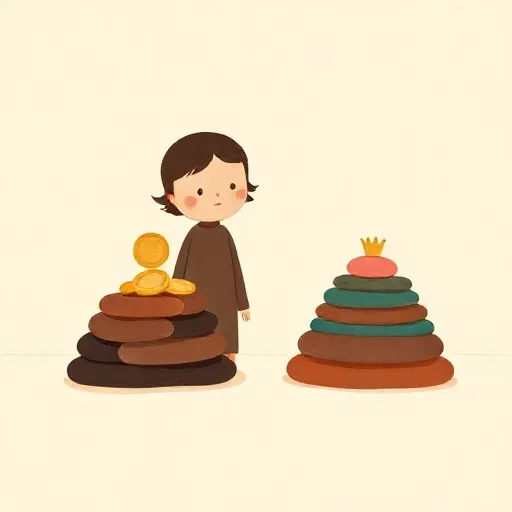
Epictetus draws a line right through the middle of your life. On one side are your opinions, your desires, your decisions—the things that happen inside your mind. On the other side is everything else: your body, your possessions, your reputation, what other people do. He calls the internal side your volition (from the Greek prohairesis), your capacity to choose and judge. And he insists that only this inner realm is truly yours. Everything beyond it is an “external.”
Take a moment to test this. Can you decide what the weather will be tomorrow? No. Can you decide what to wear if it rains? Yes. The weather is an external; your choice of coat is an act of volition. Can you control whether someone insults you? No. Can you control whether you believe the insult? Yes. Every insult is just a string of sounds; the sting is a judgment you add.
Epictetus pushes the point even further. He says that even your own body is an external. You didn’t choose your height, your health, or how long you’ll live. You can influence some of these things, but you cannot command them. If a illness strikes, your body obeys its own laws. But your mind can still choose how to respond. This might sound harsh, but it is also precise.
You Are a Spark of the Universe

Why does Epictetus trust so deeply in our power to reason? Because he believes in an orderly universe. For him, the world isn’t a random mess. It is governed by a divine reason—he often calls it Zeus or “god,” but not as a distant figure on a cloud. This god is the rational structure of nature itself, and it is inside everything.
Here is the astonishing part: Epictetus claims that your own mind is literally a piece of that divine reason. He describes it as a “fragment” or “offshoot” of Zeus’s own being. When you think carefully and make a choice based on truth, you are doing exactly what the whole cosmos does on a grand scale. That’s why your power of choice can never be taken from you. No jailer, no illness, no tyrant can reach into your mind and make your judgments for you. Your body can be chained, but your volition cannot.
This idea gives Epictetus a deep confidence. Even pain and death aren’t evils if you see them as part of a larger, rational plan. He borrows an image from an earlier Stoic, Chrysippus: think of a foot. On its own, a foot would hate getting muddy. But as part of a walking body, that mud is just part of the journey. You, too, are a part of a whole, and your own mind can learn to welcome what the whole requires.
Feelings Are Judgments—Not Accidents

If your mind really is a piece of cosmic reason, then your emotions aren’t forces that attack you from outside. They are your own mental acts. Epictetus argues that every feeling—fear, grief, anger, envy—is really a judgment. When you feel afraid, you are silently thinking, “Something bad is about to happen, and I should escape it.” When you grieve, you are telling yourself, “I have lost something truly valuable.”
This is why Epictetus believes emotional storms can be calmed. If you correct the judgment underneath, the feeling will change. He points to the myth of Medea, who killed her children because she believed it would hurt her enemies more than it hurt her. Epictetus says: if someone could have shown her clearly that this belief was false, she could never have done it. She acted on what seemed true to her.
So what does a wise person feel? Not nothing. Epictetus says you shouldn’t be “unfeeling like a statue.” There are emotions that fit a rational life: deep joy at seeing someone act virtuously, a careful “caution” that warns you away from your own bad choices, and a running gratitude toward the order of the world. Even trembling at a sudden noise is natural; it’s what you assent to after the startle that matters. A famous lesson tells students to pause when a strong impression hits: “Impression, wait for me a little. Let me see what you are, and what you represent.”
Loving People Like a Crystal Goblet

Does Epictetus want you to stop caring about your family and friends? Not at all. He insists that “love of humanity” and a sense of kindness are central to a good life. But he offers a challenging rule: love without clinging. His own analogy is a crystal goblet. You can treasure it, use it, admire it—but before you pour the wine, remind yourself that it is fragile. One day it may break. If you have already accepted that, the breaking will not crush you.
The same goes for people. Epictetus thinks you should be a devoted parent, friend, or partner, but you should also frequently remind yourself of your loved one’s mortality. This isn’t meant to be gloomy. It’s meant to make your affection free rather than desperate. He tells the story of a father who flees his sick child’s bedside because he cannot bear the fear. That father, says Epictetus, isn’t acting lovingly—he is acting on panic. The truly affectionate parent stays, holds the child, and does what is helpful, while understanding that the child’s body, like all externals, is ultimately on loan.
This also changes how you handle other people’s wrongdoing. If someone insults or harms you, their bad choice is their problem, not yours. It belongs to their volition, not yours. You don’t need to be angry at Medea; pity is closer to the mark, and the best thing you can do, if possible, is help her see her mistake. Your own inner stronghold stays untouched.
The Gym for Your Soul

No one is born wise, and Epictetus knows it. He describes a training program—a sort of mental gymnasium—built on three disciplines. First, you work on your desires and fears by constantly sorting impressions into “up to me” and “not up to me.” When you catch yourself fearing a poor grade or craving a stranger’s approval, you remind yourself: that’s an external. Your only real good is a well-tuned volition.
Second, you practice your impulses to act. Acting vigorously is fine, even excellent, when you do it while playing the role you’ve been given. Epictetus uses the image of a ball game. The ball itself is worthless; what matters is how you play—your attention, your effort, your teamwork. Life’s externals are the same. Chase them with full energy, but without ever thinking they’re the real prize.
Third, you sharpen your reasoning itself. This means learning logic not to show off at parties, but to keep your mind from being tricked “even in dreams or drunkenness,” as he puts it. Like an athlete using weights to build muscle, you practice tricky arguments to build mental strength.
The actual work is humble. Epictetus advises slowing down when a powerful impression hits: “Wait for me a little.” He suggests suppressing big words like “terrible” or “unbearable” and just describing facts plainly. And he recommends a bedtime ritual borrowed from the Pythagoreans: replay the day in your mind. Where did you give in to anger? Where did you forget the line between yours and not-yours? Tomorrow, you try again.
Why a 2,000-Year-Old Stoic Still Matters Today

Epictetus never imagined the internet, but his division between inner and outer maps onto it perfectly. A nasty comment is just an arrangement of pixels; the sting is the judgment you add. The news cycle floods you with events you cannot command. The pressure to manage your body, your grades, your social “brand” feels overwhelming. Epictetus would say: those things were never yours to master. Stop negotiating with the universe for a different past, and start tending the one plot of ground you do own—your own mind.
His ideas didn’t stay in ancient Greece. The Roman emperor Marcus Aurelius, who never met him, filled a private journal with Epictetus’s insights. Centuries later, the Encheiridion was used in Christian monasteries, influenced the founders of modern psychology, and even appears as a guide in contemporary cognitive-behavioral therapy. The core move is always the same: pause, examine the judgment, and reclaim the choice that was always yours.
No one can promise that practicing Epictetus’s philosophy will make you rich, powerful, or pain-free. What it offers is something rarer: the unshakeable knowledge that, in the one place that counts, you are already free.
Think about it
- If a friend is furious at you for something you didn’t do, Epictetus would say their anger is their problem, not yours. Do you think that’s fully true, or do you still have a responsibility to fix the misunderstanding? Why?
- Imagine you could go through life never feeling grief when you lose someone you love, because you always remembered they could die. Would you choose that state of mind? What might you lose along with the pain?
- Epictetus says you are free if no one can control your thoughts. But what if someone drugs you, or your own brain chemistry changes? Does his idea of an “unimpeded” mind still hold up?