Can You Be Free If the Future Is Already Known?
The Man in the Stone Cell

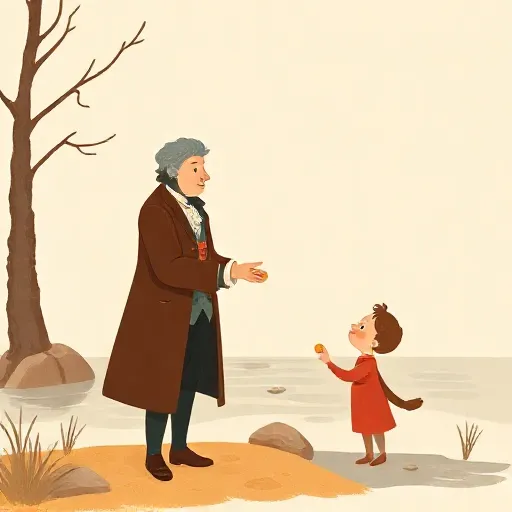
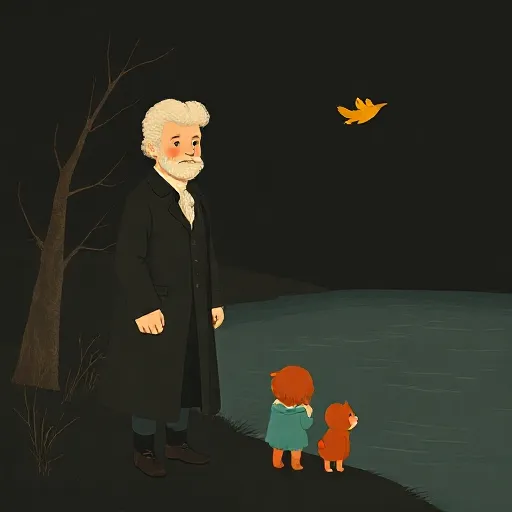
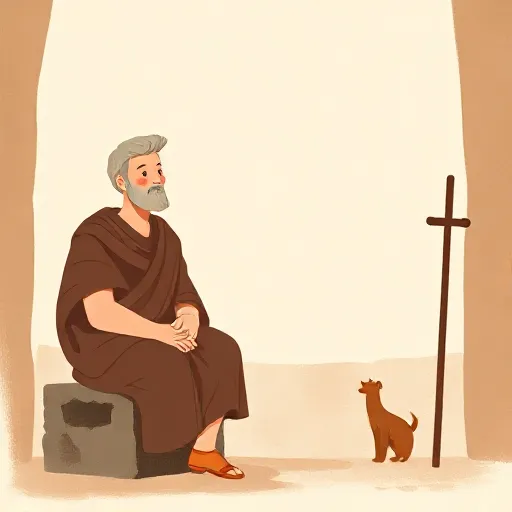
Anicius Boethius (c. 475–526) sat in a cold stone cell, waiting to die. He had been one of the most powerful men in Rome, a senator and a trusted advisor to King Theoderic. Now, he was a prisoner, his hands chained, accused of treason and mysterious magic. His friends were far away, his reputation shattered, and his execution was likely only days off. As he sat there, crushed by the unfairness of it all, he tried to write his way out of the darkness. The result was a book called The Consolation of Philosophy.
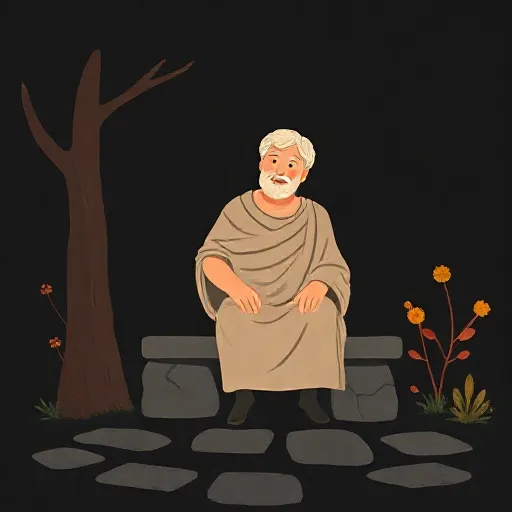
But Boethius did not write it alone. In his imagination, a visitor appeared in the cell. Not a real woman, though — this was Lady Philosophy. She was a figure who stood for calm, clear thinking. She looked at Boethius, sobbing about his lost luck, and she told him something rather shocking: he had not actually lost anything that truly mattered.
She called the things he was mourning — money, fancy titles, reputation — the goods of fortune. She argued that fortune is like a wheel, spinning randomly. One day it lifts you to the top, and the next day it drops you to the ground. If you put your happiness in fortune’s hands, you are handing over your peace of mind to a game of chance. So what could Boethius keep, even in prison? Philosophy argued that the real treasures are inside you: your character, your intelligence, and your wisdom. No executioner can take away your ability to be virtuous.
Why Do the Wicked Run the World?
Boethius accepted her logic, but it did not soothe his anger. He glared at Lady Philosophy and asked the question that has haunted humans for thousands of years: If being good is the path to happiness, why do the wicked seem to win? Why do they live in palaces while honest people rot in cells?
Philosophy’s reply was even bolder than before. She claimed the wicked are not winning at all. In fact, they are utterly powerless. Drawing on ideas from the ancient Greek philosopher Plato, she laid out a trap for logic. First, everyone ultimately wants happiness. Second, happiness is actually identical to the supreme good. If you are truly evil, you are missing that good — you are suffering from what we might call a privation, a lack of something you are supposed to have.
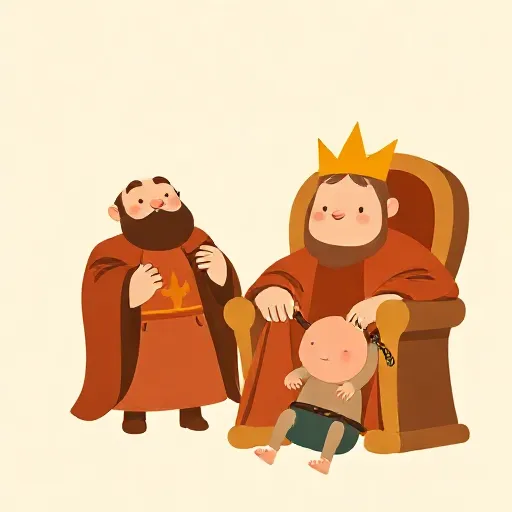
Imagine a person who is starving. They have lost the substance that makes them healthy. Philosophy argued that evil people are starving for goodness. Because they do not have it, they stop being fully human in the moral sense and sink down to the level of beasts driven by greed and fury. And while a cruel king might look successful, he is terrified of losing his stolen loot. A truly good person in prison can be freer than a guilty king on a throne.
The Unfolding Trap
Boethius had one more powerful objection. It was the deepest, trickiest puzzle of the entire book. “Alright,” he said to Philosophy, stepping away from the problem of wickedness. “Let’s talk about my chains. Let’s talk about the future. You have shown me that God rules the world. But God knows everything — that is what makes him God. He is never wrong. Here is the trap: If God knows right now what I will choose to do tomorrow, then it is a fact that I will do it. It seems like I cannot change my mind. So… do I actually have freedom?”
This is the thunderbolt of the book. Boethius was not just asking about divine fortunetelling. He was asking whether the future is already written like a script that we are just acting out. If God’s knowledge is perfect, then whatever he knows will happen must happen. But if it must happen, are any of us really free? Or are we just dominoes falling over, one after the other, thinking we are choosing to fall?
For many thinkers, this seems impossible to solve. If you answer “Yes, God knows the future,” it looks like you are admitting that fate is locked in and our choices are an illusion. If you say “No, the future is open,” it looks like you are putting a limit on God.
The Helicopter Above the Parade
Lady Philosophy took a deep breath. To untangle this knot, she had to change the way Boethius — and we — think about time and knowledge. She introduced the concept of the Modes of Cognition. The idea is simple: the way you know something depends on the kind of creature you are. A dog sniffing a trail knows the path in a different way than a bird watching it from the sky. The truth is the same, but the way of grasping it changes.
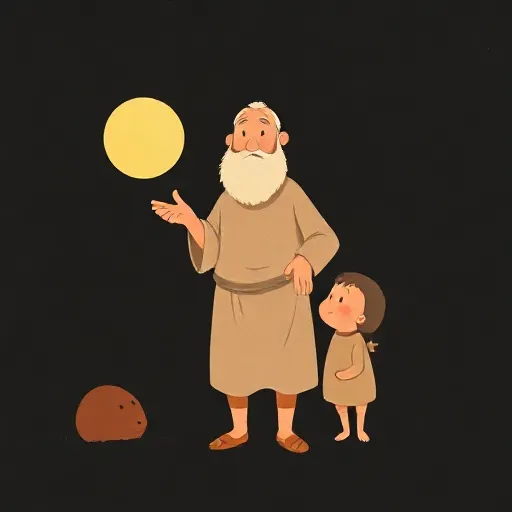
Humans are stuck in the river of time. For you, right now, the past is a memory and the future is a foggy mystery. But what about God? Lady Philosophy argued that God does not sit at the edge of the river, looking downstream to guess where you will float. God lives in Eternity. She defined this in a very specific, technical way. Eternity is not just a very, very long time — it is “the whole, simultaneous, and perfect possession of unbounded life.”
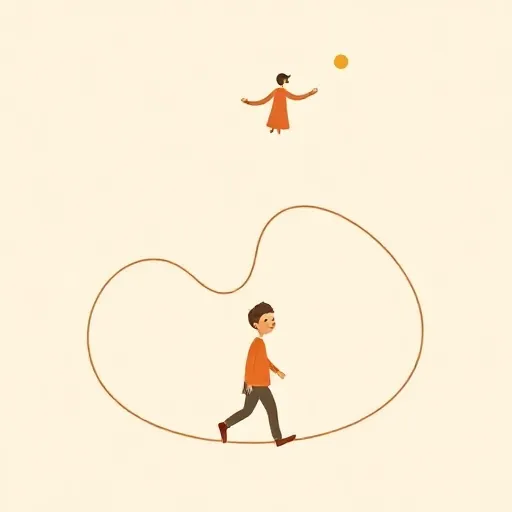
Think of a parade. You are standing on the sidewalk, and one float passes you at a time. First the drummers, then the dancers, then the giant balloon. You see the sequence moment by moment. Now imagine a person in a helicopter, hovering high above. They see the entire parade at once — the start, the middle, and the end, all in a single snapshot. God, Philosophy said, is like the person in the helicopter. He watches your entire life in an eternal “now.” He sees you being born, reading this sentence, and growing old, all at the same time.
But here is the crucial part: watching something happen does not make it happen. If you watch me walk across a room, your watching forces nothing. To handle this, Philosophy invented a distinction between two kinds of necessity. There is simple necessity — facts like “the sun will rise” or “humans will die,” which are built into the physics of the universe. Then there is conditional necessity. This means: when I am walking, it is true that I am walking. It is necessary in that specific moment. But my walking was not necessary in the first place; I chose to do it. God simply sees your free choice happen in his eternal present. The future is left untouched, wide open, and entirely yours.
The Unfinished Map
Lady Philosophy drew a beautiful map of the universe, using logic to show how a perfect mind and human freedom might fit together. But Boethius left a strange, unsettling detail at the very end of his book. Right when we should feel safe, Philosophy admits that God’s act of thinking “sets the measure for all things” and is not caused by things happening down here. This has kept philosophers arguing for fifteen centuries.
Some think Boethius hid a secret message in this. Remember, he was a Christian writing a book where an imaginary pagan lady solves his problems. He never quotes the Bible. Maybe Boethius wanted us to see that logic alone can take us to the edge of understanding, but it leaves us with a mystery. It gives us the tools to live a brave, good life, even when things fall apart — but it does not give us a clear photograph of God.
Why does this matter to you? Boethius asked if the script of your life is already written. Every day, scientists map your brain, algorithms predict what video you will click next, and people tell you to “be realistic.” It can feel like you are a domino. But Boethius offers a counter-punch: knowing an outcome is not the same as causing it. You still face the fork in the road. The person in the helicopter might see the whole path, but down on the ground, the footsteps are still yours.
Think about it
- If a supercomputer could predict every choice you will ever make based on your brain chemistry, would it still be fair to punish people for bad choices?
- Boethius thought the wicked are secretly miserable even if they are smiling. Do you agree? Can someone who cheats and lies ever be truly, deeply happy?
- If you could step outside of time and watch your whole life — past, present, and future — at once, would knowing a bad decision was coming make it impossible to change?