
The Philosopher Who Said You Used to Be a Fish
The Man Who Jumped Into a Volcano
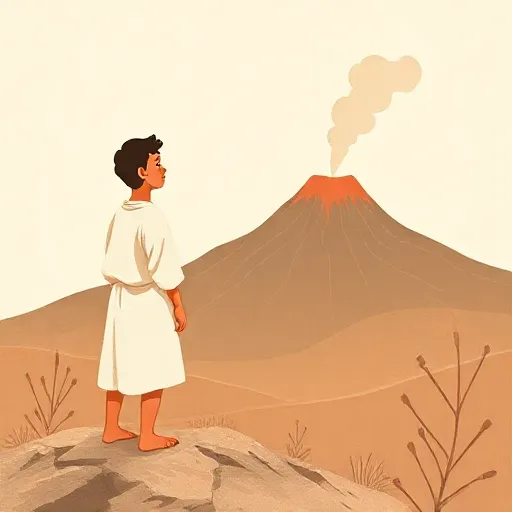
Around 2,500 years ago, a man named Empedocles (c. 494–434 BCE) lived in Acragas, a city on the island of Sicily. He came from a wealthy family, his grandfather even won a horse race at the Olympic Games, and people told wild stories about him. Some said he could heal the sick. Others claimed he once brought a dead woman back to life. One famous legend says he leaped into the fiery crater of Mount Etna to prove he was a god.
That story is probably made up. But it shows how people saw him: as a philosopher, a poet, and maybe even a magician. Empedocles wrote his ideas not in boring prose, but in rolling, powerful verses, like Homer. He wanted to explain the entire universe with a single idea. And he believed that idea could also teach you how to live a good life.
Four Roots and Two Fighters
Empedocles looked at the world and saw everything changing. A seed becomes a tree. A tree crumbles into soil. A cloud forms, rains, and vanishes. How could one thing turn into another without something permanent underneath?
He gave a bold answer. Everything in the universe is made from just four basic ingredients, which he called roots. These are fire, earth, air, and water. Empedocles was the first thinker to clearly separate these four, and later philosophers like Aristotle praised him for it. But Empedocles didn’t stop there. He gave the roots divine names—shining Zeus, life-giving Hera, gloomy Aidoneus, and Nestis, whose tears are the fresh water we drink.
If you have ever built a model car from a kit, imagine the roots as your four types of bricks. Every single thing you can build—the car, a house, a weird dinosaur—is just those same bricks, snapped together in different patterns. Empedocles said the roots themselves are eternal. They never pop out of existence or get destroyed. They just rearrange.
But what snaps them together? What pries them apart? Empedocles introduced two giant, opposing forces. Love is the force that pulls different roots together into harmony. Strife is the force that drives them apart, making each root clump only with its own kind. Love mixes; Strife separates. Both are just as real and eternal as the roots themselves.
The Cosmic Breathing Cycle
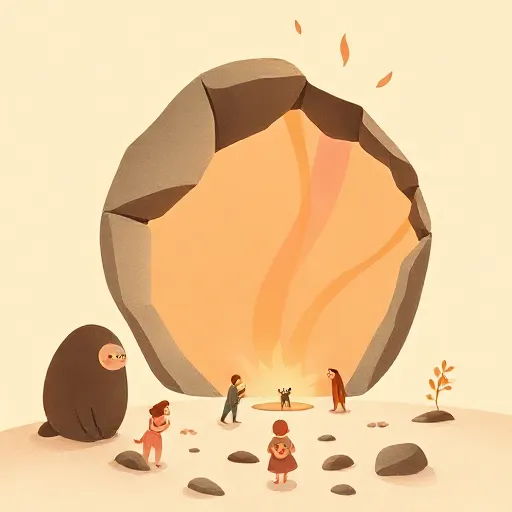
So the roots are always there, and Love and Strife are always fighting. Empedocles said this creates a gigantic, endless cycle. It is like the universe is breathing in and breathing out, over and over, forever.
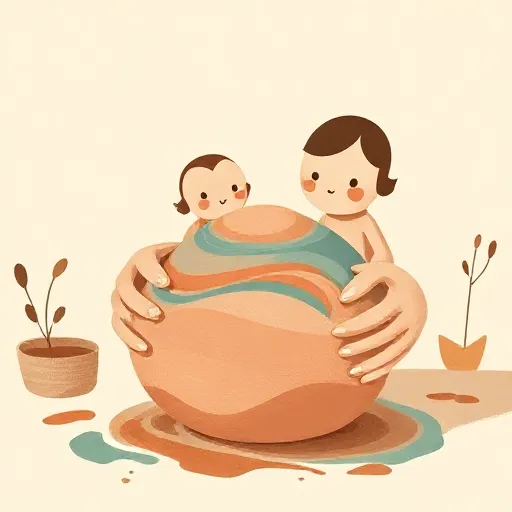
Imagine Love winning completely. All four roots are perfectly blended into a single, smooth, motionless ball. Empedocles calls this the Sphere. It is total unity, total peace. But it cannot last. Strife creeps in at the edges. It starts teasing the roots apart, creating a whirlpool. Lighter fire spins to the outside, heavy earth sinks to the middle, and a world like ours forms—with a sun, an ocean, and solid ground.
Some scholars think Empedocles described a cosmos forming twice in a full cycle: once when Strife breaks the Sphere apart, and again when Love starts pulling separated roots back together. Others argue there is only one formation we need to worry about. A recently discovered piece of papyrus with some of Empedocles’s lost verses has added new fuel to this debate, but philosophers still have not settled it.
The key point stays the same no matter what. You and I live in the messy middle of the cycle, where Love and Strife are both tugging at once. That tension makes our world possible.
Arms Walking Around Without Bodies
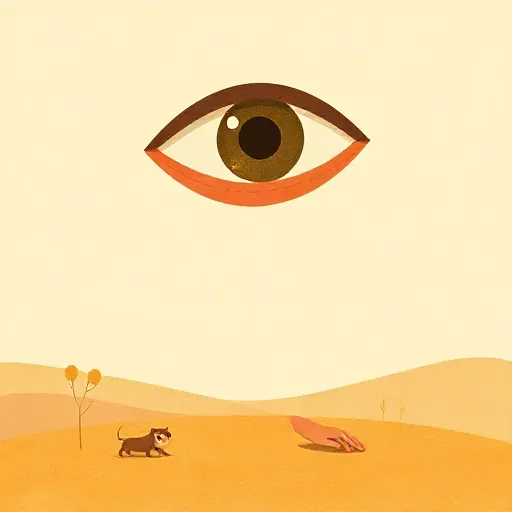
Empedocles had a surprisingly modern-sounding idea about how life first appeared. Under the growing power of Love and Strife, the roots began forming living things through a slow, chaotic process.
He describes a strange early world. Single limbs wandered the earth alone: eyes without faces, arms with no shoulders. These stray parts then combined randomly. Some unions were monstrous—creatures with the heads of cattle on human bodies, or beings with two faces and two chests. You can picture it like a fantasy game where you randomly glue mismatched parts together.
Most of those combinations could not survive. The ones that could, however, became the ancestors of the animals and humans around us today. Some scholars see this as an early glimpse of evolution through natural selection, 2,000 years before Darwin. Empedocles explained the first full human shapes as muddy outlines pulled up from the earth by fire, still missing real limbs and voices. Only later did men and women as we know them emerge, and sexual reproduction took over.
Thinking With Your Blood
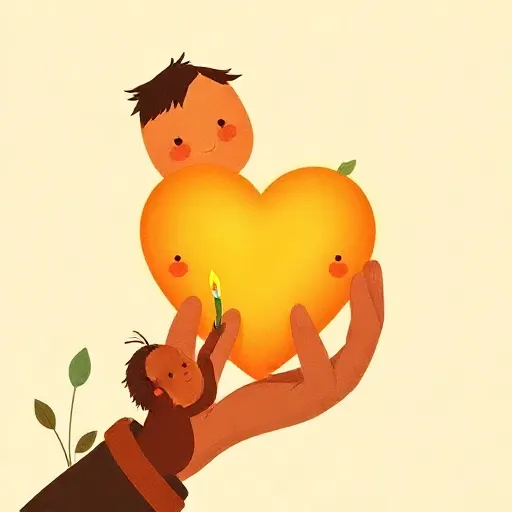
Here is a spooky thought: Empedocles believed that the blood around your heart is what you use to think. He was not being poetic. He meant it literally.
His reasoning went like this. You can only know something if a little bit of it is already inside you. The ancient formula was “like knows like.” You recognize earth because you contain earth. Your eye detects fire-light because a tiny divine fire lives inside your eye. When you see a tree, tiny invisible particles Empedocles called effluences flow off the tree and enter your eye through tiny passages, meeting the fire inside.
But that only explains seeing. What about understanding the whole world? Empedocles said the most perfect blend of the four roots is a balanced, equal mixture. The blood around your heart happens to be the most evenly mixed stuff in your body. That perfect balance lets it detect everything—fire, water, earth, and air all at once. Thinking is simply your blood resonating with the universe.
He also gave you a warning. The thoughts you feed yourself change the mixture inside you. Learn true things, and your elemental balance grows wiser. Chase foolish things, and your thoughts get “blunted” and murky. You are literally shaping your own mind, element by element.
The Exile of the Gods
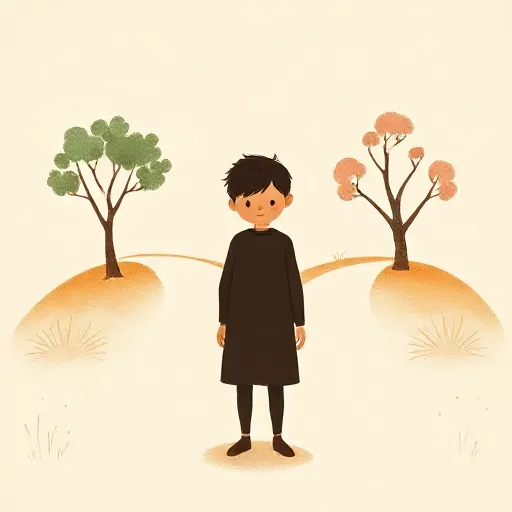
Empedocles was not just a scientist explaining volcanoes and eyeballs. He also wrote a second poem—or maybe it was all one big poem—called the Purifications. This one tells a darker, more personal story.
He begins by announcing to his fellow citizens that he is not a man. He is an immortal god, exiled to earth and wrapped in a body of flesh as punishment. According to an ancient decree, daemons (supernatural spirits) who commit bloodshed and break their oaths are banished from the company of the gods for 30,000 seasons. They are forced to be born again and again in different bodies. Empedocles confesses that he, too, trusted in mad Strife and joined this wandering.
The cycle of rebirth, called transmigration, moves through a ladder of life forms. A daemon might be a plant, then a fish, then a lion, and finally a human. Empedocles himself claimed to remember being a boy, a girl, a bush, a bird, and a fish. At the top of the ladder, humans who purify themselves can become prophets, poets, and healers, before finally being restored as gods.
His rules for purification are strict: no eating meat, no bay leaves, no beans, and no shedding of blood. Why no meat? Because if souls recycle through animals, then biting into a lamb could be cannibalism of your own dead relatives. He paints a horrifying picture of a father slaughtering a transformed son, deaf to the cries.
Why an Ancient Volcano-Jumper Still Matters
You have probably never worried that your next hamburger is your great-uncle reincarnated. But Empedocles planted seeds that are still growing.
His four roots evolved into our modern idea of chemical elements. His description of mismatched limbs randomly combining until something works prefigures natural selection. And his claim that you perceive the world because tiny physical effluences enter your body is an early attempt at a purely material explanation for the mind. He wanted to explain everything—stars, feelings, right and wrong—with the same set of rules. That ambition still drives science today.
Most importantly, Empedocles made the universe a drama. You are not watching from the outside. The fight between Love and Strife happens inside your own chest, in the blood you think with. Every choice to harm or to help is a vote for which force wins, in the cosmos and in yourself.
Think about it
-
If everything is made of just four ingredients, is there a real difference between a living dog and a rock, or is it just a different arrangement of the same stuff?
-
Empedocles thought meat-eating was wrong because you might be eating a reborn human. Can you build a strong argument against eating meat that does not rely on believing in reincarnation?
-
If Love unites things and Strife separates them, can you think of a situation where Strife (competition, disagreement, breaking apart) might actually be good for someone?