Can a Thought Move Your Body? Elisabeth of Bohemia's Challenge
The Letter That Started It All

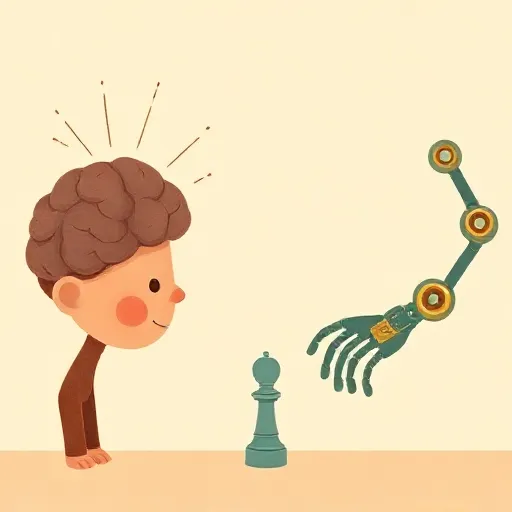
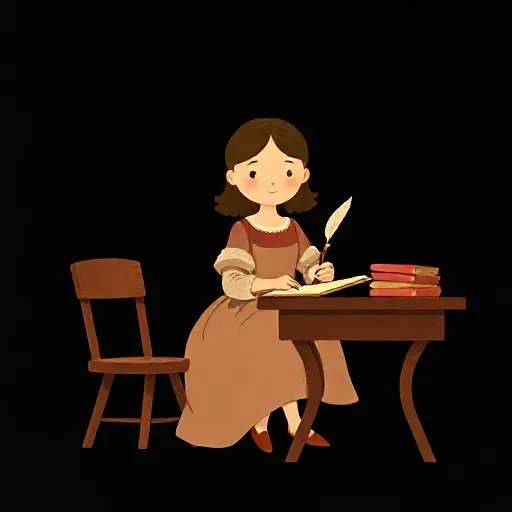
In 1643, a letter crossed the English Channel. It came not from a university scholar but from a 24-year-old princess living in exile. Elisabeth of Bohemia (1618–1680) had read the works of René Descartes (1596–1650), the most famous philosopher of the age, and she had doubts. She put them into a polite but piercing question: How can something that doesn’t take up space — an immaterial mind or soul — make a physical body move?
Descartes argued that mind and body are two completely different kinds of stuff, a view called substance dualism. The mind is a thinking thing, with no size, shape, or location. The body is an extended thing, a machine of flesh and bone that obeys the laws of physics. Elisabeth did not just accept that. She wanted to know how these two substances could touch. If your decision to raise your arm is a mental event, and the arm moving is a physical event, what connects them? The question would become famous as the mind–body interaction problem.
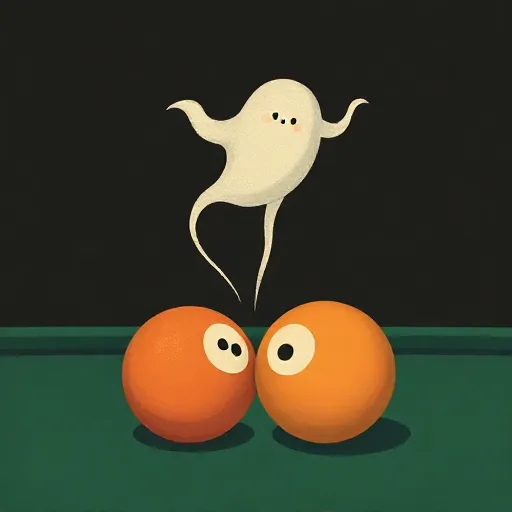
Elisabeth was no ordinary beginner. She had been educated in Greek, Latin, French, English, and German, and also in mathematics, politics, and science. Her siblings nicknamed her La Greque for her sharp mind. By the time she wrote to Descartes, she already had a firm grasp of the new mechanistic science — the idea that all physical changes happen through direct contact and motion, like billiard balls clicking together. Descartes himself tested her with a tough geometry problem, and she solved it more elegantly than he did. In a mechanistic world, a purely mental cause looks like a ghost trying to push a billiard ball. Her opening letter set the stage for a six-year correspondence that would push Descartes to the very limits of his philosophy.
How Can a Thought Move Your Arm?

Descartes first tried to dodge the question. He suggested that the mind–body union works like the Scholastic notion of heaviness — a mysterious quality that makes heavy things fall. Elisabeth immediately called this out. She reminded Descartes that he himself had thrown out those old, magical explanations when he built his new science. She was a committed mechanist: she believed that only efficient causation — one thing pushing or pulling another — could explain physical events. You cannot just appeal to a special quality that nobody can see.
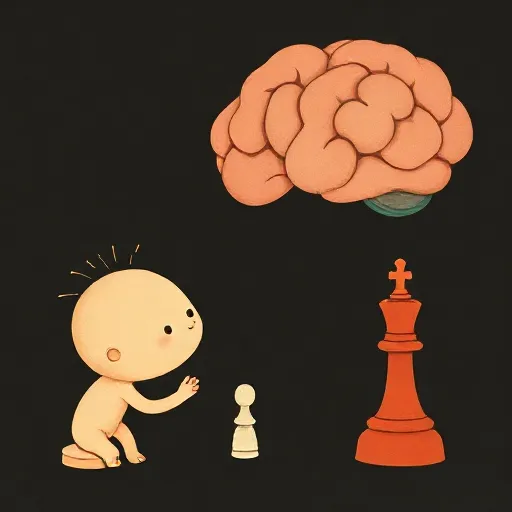
So the problem remained. If the mind has no extension, it cannot be at a location. It cannot bump into the body. Elisabeth was not buying a half-answer. She pressed further, pointing out that our ability to think depends on the body in obvious ways. When someone has the vapours — a 17th-century term for melancholic fumes thought to rise from the stomach — their mind feels foggy. A fever or a sleepless night makes it hard to reason clearly. If the mind were a completely separate substance, why would a sick body drag it down?
At this point, Elisabeth seems to have been willing to reconsider substance dualism itself. She asked, in effect, whether the mind might be material after all — maybe an extended thing, but of a very different kind from the ordinary body. She never declared herself a materialist, but she pushed the idea that the mind might depend on the body far more than Descartes wanted to admit. She even mentioned, with a hint of irony, that her sex was often treated as a bodily condition that weakens reason — a claim Descartes simply ignored.
Why a Bad Cold Can Mess Up Your Thinking
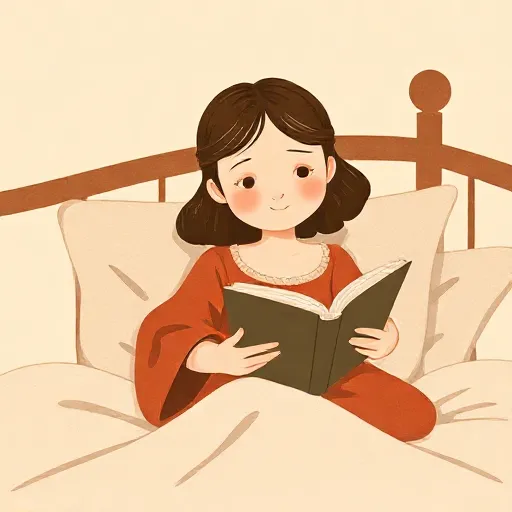
Elisabeth believed that we do have freedom of thought. You can choose to turn your attention from one thing to another. Your sequence of thoughts is not locked into the chain of physical causes. But she also insisted that this freedom works only when your body is in decent shape. A pounding headache, a long illness, or deep exhaustion does not just hurt — it shrinks your mental space. You can still think, but the range and sharpness of your thinking shrink.
This insight cut against the spirit of Descartes’ substance dualism. Descartes held that the mind is a substance that can exist all by itself, even without a body. Elisabeth did not directly say that was false, but her observations made it hard to believe. She treated the mind’s powers as fragile — something that grows out of a living body, not a ghost loosely attached. Some scholars think she was moving toward a more naturalistic view of the soul, where the soul is conscious but still has some connection to extension, without collapsing into pure matter. She kept the question open, refusing to let Descartes settle for easy answers.
Her stance also had a personal edge. Elisabeth lived through war, exile, and family danger. She knew firsthand how fear and grief could cloud judgment. When Descartes wrote that a calm philosopher can rule her passions with reason, Elisabeth reminded him that not everyone has the luxury of a quiet study and a healthy body. The ability to think well, she suggested, is partly a matter of luck.
You Can’t Just Mean Well — You Have to Do Good
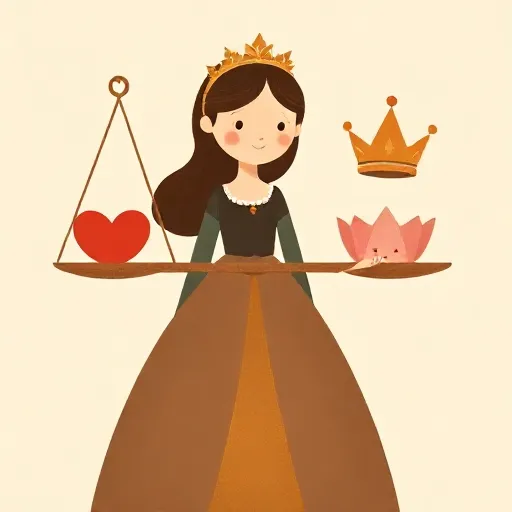
In 1645, Elisabeth fell seriously ill. Descartes, half-diagnosing her, believed the illness came from sadness over the English Civil War, which threatened her family. He took it upon himself to lift her spirits by talking about how to live a good life. They read the Roman philosopher Seneca together but found his work muddled. Descartes then offered his own account of virtue.
For Descartes, being virtuous meant one thing: having a firm resolution to do what you judge best, no matter what happens afterward. If you mean well and act on your best judgment, you are virtuous. Success or failure does not matter. This made virtue impervious to fortune. But Elisabeth was not comforted.
She pointed out that good intentions can go wrong. A ruler might decide on a policy she honestly believes is the best for her people, but without complete information, she could trigger a disaster. The regrets would still sting. According to Elisabeth, you cannot be perfectly content if you cause harm even by accident. To avoid regret altogether, you would need what she called an infinite science — knowing every single result of every action throughout the future. Of course, no human has that.
Elisabeth also asked a more basic question: How do we even figure out what is truly best? Each of us has biases. Our passions, our self-interest, and our habits shape what we think is valuable. Without a clear measuring stick, Descartes’ formula for virtue — “do what you judge best” — feels hollow. Her criticism hinted at a view of ethics that treats good and bad as a balance of competing interests, much like the contract theories of thinkers such as Thomas Hobbes.
Descartes responded by listing a few truths he thought were enough to guide us: God exists, the soul is immortal, the universe is vast. Elisabeth shot back that those ideas only open more puzzles about free will and why a good God would allow suffering. They do not help a real person choose between two difficult options at dusk.
Ruling When the World Is Messy

Elisabeth was not just a sharp critic of ethical systems; she had to put thoughts into practice. As a princess in exile with a family struggling to regain political footing, she faced brutally practical problems. She asked Descartes for his best rules for civil life and for his take on Machiavelli’s The Prince. Descartes politely refused to lay out rules but offered his reading. Elisabeth disagreed: she thought Machiavelli’s focus on the most violent, unstable states was useful for getting a grip on power, but it did not tell you how to govern once things settle down.
Her own approach can be pieced together from her letters. She rejected Descartes’ suggestion that we can count on God to guarantee a good outcome if our intentions are good. Instead, she leaned toward a hands-on, pragmatic way of ruling. She understood that a leader’s job is not just to follow a bright ideal — it is to balance the competing desires of real people, each driven by their own passions and self-interest. Rulers, she noted, are not passionless philosophers. They have their own fears and ambitions, and they have to make decisions quickly, with incomplete information.
She applied this skill in a surprising second act. In 1667, Elisabeth became the abbess of a Lutheran convent in Herford, Germany. She managed the convent’s lands and finances shrewdly. More strikingly, she opened its doors to persecuted religious groups — Labadists, Quakers, and others — offering shelter even when it caused tension. She governed not by abstract principle alone, but by navigating messy, real-world conflicts. She once wrote to Descartes that governing and doing philosophy seem almost incompatible. Yet she found a way to do both, turning a convent into a small, live experiment in how to rule a fractured community with wisdom and pragmatism.
So, Who Are You — A Thinking Thing or a Body?

Elisabeth never wrote a treatise, and she refused requests to publish her side of the correspondence. Her voice survived only through the letters that were found centuries later in a dusty packet. But her questions are as alive as ever.
Today, neuroscientists trace how electrical signals in the brain produce decisions, but they still puzzle over the “interaction” between a felt thought and a physical movement. Philosophers still debate whether the mind is nothing more than the brain, or whether something about conscious experience does not fit into the material world. Elisabeth saw that crack in the picture of the perfectly rational, independent mind.
Her moral insights echo, too. When you mean to help a friend but your advice makes things worse, you feel the sting she described. You realize that good intentions are not a magic shield against regret. And when the world feels chaotic, her refusal to settle for tidy philosophical answers can be refreshing. She showed that philosophy is not just for gray-bearded scholars in quiet rooms. A young woman, wrestling with war, exile, and bodily limits, could push the greatest philosopher of her age to think harder than ever before.
The next time you feel your attention drift because you are tired, or you wonder whether you really chose to raise your hand or just watched it happen, you are stepping into Elisabeth’s world. Her question — how does a thought become an action? — is not settled. It is yours to keep asking.
Think about it
- If your mood and energy level change how well you can think, are you ever completely in control of your own mind?
- Can you be a good person simply by intending to do good, even if your actions accidentally cause harm? Why or why not?
- If you were in charge of a group, would you try to follow fixed rules, or would you decide each situation case by case based on what seems to work best?