Why Are There Spotted Moths? The Secret War Over Evolution
A Moth, a Paintbrush, and a Question
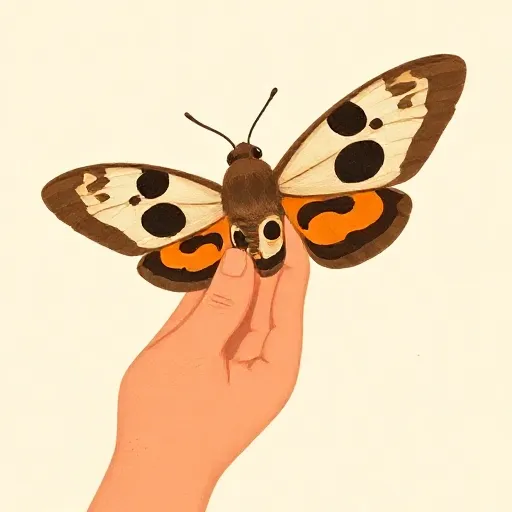
In the summer of 1939, a young biologist crept through an English woodland at dusk. He carried a net, glass jars, and a tiny paintbrush. His target was Panaxia dominula, a moth with dramatic black spots on white wings. He captured each moth, marked it with a dab of paint, and released it back into the nettles. For eight years, he and his mentor returned to the same patch, counting how many marked moths reappeared. They were chasing a huge question: what drives evolution? Is nature a painstaking editor that perfects every detail, or is much of life’s variety just the roll of a genetic dice?
Their study ignited a fierce debate that has lasted almost a century. It began with spotted moths and striped snails but now reaches into your own DNA. The field they pioneered is called ecological genetics — the study of how genetic differences arise and spread in wild populations, and which forces shape them.
Why Are There Two Kinds of Snails?
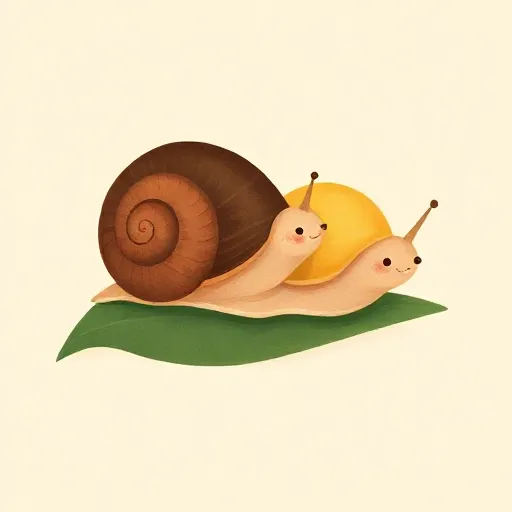
Walk through an English garden in spring, and you might see snails with different shell patterns — some with bold dark stripes, others plain. This is a polymorphism: two or more distinct forms of the same species living side by side. Polymorphisms fascinated early ecological geneticists because they were visible, easy to count, and clearly had a genetic basis. But why didn’t one form simply replace the other?
Biologists already knew about natural selection: the process where traits that help survival become more common over generations. If one shell pattern helped snails hide from thrushes, that pattern should spread. But here, both patterns were common. This meant something else was going on. The English geneticist E. B. Ford (1901–1988) believed that natural selection was still in charge — it was just working in two directions at once, creating what he called a balanced polymorphism. For example, banded snails might be harder to spot in one season, while plain ones did better in another, keeping both types in the population. Ford went further: he defined a genetic polymorphism in a way that ruled out mere mutation or chance as the explanation. The rarest form, he argued, had to be too common to be explained by recurring mutations alone. For Ford, any widespread genetic variant had to be there because of active natural selection. Nature was a master tuner.
Ford, Fisher, and the Power of Selection

Ford worked closely with R. A. Fisher (1890–1962), a towering statistician and geneticist. Fisher believed that evolution was a slow, gradual process. In his view, natural populations were enormous — sometimes the whole planet’s population of a species. In such a vast group, the effect of random chance was practically zero. Even a tiny advantage — a fraction of a percent — would eventually take over, given enough time. This became known as Fisherian gradualism.
Ford built on this idea. He estimated that the selective advantage of a gene in the wild was often 25 percent or more — huge by evolutionary standards. When populations shrank due to harsh conditions, he argued, natural selection grew even stronger, weeding out any unfit variants and leaving little room for drift. So in Ford’s world, the struggle for survival was always in the driver’s seat.
Fisher and Ford tested their ideas in the field. Their most famous study tracked two wing-color variants of the Panaxia moth from 1939 to 1946. They used mark-recapture data to estimate population sizes and then calculated whether the year-to-year swings in the frequencies of the variants were better explained by selection or by drift. Their conclusion was absolute: the fluctuations were too large for random drift to explain. They declared that chance fluctuations could play no significant role in evolution. For them, the matter was closed.
The Sewall Wright Effect: When Chance Fights Back
But the matter was not closed for Sewall Wright (1889–1988). Wright had spent years developing a richer model of evolution. He believed that natural selection, mutation, migration, and random genetic drift — the accidental rise or fall of gene frequencies, especially in small populations — all worked together. Species, he argued, are often broken into many small local groups connected by occasional movement. In these small pockets, drift plays a big role.
Wright tore into Fisher and Ford’s moth study. He pointed out that their population size estimates were way too high. Moths don’t form one giant random-mating pool; they cluster in patches. Caterpillars often die in family groups from viral infections, which reduces the effective breeding population. The study also included frequency data from ten years before the careful counts — a period with no population size estimates at all. Without that earlier data point, the fluctuations looked much smaller and could easily be explained by drift. On top of that, the gene frequency estimates themselves had sampling errors that accounted for over half the observed variance. Wright argued that if you forced a pure selection explanation onto the data, you’d have to believe that the selective value of a single gene swung from near lethality to huge benefit and back every few years, with no environmental cause in sight.
Fisher and Ford did not back down. In a reply, they coined the mocking term “Sewall Wright Effect” to describe the idea that chance could matter in evolution. Ford, decades later, still insisted that drift played no significant part in controlling evolution. The battle lines were drawn.
The Hidden Code: Allozymes and the Neutral Revolution

By the 1960s, a new window onto genes opened. Allozyme electrophoresis let scientists see variation not in wing spots but in the proteins that genes actually build. The results were a shock. In many species, 15 to 40 percent of genes carried different forms, and the average individual was genetically different from its neighbor at 5 to 15 percent of its genes. This hidden diversity was far greater than the visible polymorphisms Ford had studied.
There was a huge problem. If natural selection were keeping each of these variants in a balanced state, the number of selective deaths required — the cost of natural selection — would be impossibly high. The population would have to produce far more offspring than it could to pay that cost. The math didn’t add up.
Enter Motoo Kimura (1924–1994). In 1968, he proposed the neutral theory of molecular evolution. Kimura agreed that natural selection shapes body parts and behaviors. But at the chemical level of DNA and proteins, he argued, most changes are neither helpful nor harmful — they are neutral. Their fate is determined by random drift. A neutral mutation has a small probability of drifting to fixation equal to its starting frequency; a new mutation’s probability is about 1 divided by twice the population size. Over long timescales, this random process can fill genomes with neutral variation.
Kimura’s idea was fiercely resisted, but DNA sequencing later confirmed a key prediction. Sites in the genetic code that can change silently — without altering the protein — evolve much faster than replacement sites that do alter the protein. This pattern, called purifying selection, showed that selection was mostly busy preventing harmful changes, not sculpting every little variant. At the molecular level, drift was a major player.
From Moths to Genomes: Why the Fight Lives On

The tools have grown vastly more powerful. Today, ecological geneticists sequence entire genomes. They can detect selective sweeps — when a strongly favored gene rises to prominence and carries neighboring neutral DNA with it, temporarily erasing variation nearby. They can also find stretches of DNA where variation is unusually high, a sign of an ancient balanced polymorphism that has survived longer than the species itself. Some polymorphisms are so old they jump across species boundaries, like the ones that helped wild tomatoes on the Galapagos Islands borrow an orange fruit color from a local relative through hybridization.
Yet the core argument remains unsettled. Many researchers still lean heavily on natural selection as the main engine, pointing to things like codon bias — the fact that even among redundant DNA spellings, some are used more often because they allow more efficient protein building. That looks like selection reaching into the tiniest nooks of the genome. Others point out that drift can mimic some patterns of selection, and that separating the two remains extremely difficult without careful mathematical models. The debate between the selectionist and neutralist viewpoints, born in a moth-filled English wood, is still alive in every genomics lab.
What does this mean for you? The diversity you see in the people around you — in height, skin color, the ability to digest milk, susceptibility to certain illnesses — is a mix of selective fine-tuning and genetic drift. Understanding which is which helps doctors predict disease, helps conservationists save endangered species, and helps all of us grasp the beautiful, messy truth of how we got here.
Think about it
- You find a rare color form of a beetle in your neighborhood. What kind of evidence would you need to decide if natural selection is keeping it around, or if it’s just drifting by accident?
- If a random genetic change spreads in a small population and later helps them survive a new disease, should we call that adaptation or just luck? Why?
- Many serious genetic diseases still exist in human populations. Using the ideas of drift and selection, how might you begin to investigate why they haven’t disappeared?