Why One Experiment Can’t Prove a Theory Wrong
The Experiment That “Proved” Something—Or Did It?

In 1850, a French physicist named Léon Foucault built a clever device. He sent a beam of light at a rapidly spinning mirror, bounced it through a long tube of water, and measured how fast it moved. Scientists at the time were locked in a battle. Some said light was made of tiny particles; others said it was a wave. If light were a stream of particles, it should speed up when it entered water. A wave would do the opposite—it would slow down. Foucault’s numbers showed light moving slower in water. The particle camp was devastated. The wave theory had won. Many called it a crucial experiment—a single test that decides between two theories once and for all.
But decades later, a young physicist named Pierre Duhem (1861–1916) looked at that triumphant experiment and raised an eyebrow. What if light was neither particle nor wave, but something else entirely? What if the experiment only ruled out one narrow version of the particle idea, not every possible particle theory? Duhem announced that no experiment can ever be truly “crucial.” The result might seem decisive, but it actually leaves an enormous space of other possibilities wide open.
The Web of Ideas: Why You Can’t Test Just One Thing

Duhem was not just being picky. He had uncovered a deep truth about how all experimental science works. When a scientist makes a prediction and the result doesn’t match, you might think she simply proved her hypothesis false. But think about what goes into the test. There’s the main hypothesis, yes—but also assumptions about how the measuring instruments work, about how light travels, about the mathematics used, about a dozen background theories that everyone takes for granted. All these pieces cling together like a spider’s web. Duhem called this holism: you can never isolate one single hypothesis and test it alone.
He put it this way: if the predicted phenomenon does not happen, the only thing the experiment teaches you is that somewhere in that whole web of ideas there is at least one error. But which thread is broken? The experiment doesn’t say. This is the non‑separability thesis—the idea that a hypothesis can never be separated from the whole theoretical scaffolding and put on trial by itself. Later, the American philosopher W. V. O. Quine (1908–2000) extended this idea even further: he argued you could hold onto any belief, no matter what the experiment says, as long as you are willing to adjust enough other parts of the web. Duhem himself was more cautious. He didn’t think you could believe absolutely anything forever; he just insisted that when an experiment goes wrong, the blame is always ambiguous.
No, Science Doesn’t Need Mechanical Models
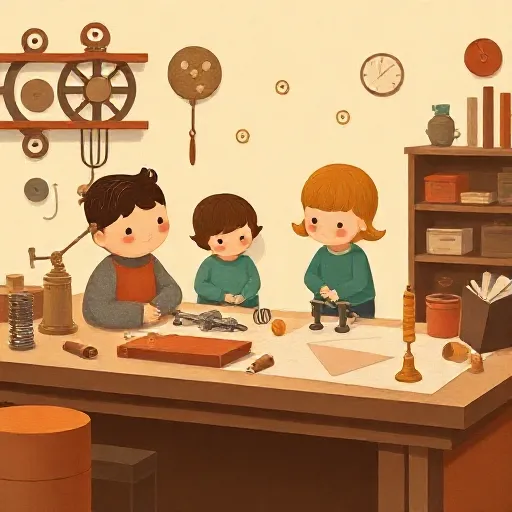
Duhem wasn’t only worried about how experiments tested theories. He also cared deeply about what a theory should look like. In his time, many English scientists—especially James Clerk Maxwell (1831–1879) —loved to build little mechanical models. They imagined electric and magnetic fields as invisible gears, wheels, or fluids churning in space. For them, understanding meant picturing a machine that mimicked the behavior of nature. Duhem called this a dangerous confusion. He wanted physics to be autonomous, meaning it shouldn’t depend on unobservable gizmos dreamed up by the imagination.
Instead, Duhem defended what he called a representative theory (or instrumentalism, as philosophers later put it). A good physical theory, he said, doesn’t claim to reveal the hidden reality behind appearances. It simply classifies and summarizes experimental laws in a neat mathematical form. Once you start saying electric fields are “really” little whirlpools, you’ve stepped outside physics into metaphysics—and your science becomes fragile, because someday someone will dream up a better model. By keeping theory abstract and logical, you protect it from being tossed out every time a fashion changes.
Yet Duhem added a surprising twist. He believed that over centuries, as theories grew more and more systematic, they would slowly converge toward a natural classification—a perfect ordering of the world that would eventually match the way reality actually is. He didn’t think we could ever be certain we’d reached that endpoint. But he held that the long history of physics, with all its dead ends and corrections, was bending toward truth. This is why many scholars today say Duhem was not a pure instrumentalist after all; his view was a kind of gradual, historical realism.
The Middle Ages Were Not So Dark After All
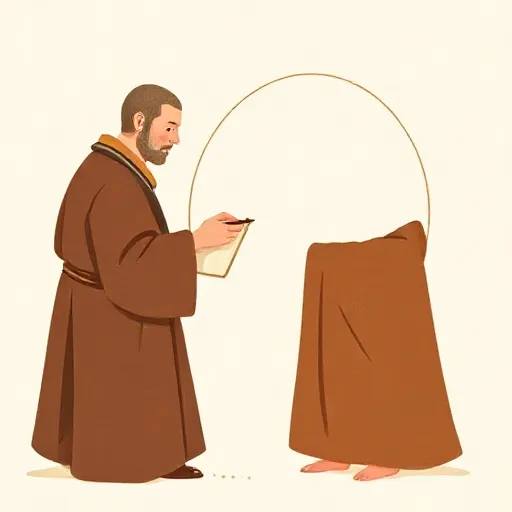
In 1904, while researching an old book on the origins of statics, Duhem stumbled across an unknown medieval thinker named Jordanus de Nemore. That footnote changed everything. For most of the 1800s, scholars treated “medieval science” as a joke—a long, empty gap between ancient Greece and the brilliant 17th century. Duhem followed the trail from Jordanus to a whole Parisian school of physicists in the 1300s, including John Buridan and Nicole Oresme.
What he found astonished him. These medieval scholars had developed a sophisticated impetus theory—the idea that a moving object carries an inner force that propels it forward. That sounded an awful lot like what Galileo Galilei (1564–1642) called momento, and later what Isaac Newton (1643–1727) would formalize as inertia. Duhem argued that Galileo did not invent a new physics out of thin air; he rounded out a tradition already thriving in the medieval universities. Even the idea that the Earth might rotate, famously argued by Copernicus and Galileo, had been seriously discussed by Oresme two centuries earlier.
Duhem’s continuity thesis upset many historians. But it forced everyone to see that science doesn’t leap forward in sudden revolutions alone. It also creeps forward through long, quiet conversations, often in places we’ve forgotten to look. Far from being a period of darkness, the Middle Ages turned out to be a laboratory where many early modern ideas were first tested in words.
Why Duhem’s Puzzle Will Never Leave You Alone
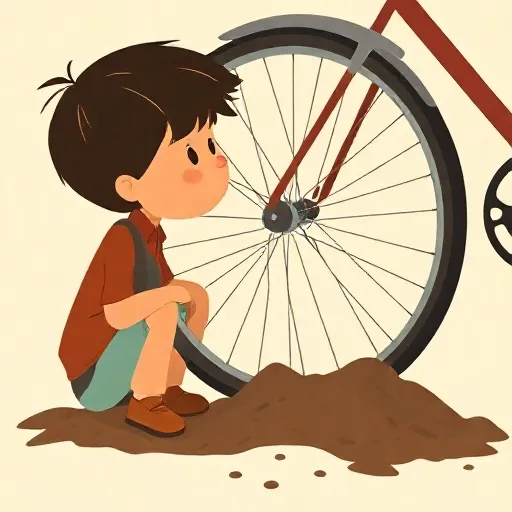
You may never stare at a spinning mirror in a French laboratory, but Duhem’s puzzle follows you around. Every time something fails—a bike chain slips, a computer program crashes, a plant in your windowsill wilts—you face a web of possible causes. You might think you know the culprit, but you can’t be sure without checking a dozen background conditions. Even then, you’re using something like bon sens (“good sense”), Duhem’s name for the scientist’s trained instinct about where to look first. It’s not a rulebook; it’s a feel you develop by knowing the history of similar problems.
Duhem’s own life was full of tangled causes. He was a deeply religious man in a strongly anti‑religious French university system. His first doctoral thesis was rejected, partly because it challenged a beloved principle of a powerful chemistry professor. He spent his career in provincial cities, far from Paris, while his ideas slowly reshaped the philosophy of science across Europe and America. And those ideas still refuse to settle down: today, philosophers argue about whether a “crucial experiment” exists at all, and working scientists weigh Duhem’s web every time they debug a theory.
Science is often pictured as a clean march from question to answer. Duhem showed it’s more like a large family solving a puzzle together over centuries—still arguing, still adjusting, never quite sure which piece will be the one that finally makes everything click.
Think about it
- A science teacher’s demonstration fails to show the expected result. Should she immediately conclude the textbook theory is wrong? What else might she check first?
- If two equally smart researchers look at the same confusing experiment and disagree about which assumption is to blame, is that a sign of bad science or of normal science?
- Can we ever be completely certain that a scientific theory—like the theory of germs or the theory of gravity—is true, or is our confidence always just a matter of not having found the broken thread yet?