What Is God Made Of? The Medieval Idea of Divine Simplicity
What would a perfect being be made of?

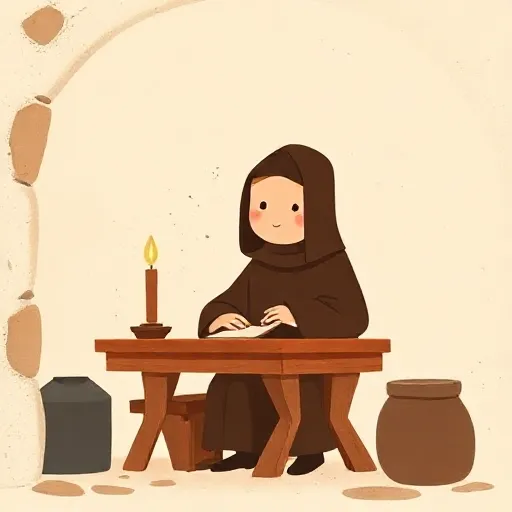
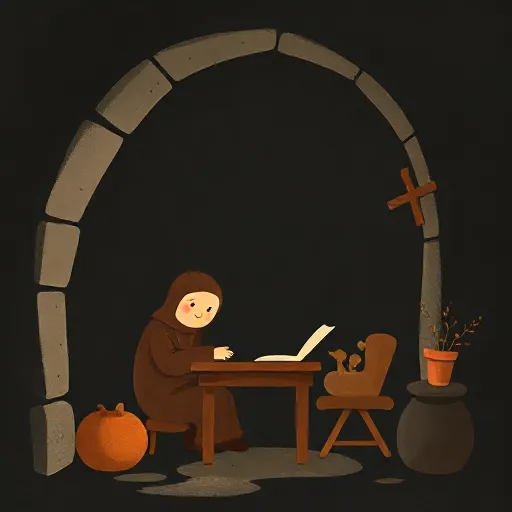
In the 13th century, a friar named Thomas Aquinas (1225–1274) sat writing in his monastery cell. He asked a question that seems almost too big to grasp: what is God made of? Not what does God look like, or where is God—but what is God’s basic structure? His answer still makes people scratch their heads: God is not made of parts at all. God is perfectly simple.
This is the doctrine of divine simplicity (DDS). It says God does not have goodness, power, or wisdom the way you have a backpack or a personality. Instead, God is those things. God is identical to his own existence, his own nature, and every perfection. There is no gap between what God is and what God has. To many people, that sounds like a riddle. But for Aquinas and other medieval thinkers, it followed from the very idea of a perfect being.
Why would anyone think God is simple?
The first reason comes from the idea of perfection. If God is the greatest conceivable being, then God must be completely independent. A being that depends on parts to exist depends on those parts, just like a car depends on its engine. But God, being ultimate, should depend on nothing outside himself. If God had properties—like being just, being all-knowing—and those properties were separate pieces of him, then God would depend on them. So to be fully independent, God must be his properties rather than having them.
A second reason deals with necessity. A perfect being must exist necessarily—meaning it’s impossible for that being not to exist. But what could ground such a rock-solid existence? Aquinas argued that if God’s essence (what God is) is the very same thing as his existence (that God is), then God couldn’t fail to exist. A being whose nature just is to exist is automatically necessary. Simplicity guarantees this identity.
There’s also a famous puzzle from Plato called the Euthyphro dilemma. Is something good because God commands it, or does God command it because it is good? If the first, goodness seems arbitrary—God could make cruelty good. If the second, God is bound by an external standard of goodness, which threatens God’s sovereignty. Divine simplicity offers an escape: God is not subject to a standard of goodness; God is the standard. Because God is identical to perfect goodness, God’s will can never stray from it.
The big objection: can a person be a property?

Not everyone finds this idea convincing. The philosopher Alvin Plantinga (born 1932) posed a sharp challenge. If God is identical to his properties, Plantinga said, then God is a property. But properties are abstract objects—like the number seven or the idea of redness. Abstract objects can’t do anything. They can’t create a universe, know things, or love anyone. A personal, active God must be concrete, not an abstract property. So DDS seems to contradict the core belief that God is a living creator.
To see the problem more clearly, think about how we normally talk about people and their features. You are friendly, curious, maybe a bit impatient. You have those traits, but you aren’t identical to them. They are parts of your overall character, not the whole you. Plantinga’s world splits beings into two separate categories: concrete individuals (that can act) and abstract properties (that can’t). On that picture, saying God is a property breaks the rules of what can exist. So DDS looks like a category mistake—like asking what color Tuesday is.
A different way of building things: constituent ontology
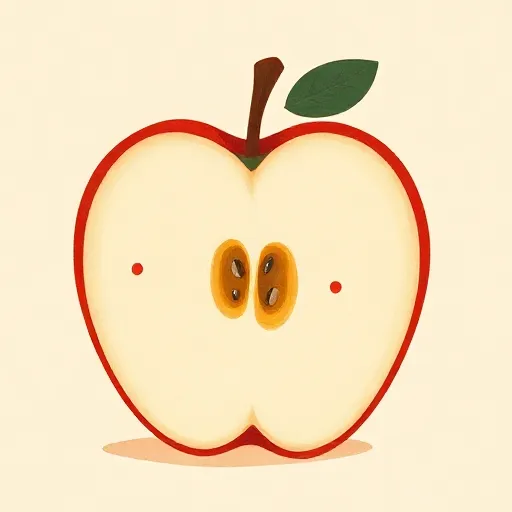
But Aquinas and his followers didn’t think about individuals and properties the way Plantinga does. They worked within a different framework called constituent ontology. In this view, properties are not abstract tags floating in another realm. Instead, they are real pieces—constituents—of the things that have them. For an apple, its redness and sweetness aren’t separate ghostly ideas; they are actual parts of the apple, somehow intertwined. A person’s wisdom is literally something inside them, part of what makes them who they are.
In everyday things, these property-parts come together as a bundle. An apple’s color, taste, and shape are distinct bits that happen to be joined in one object. Their togetherness is contingent—they didn’t have to be in this apple. But for God, the DDS defender argues, all perfections are fused into one single item. God is a self-individuating nature: there’s nothing extra (like matter or a separate “thisness”) that makes God a distinct individual apart from his nature. In God, nature and person are identical. Under constituent ontology, this is at least thinkable, even if it still boggles the mind.
Can God’s attributes all be the same thing?

Even if we accept that God is identical to his nature, another puzzle pops up. If God is omniscience (all-knowing), and God is omnipotence (all-powerful), then by logic, omniscience must equal omnipotence. But knowing everything and being able to do everything seem like different concepts. How can they be the same?
William Mann (1947–2022) offered a clever fix. Instead of saying God is identical to the property omniscience in the abstract, we should say God is identical to his own omniscience—a property instance. A property instance is not the universal idea, but a particular, concrete version of it tied to one being. Socrates has his own wisdom, a specific instance of wisdom that is uniquely his. God’s property instances—his wisdom, his power, his life—are each identical to God. So God’s wisdom is God’s power, not because the general concepts are the same, but because both converge into the one simple divine reality. On this view, you don’t have to claim that wisdom and life are the same everywhere, only that in God they merge perfectly.
This move avoids some problems, but it invites a new worry: if God is a property instance, isn’t God just a property, not a person? Mann replied that every person—including you—is ultimately a property instance, a concrete bundle of all your properties. Not everyone buys that, and the debate rumbles on.
The mystery of freedom and necessity
Even if the identity puzzles can be managed, a deeper problem surfaces. If God is perfectly simple and has no unrealized potential whatsoever—what Aquinas called pure act—then what God does, God does necessarily. God can’t shift from “maybe I’ll create” to “I will create.” That would mean God changed, gaining something he previously lacked. But a simple being can’t change.
So, if God creates a universe, it seems God must create it necessarily. Then the universe itself becomes necessary. You, your pet, the chair you sit on—all of it would exist in every possible version of reality, just as God does. That’s called modal collapse: the distinction between necessary and contingent things collapses.
Many philosophers, like Eleonore Stump (born 1947), see this as a point where our reasoning hits a wall. Stump compares it to wave-particle duality in physics. Light behaves both like a wave and like a particle, and we can’t form a single picture of how that’s possible, yet we have good reasons to accept both. In the same way, she argues, we have strong reasons to say God is both simple and free, even though we can’t grasp how the two fit together. This is sometimes called a mysterian position: it’s a genuine mystery, not a mistake.
Others, like William Hasker, find that move unsatisfying. If a claim seems to contain a contradiction after our best efforts, it’s more reasonable to reject it. For Hasker, divine simplicity itself is the problem—it simply can’t coexist with a God who freely decides things. Among theists today, you’ll find passionate defenders of both sides.
So what does this mean for you?

You might wonder why a 750-year-old debate about God’s inner structure matters to anyone who isn’t a theologian. But the question touches something closer to home: how far can human thought go? Divine simplicity challenges us to ask whether our minds, built to handle dogs and chairs and planets, can ever really capture the deepest possible reality. Aquinas himself said we can know that God is, but not what God is. The simplicity doctrine is a way of taking that humility seriously.
It also forces us to think about what it means for something to be truly ultimate. Is the ground of everything complex, like a giant machine with many interacting gears, or is it utterly unified, something more like a single blazing note of existence? Neither answer fits neatly into everyday language. Wrestling with DDS is like trying to describe a color no one has ever seen—you circle around it, pointing at what it’s not, catching glimpses through analogy and negation.
Whether you end up thinking DDS is a profound insight or a hopeless muddle, the act of working through it stretches your ability to reason about the boundaries of thought. And that, really, is what philosophy is for.
Think about it
- If you tried to describe a being that has absolutely no parts, what everyday object or experience would you use as a comparison? How far does the comparison hold up?
- Can something be a person if it doesn’t have separate thoughts, feelings, or choices—just one single reality that is all those things at once? Why or why not?
- If some truths about reality are beyond what the human mind can ever fully picture, is it still worth trying to talk about them? What makes an attempt worthwhile?