Can a Life with a Disability Be Just as Good?
A Phone Call That Changes Everything
Imagine a couple getting a call from their doctor about a prenatal test. The doctor says the fetus has a condition that will likely mean being born with limbs that develop differently, or without the ability to hear. Right away, the parents wonder: Will our child have a good life? Will they be happy? That question — does an unusual body or mind make a life worse? — isn’t just for parents. It’s a question philosophers have been wrestling with for decades.
We all make assumptions about what makes a life go well, even without realizing it. Those assumptions affect which medical treatments we fund, which babies get life support, and how we treat the person in a wheelchair on the bus. To figure out whether disability necessarily makes life worse, we first have to ask a more basic question: What is a good life?
What Counts as a Good Life?
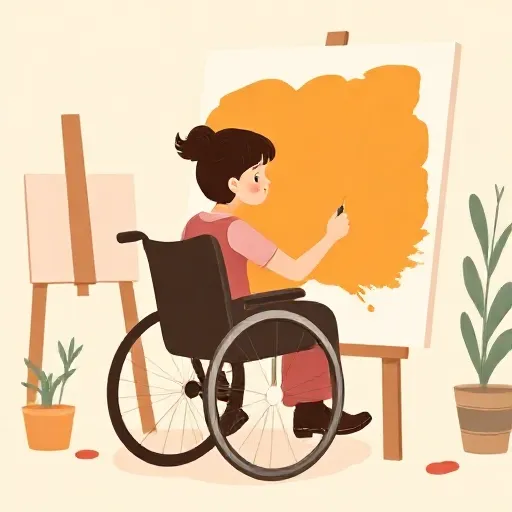
Philosophers usually group their answers into three big camps. T.M. Scanlon (born 1940) laid them out clearly.
First, there are experiential theories. On this view, a good life is simply one that feels good to the person living it — lots of joy, pleasure, and satisfying moments, and not too much pain. If you smile more than you cry, your life is going well.
Second, there are desire theories. Here, a life goes well when you get what you want. If you deeply desire to become a musician, and you end up making music, your life is better — regardless of whether every day feels happy. The satisfaction of your deepest wants is what matters.
Third, there are objective list theories. These say that some things are just good for human beings, whether we want them or enjoy them. Having close friends, being healthy, thinking for yourself, playing, and experiencing beauty might be on the list. Derek Parfit (1942–2017) coined that name. For someone like Martha Nussbaum (born 1947), that list includes using your senses, moving around, loving others, and living a life you have thought about and chosen.
Now here’s the catch. These different theories give very different answers when we ask: “Does a disability automatically make someone less well-off?”
On an experiential theory, we’d ask: Do people with disabilities feel less joy? The evidence is striking. When researchers ask people with disabilities to rate their quality of life, their scores are often just as high as anyone else’s. On a desire theory, their self-reports also carry weight — they know what they want. But on an objective list theory, things get complicated. If you cannot see, for example, you miss out on visual beauty, which might be on the objective list. That suggests a life must be missing something important.
The Problem with the List
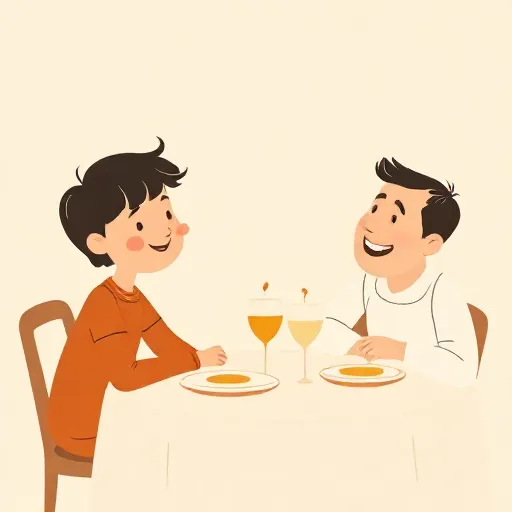
So does an objective list mean life with a disability can’t measure up? Many disability scholars argue it depends on how you write the list. Adrienne Asch (1946–2013) pointed out that many activities we imagine are blocked by a disability are really just means to an end — and the end can be reached another way.
Think about walking. We often talk as if walking itself is a great good. But what is it good for? Mainly, for moving from place to place. A wheelchair achieves the same end. Or think about talking — it’s a means to communicate. A deaf person who signs is communicating. The valuable end is still there.
Even when an experience seems to have intrinsic value — value all by itself — the picture might not be as narrow as it first appears. The intrinsic value of sight might really be the value of rich sensory and aesthetic experience. A blind person can have that through sound, touch, and story. As Asch and David Wasserman argued, human beings have a “fortunate redundancy.” A person who lacks one sense or motor function usually has more than enough others to build a life full of beauty, relationships, and meaning.
Of course, some philosophers say the list still matters. Having more ways to access a good — like enjoying both sunsets and symphonies — might make it easier, or make life richer. But does it make the life itself better, if the person is just as fulfilled? That’s the puzzle.
Are Disabilities “Neutral” Characteristics?
Some philosophers, such as Elizabeth Barnes, argue more dramatically: Disabilities are not just compatible with a good life; they are neutral characteristics — like hair color or being left-handed, at least once we set aside social prejudice. On this mere-difference view, being disabled doesn’t make your life worse on average. It just makes it different.
This sparks fierce argument. One strong objection comes from Jeff McMahan (born 1954). He says: If a single disability is neutral, then intuitively a combination of many disabilities should also be neutral — but that doesn’t seem right. A person who is both blind and deaf, for example, faces far greater challenges in achieving welfare than someone with only one, even if each alone might not reduce well-being. He thinks the harm of disabilities is “largely additive.” Asch and Wasserman reply that human capacities are usually “more than adequate,” so you don’t need compensation; you just don’t run out of ways to live fully. Still, McMahan’s point about combinations has force: it’s harder when you have fewer routes altogether.
Another problem is an awkward asymmetry. We enthusiastically try to prevent disabilities. Taking folic acid during pregnancy to prevent spina bifida is not just accepted — it’s sometimes required in food. But imagine the government adding a safe supplement to the water to prevent female sex or dark skin. Almost everyone would be horrified. If disability were truly neutral like sex or race, why is preventing it seen as obviously good while the other cases are seen as offensive? Barnes answers that the difference is often about consent and bodily invasion, not about the underlying nature of the characteristic. She says a procedure to prevent deafness might be permissible, just as a procedure to cause it might be permissible if freely chosen — but both can be harmful transitions. The debate is far from settled.
A Life’s Story, Not Just a Set of Parts
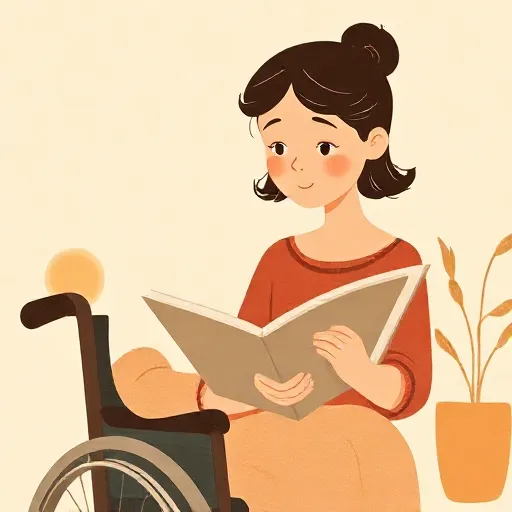
Even if a disability makes some parts of life harder, that might not mean the whole life goes worse. Think of a novel. A story can include painful chapters but still be a great book overall. Some philosophers, like David Velleman, argue that the goodness of a life isn’t the sum of its moments. It’s about the narrative — how earlier events gain meaning later. A person who becomes disabled as a teenager might find that the struggle gives their life a focus and depth they never had before. That doesn’t mean the disability wasn’t a difficulty; it means difficulties don’t always ruin the whole.
Similarly, philosophers of “noncomparative harm” say an event can be a genuine harm — like a painful injury — without making you worse off overall than you were before. You might be harmed by a surgery that saves your life. The harm is real, but the life that follows can be just as good, or better. This matters because it severs the link between “this condition hurts” and “this life is worse.”
Why the Answer Matters for Real Decisions
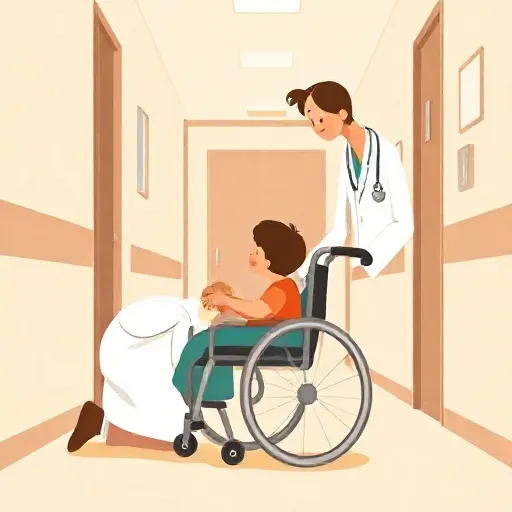
These aren’t just classroom puzzles. When a baby is born extremely prematurely and doctors talk about withdrawing life support, assumptions about the quality of a disabled life guide the decision. When health economists calculate the value of a treatment by measuring “quality-adjusted life years,” they often assume that a year lived with a disability is worth less than a year lived without one — even though people with those disabilities report being happy. If the “objective list” is written too narrowly, the calculation might devalue disabled lives in ways that are not just mistaken but harmful. In Oregon in the 1990s, such measures led to health-care priorities that discriminated against people with disabilities.
The debate also plays out in prenatal testing. A parent’s fear that a child with a disability can’t have a good life may lead to abortion, even for conditions that many adults live with happily. The sheer uncertainty of what a child’s life will be like — and the natural tendency to imagine the worst — can amplify mistaken assumptions. Disabilities are often experienced as tragic because we imagine them from the outside, without the tools and love and stubborn joy that fill real disabled lives.
The core question, then, is not only whether some people with disabilities thrive (they do). It’s whether we should change the way we think about well-being so that we stop treating disability as a automatic cut to a life’s value. That’s not just about being “nice” — it’s about getting the philosophy right.
Think about it
- If a person says their life is going well despite a disability, should we trust their report more than a doctor’s guess about how we would feel in their place? What might be gained or lost either way?
- Imagine a friend’s family is considering a medical procedure to restore hearing for their baby, who was born deaf. What different reasons might they have for and against the surgery, and which of those reasons are really about the baby’s future well-being rather than the parents’ own comfort?
- Should a society spend more money to prevent disabilities or to make buildings, schools, and apps accessible for people who already have them? How would you decide if you were in charge of the budget?