Is a Crowd of Barely Happy Lives Better Than a Few Wonderful Ones?
A Mother’s Choice That Changes Everything
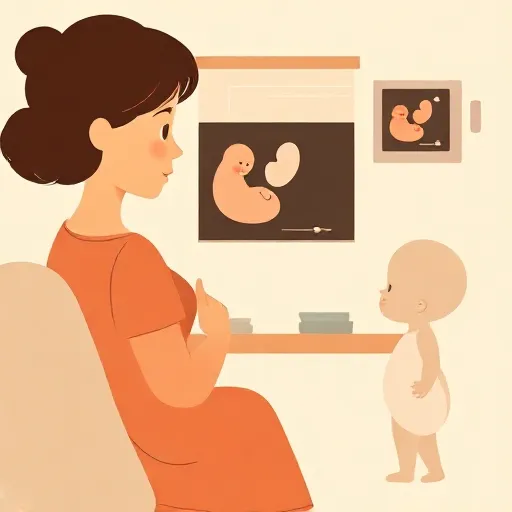
Imagine a pregnant woman who becomes ill. A simple treatment will prevent her child from being born with a condition that causes lifelong suffering. If she takes the medicine, her child will be healthy. Almost everyone agrees she should take it: the child will have a better life.
Now imagine a different woman. She has the same illness but is not yet pregnant. If she becomes pregnant now, her future child will have that same condition. If she waits a few months until she recovers, any child she has will be healthy. What should she do?
Many people feel she should wait. But if she does, a completely different child will be born — a different egg and sperm will meet. The child who would have been born sick will never exist. Can we really say waiting is better for that particular child? Nonexistence isn’t something you can compare to a life worth living. Yet if she waits, no child is harmed and a healthier child exists instead. The philosopher Derek Parfit (1942–2017) called this the Non-Identity Problem: it seems impossible to justify the choice by pointing to a benefit for the child who would have existed, yet we still feel postponing is the right thing to do.
Parfit suggested that the identity of the people involved shouldn’t matter. He called this the No-Difference View: in both cases, the mother should act so that a healthy child is born. That view leads straight into a much bigger puzzle — one that challenges how we think about whole populations.
The Repugnant Conclusion: When Total Happiness Runs Away
If personal identity doesn’t matter, what makes one future better than another? One natural answer is total utilitarianism: the best outcome is the one with the greatest total amount of well‑being — happiness minus suffering — no matter how many people share it. Given a choice between two populations, you should simply add up everyone’s lifetime welfare and pick the bigger total.
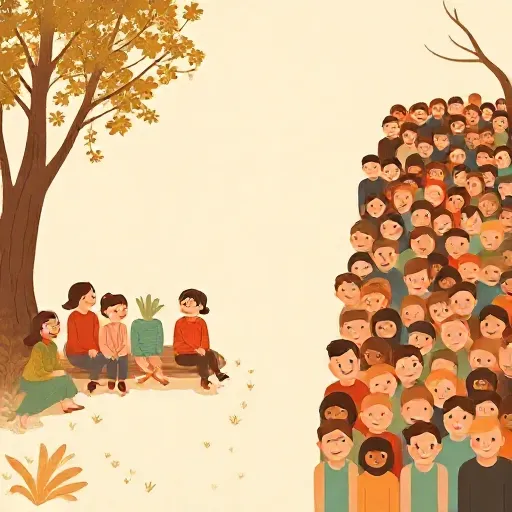
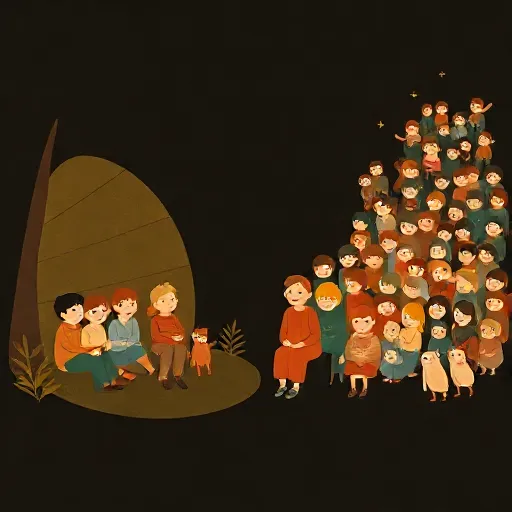
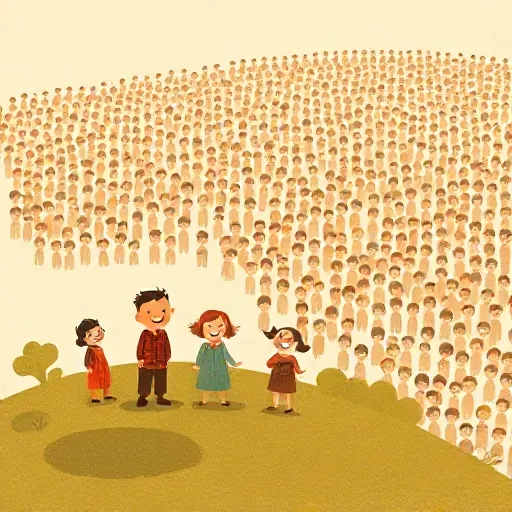
Parfit noticed an alarming consequence. Picture two possible worlds. World A has a small population, say a million people, all living extraordinarily happy lives. World Z has an unimaginably large population — trillions upon trillions — each person living a life that is only barely worth living: just enough pleasure to outweigh the pain, but no more. Because Z has so many people, its total well-being is larger than A’s. According to total utilitarianism, Z is the better world.
Parfit called this the Repugnant Conclusion: for any population of extremely happy people, there is a much larger population whose lives are barely worth living that is better overall. The philosopher Henry Sidgwick (1838–1900) had glimpsed the idea decades earlier, but Parfit showed how hard it is to escape. The conclusion feels repugnant because we instinctively value the quality of lives, not just their quantity. Yet the arithmetic pushes the other way.
The Mere Addition Trap: How One Reasonable Step Leads to Z
Parfit didn’t just spring the Repugnant Conclusion on us from nowhere. He built an argument called the Mere Addition Paradox to show that perfectly sensible steps force you toward it.
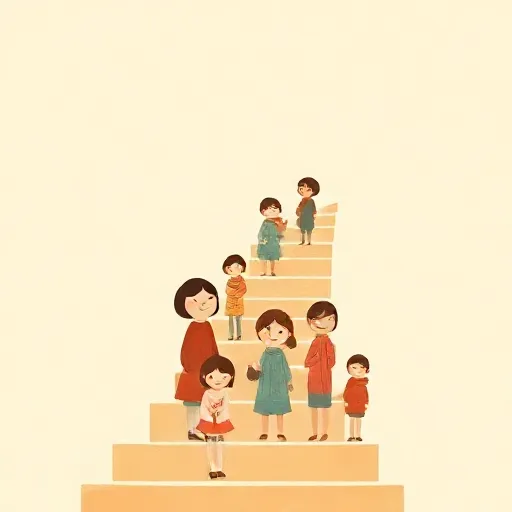
Start again with world A, full of very happy people. Now imagine adding a new group of people whose lives are still worth living but a bit less good. Call this larger world A+. The new people create extra total well‑being without making anyone worse off. Is A+ any worse than A? It’s hard to say yes — mere addition of lives worth living shouldn’t make the world worse. Now consider world B, which has the same number of people as A+ but is more equal and has a slightly higher average welfare. B is clearly better than A+. If A+ is at least not worse than A, and B is better than A+, then B must be better than A. Repeat this reasoning: from B to B+, then C, C+, and so on, levelling the well‑being at each step while adding more people. Eventually you land at Z, the world of barely worthwhile lives.
The paradox is that each link in the chain feels reasonable, but the final result is repugnant. Parfit challenged philosophers to find Theory X — a moral theory that solves the Non‑Identity Problem, avoids the Repugnant Conclusion, and blocks this chain of reasoning, without causing other absurdities. He admitted he never found one.
Quick Fixes That Break Something Else
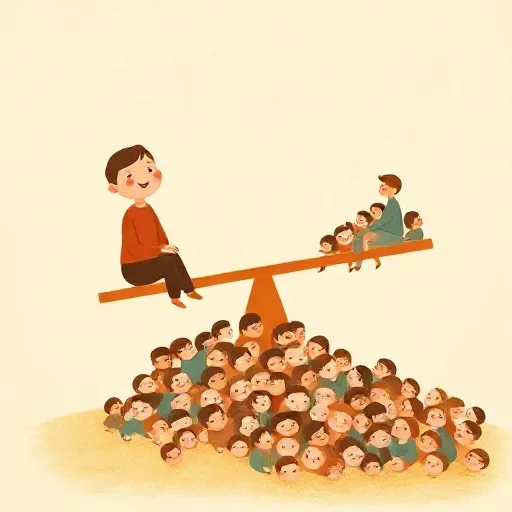
The simplest way out seems to ditch total utilitarianism for average utilitarianism: we should maximize the average well‑being per person, not the sum. In the A vs. Z comparison, A has the higher average, so Z is worse. The Repugnant Conclusion disappears.
But average utilitarianism comes with its own headaches. It implies that a population of a single person with an incredibly happy life is better than a population of millions with lives only a tiny bit less happy. Even more disturbing, it says that a world of one person suffering terrible torture is worse than a world with millions suffering slightly less terrible torture — because the average is only a little higher. Most people find that just as hard to swallow as the Repugnant Conclusion.
Other attempts try to blend total and average thinking. Variable value principles say that adding happy lives matters less when a population is already large, like a bonus that shrinks. This can avoid Z, but it leads to the Sadistic Conclusion: in some situations, adding people with genuinely tortured lives could be better than adding people with positive, happy lives. Critical‑level principles propose that only lives above a certain quality threshold count toward the world’s value; lives below that threshold count as zero or negative. That blocks Z too, but where should the threshold be? Set it high and you exclude clearly good lives; set it low and the Repugnant Conclusion slips back. And critical‑level views also generate a version of the Sadistic Conclusion. Every fix so far seems to trade one nightmare for another.
Are Some Good Things Worth More Than Any Number?

Parfit proposed a different escape: maybe some kinds of good are superior to others, in a way that no quantity of the lesser good can outweigh a single instance of the greater. The alphabet of worlds A to Z isn’t just a smooth slide down — moving from A to B means losing something like Mozart’s music. A few steps later, Haydn is gone; later still, Venice has been destroyed; and eventually all that remains is “muzak and potatoes.” The claim is that the best things in life are so valuable that losing them cannot be compensated for by any gain in lower‑quality pleasures, no matter how many people experience them. So A will always be better than Z, and the Repugnant Conclusion is blocked.
This approach feels appealing, but it has strange implications. You can arrange days of a life in a descending sequence where each day is only marginally worse than the day before — think of two days that differ by a single pinprick. If some days are superior to others, then somewhere in the sequence you would have to say that a certain number of α‑days is better than any number of β‑days, even though an α‑day and a β‑day differ by next to nothing. That seems to explode our ordinary ideas about what “better” means.
Why This Matters Every Time You Imagine the Future

This isn’t just a far‑off puzzle for professors. Whenever we decide how many resources to leave for future generations, whether to have children, or what a good global population would look like, we are brushing against the Repugnant Conclusion. If total well‑being is all that matters, we might be pushed toward creating enormous populations with meager lives. If we resist that, we risk endorsing principles that say adding a suffering person could be better than adding a happy one.
Some philosophers have argued we should simply accept the Repugnant Conclusion. One suggestion is that our intuition rebels because we cannot truly picture billions of lives — a life barely worth living may not feel terrible from the inside, and the sheer scale makes the judgment unreliable. Others have proved impossibility theorems: no population ethics can satisfy all the conditions we find plausible at once. That leaves a genuine dilemma without a clean escape.
The Very Repugnant Conclusion raises the stakes even higher: for any world of extremely happy people, there is a better world that mixes lives barely worth living with lives of horrible suffering. If you can’t accept that, you need a theory strong enough to block both — and no one has yet built one that doesn’t crash into other absurdities. The question Parfit opened remains one of the hardest in ethics: what kind of world should we really want?
Think about it
- If you had a magic dial that could turn a world of ten extremely happy people into a world of a billion people who are just barely content, would you turn it? What reasons pull you each way?
- Suppose future technology lets us create as many lives as we want. Would it be wrong to create huge numbers of people who only ever have just enough to get by, if that increased the total amount of happiness in the world?
- If rejecting the Repugnant Conclusion forced you to accept that adding a tortured life could sometimes be better than adding a happy life, would that change how you think about the original puzzle? Why or why not?