Why Would a Good Politician Ever Choose to Do Evil?
A Dangerous Idea from a Victorian Novel

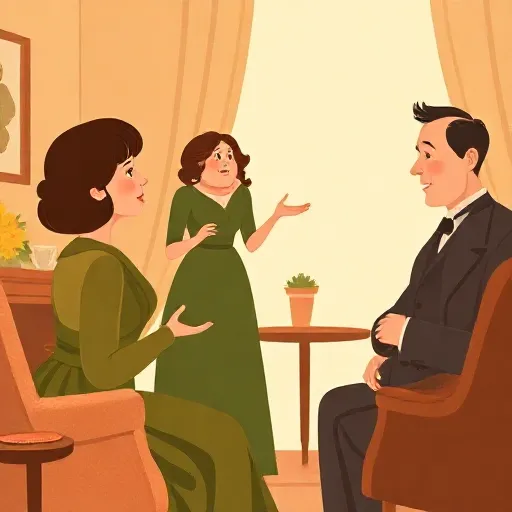
In 1875, the novelist Anthony Trollope wrote The Way We Live Now, a biting story about greed and corruption. One of its characters, Lady Carbury, is charming but morally shallow. She gets into a fierce argument with a journalist, Mr. Booker, about Augustus Melmotte, a swindling financier. Lady Carbury believes Melmotte’s grand schemes could create a magnificent new world for millions. To her, that makes any shady dealing along the way perfectly acceptable. Ordinary rules are for ordinary people.
“You would do evil to produce good?” Mr. Booker asks, horrified.
Lady Carbury shoots back: “I do not call it doing evil.”
She isn’t just making excuses for a crook. She is expressing a deeply unsettling idea: when the stakes are high enough, a leader might have to do terrible things — and maybe, just maybe, that could be right. This is the beginning of a puzzle that philosophers still wrestle with today.
What Are Dirty Hands?
The problem has a vivid name. In 1973, the American political theorist Michael Walzer published an essay called “Political Action: The Problem of Dirty Hands.” He used the phrase dirty hands to describe situations where a political leader must do something deeply immoral — like ordering the killing of innocent people — to prevent an even greater catastrophe. Unlike Lady Carbury, the leader doesn’t pretend the act isn’t evil. He or she knows it’s wrong, feels genuine guilt, but believes there is no other way to save a whole community.
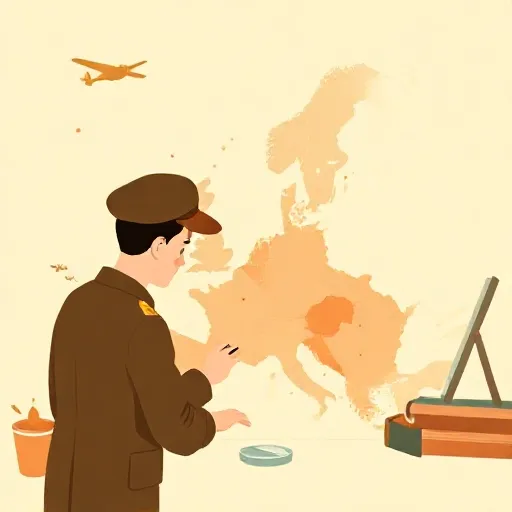
Walzer later narrowed the idea further. He argued that dirty hands are only permitted in what he called a supreme emergency. This is not just any crisis. It means the very survival of a people and their way of life is at stake — a threat so extreme that the normal moral rules falter. His most famous example came from the early part of World War II. With Nazi Germany poised for victory, Walzer argued that Britain’s deliberate bombing of German cities, which killed thousands of non‑combatants, was a gravely immoral act that had to be done. Once the danger receded, later bombing raids became simply wrong and unjustifiable.
This is a long way from Lady Carbury. For Walzer, even a necessary evil is still evil, and the people who commit it carry a stain that does not wash off.
Is It Really Right to Do Wrong?
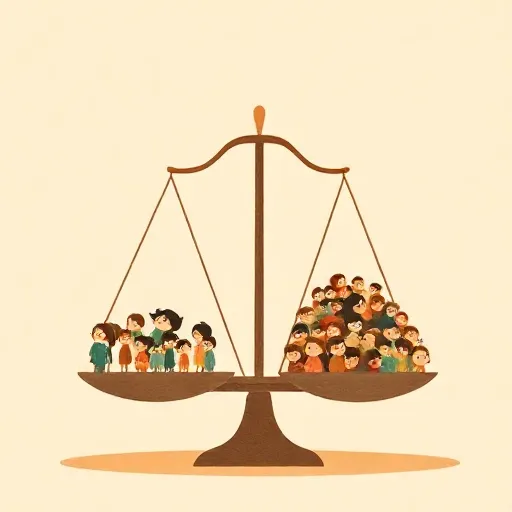
The dirty hands idea immediately runs into a huge problem. If you say it is sometimes “right to do what is wrong,” you seem to be saying that the very same act is both wrong and not wrong. That sounds like a contradiction. Philosophers have tried to dissolve this paradox in three main ways.
One group, often called absolutists, insist that some moral rules can never be broken, no matter how terrible the consequences. They hold that intentionally killing an innocent person, for example, is always wrong. Thinkers as different as Augustine, Thomas Aquinas, and Immanuel Kant have defended this view. For an absolutist, the story is simple: no supreme emergency can make murder permissible. Your hands stay clean because you refuse to do the evil deed.
A second group, including most utilitarians, takes the opposite view. They believe that when you face a horrible choice between two evils, you should simply pick the lesser one. If that means breaking a deep moral rule to save many lives, then that is the right act — and there is no genuine guilt, only regret that the situation was so awful. For them, saying you did something wrong but right is just a muddle.
The dirty hands defender stands in the middle. They believe the act is both morally forbidden and yet, in the unique pressure of a supreme emergency, something you must do. You remain guilty; you should feel remorse. This position preserves the idea that some rules are so important that breaking them really is wrong, while admitting that in the most extreme situations the world leaves no innocent path.
Do Our Hands Get Dirty Too?

If a leader dirties their hands in a genuine emergency, what about the citizens who put that leader in power? Walzer himself noticed the awkwardness. He wrote that we, the public, want our leaders to be virtuous. Yet we also seem to want them to be the kind of person who can overcome their scruples and do the terrible thing when the community’s survival is at stake. He even suggested that when a leader acts with dirty hands on our behalf, our own hands get dirty too.
Think about what this means in a democracy. If you vote for a president knowing they might have to order a morally appalling act — say, torturing a suspect to find a ticking bomb — do you share responsibility for that act later? Many philosophers argue that you do. If the community authorises the leader, the moral stain might spread to everyone. This creates a fresh puzzle: should a dictator-like emergency act be punished or shamed, and who should do the punishing without becoming hypocritical? The idea that we are all a little complicit makes drawing a clear line between “clean” citizens and “dirty” leaders extremely difficult.
Why This Matters When You’re Not a Prime Minister

You might think all this only matters in war rooms and palaces. But the dirty hands problem shows up in everyday life too. Imagine your best friend is about to be unfairly expelled because of a mistake only you can fix — but fixing it requires telling a serious lie. Or suppose you discover that the only way to stop a group of students from spreading a dangerous lie online is to hack into their accounts, which you know is a violation of their privacy. Are you really doing wrong? Is it justified? Do you owe anyone an apology even if you think you did the right thing?
These small‑scale dilemmas echo the same structure: an absolute‑feeling rule (never lie, never violate privacy) clashes with a huge good that only seems reachable through a bad act. The debate about torture after the attacks of September 11, 2001, brought the issue storming back into public view. Some philosophers who had once allowed torture in extreme “ticking bomb” fantasy scenarios later changed their minds entirely, arguing that such imagined emergencies are dangerously unrealistic and that torture must be condemned absolutely in practice.
At its heart, the dirty hands puzzle is a reminder to be suspicious of anyone who feels too comfortable with “beneficent audacity.” Lady Carbury’s contempt for ordinary rules sounds thrilling, but it has a long history of making horrors seem noble. The question isn’t settled. It asks each of us, whether we ever govern or not, what we believe is truly off‑limits — and what we are willing to carry on our conscience if we cross that line.
Think about it
- If you could save your best friend from serious harm only by telling a persuasive lie, would you do it? Would you feel guilty afterwards, and should you?
- Is there any single rule you think should never be broken, even to prevent something terrible? What makes that rule different from all others?
- If a country’s leader orders an evil act to prevent an even greater disaster, should ordinary citizens share the blame when they didn’t personally choose the act?