Can a Sentence Be True and False at the Same Time?
A T-Shirt That Breaks Reality

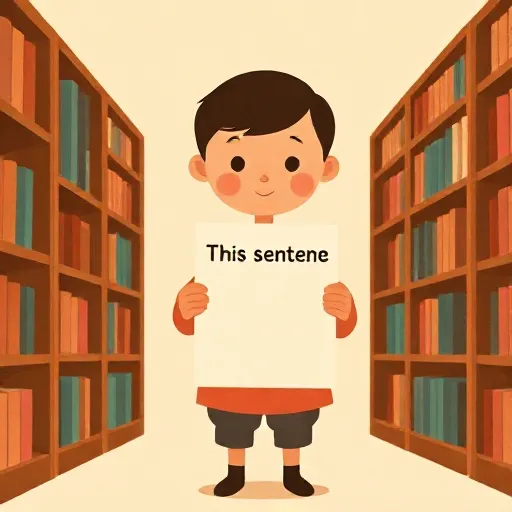
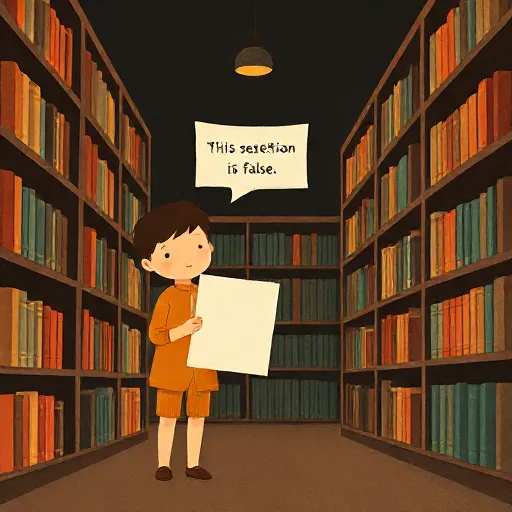
Imagine you see a T-shirt that says:
“This sentence on the T-shirt is false.”
Is that sentence true? Start by supposing it is true. Then what it says — that the sentence is false — must be right. So it’s false. But if it’s false, then what it claims — that it’s false — is correct, so it’s true. Whichever way you push, you end up caught: the sentence is true and false at the same time.
Most of us feel something has gone wrong. For thousands of years, philosophers held that a statement cannot be both true and false. Aristotle (384–322 BCE) called that rule the Law of Non-Contradiction, and it looked unshakable. But a few thinkers, ancient and modern, have argued that the T-shirt puzzle is not a silly trick — it might reveal something deep about truth itself. The view that some contradictions are actually true is called dialetheism (dye-AL-uh-thee-ism). And if the dialetheists are right, the most famous law in logic would have to be rewritten.
What Does It Mean to Say a Contradiction Is True?
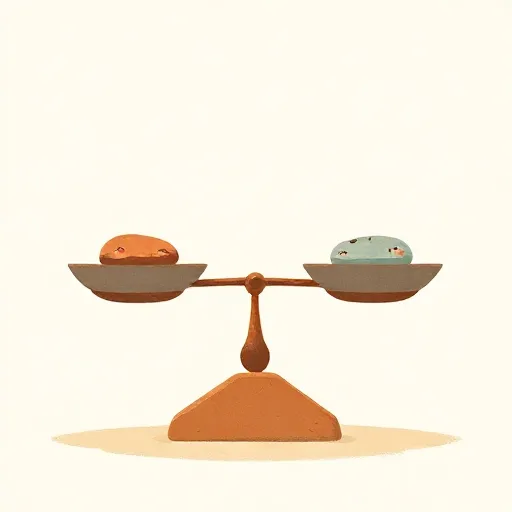
Dialetheism comes from a Greek word meaning “two-way truth.” Graham Priest (born 1948) and Richard Routley (later Sylvan) gave it the name in 1981, imagining truth and falsity like a Janus head — a face that looks in both directions at once. The dialetheist says that some sentences are truth-value gluts: they are true and false simultaneously.
That idea sounds alarming because we’re used to thinking that if a contradiction sneaks in, everything collapses. A standard rule in many logic textbooks is Explosion: from a contradiction, any conclusion follows. If “It is raining” and “It is not raining” were both true, you could apparently prove that pigs fly. So if dialetheism leads to Explosion, dialetheism would be absurd.
But dialetheists reject Explosion. They embrace paraconsistent logic, which is a logic where a contradiction does not automatically explode into every possible claim. Think of a computer program: a single bug doesn’t usually crash the whole system; the program might still run, just oddly in one corner. Paraconsistent logics are designed to let a contradiction sit harmlessly without infecting everything else. So you can accept that some statements are gluts without having to accept that all statements are true — a view called trivialism, which no serious thinker defends. Dialetheism claims only a very few, specific contradictions are true.
Not everyone who uses paraconsistent logic thinks any contradictions are actually true. Some just want tools for handling messy databases, fictional stories, or legal rules. The dialetheist goes further: she believes there are real, true contradictions in the actual world.
The Liar: A Puzzle That Wouldn’t Go Away
The T-shirt sentence is a version of the Liar paradox, known since ancient Greece. The trick is self-reference: the sentence talks about its own truth. That leads to a logical loop.
Many clever people have tried to escape the loop without accepting a true contradiction. One popular move is to say that the Liar sentence is neither true nor false — a truth-value gap. Just as there are imaginary beings that don’t exist, maybe there are sentences that don’t have a truth value. If the Liar is neither true nor false, the reasoning that forces it into truth and falsity fails.
But the Liar fights back. Imagine a strengthened Liar: “This sentence is not true.” If it’s true, then what it says holds — so it’s not true. If it’s false, then it’s not true, which matches its claim, so it must be true. Saying it’s a gap doesn’t help, because now “not true” covers both false statements and gappy statements. The same knot reforms. Philosophers call this the revenge problem: every attempt to patch the old puzzle produces a new version of it. The dialetheist’s answer is simpler: stop fleeing. Accept that the Liar really is both true and false, and build a logic that can handle it.
The dialetheist also claims an advantage: the Liar belongs to a whole family of self-referential paradoxes, including the set-theoretic Russell’s paradox about the set of all sets that don’t contain themselves. If the same kind of puzzle demands the same kind of solution, maybe all these paradoxes point to genuine contradictions that a paraconsistent logic can tame in one stroke.
More Reasons to Take True Contradictions Seriously

Liar-like puzzles aren’t the only places dialetheists spot true contradictions. Ordinary language and the world itself seem to produce borderline cases where a rule both applies and doesn’t.
Consider change over time. You step out of a room. At the precise instant you cross the threshold, are you inside or outside? If you pick one answer, it seems arbitrary. If you say you’re neither, you end up saying you’re not inside and also not not-inside — which is again a contradiction. Dialetheists argue that the boundary moment is a truth-value glut, both inside and outside. Similar puzzles arise for vague predicates: a teenager on the edge of adulthood might be both an adult and not an adult. These are not just word games; they concern the fabric of the world we live in.
Graham Priest and other modern dialetheists present these paradoxes as evidence that reality itself can be inconsistent. They aren’t celebrating chaos — they’re trying to describe stubborn borderline cases that resist a clean, consistent picture. For them, dialetheism is not a celebration of nonsense, but an attempt to face facts that orthodox logic has swept aside.
Why Most Philosophers Say No
Dialetheism is a minority view, and for good reason. Critics mount several powerful objections.
The Explosion worry. Without Explosion, how do you stop a single contradiction from being an excuse to believe anything? Dialetheists reply: by using paraconsistent logics, you can isolate contradictions. But skeptics wonder whether these logics really capture the ordinary meaning of “not.” If you change what “not” means, are you still talking about the same thing — or are you changing the subject?
The exclusion problem. Imagine a dialetheist friend tells you, “The cat is on the mat,” and you reply, “No, the cat is not on the mat.” Normally, that’s a disagreement. But if the dialetheist thinks the cat might be both on and not on the mat, how can she indicate she truly disagrees with you? Saying “The cat is not on the mat” doesn’t rule out that the cat is also on the mat. Even saying “That’s false” doesn’t work, because for a dialetheist something false can also be true. Priest’s answer: denial is not the same as asserting a negation. You can just reject a claim directly, without the act being captured by “not.” But critics ask whether that’s a stable distinction, or whether it just kicks the problem to a new level.
The rationality worry. If someone is allowed to accept a contradiction, what stops them from accepting any wild idea? Couldn’t they always reply “I believe both A and not-A”? Dialetheists answer that beliefs still need evidence. Accepting a contradiction isn’t a free pass — you must have strong arguments for it, like the Liar. Most contradictions, like “Brisbane is in Australia and Brisbane is not in Australia,” have no good evidence, so no rational person would accept them. But the Liar, so they argue, is special.
These debates continue. No single objection has delivered a knockout, but many philosophers think the costs of dialetheism — tampering with logic’s most basic words — are too high.
Why This Still Matters for Your Own Thinking

You don’t need to be a professional logician to care about this fight. Every time you argue with a friend or try to decide what to believe, you use the Law of Non-Contradiction without even thinking. If something sounds self-contradictory, you probably dismiss it immediately. Dialetheism asks: what if, in some rare cases, that instinct is wrong? What if a contradiction can be the price of a cleaner, simpler picture of truth — one that doesn’t require endless patches and loopholes?
Maybe the most important gift of dialetheism is that it forces us to explain why we trust consistency in the first place. It pushes us to ask: Is consistency a requirement of reality, or just a habit of thought? Could a subtle contradiction lurk inside the rules you use every day — in a game, a grading policy, or a promise you made? Philosophers haven’t settled these questions, and you get to join the detective work. The two-faced truth might be nonsense, or it might be the key that unlocks puzzles we’ve been running from for millennia.
Think about it
- If a friend said, “I am lying to you right now,” would you believe them? Why, or why not? What does your answer reveal about how you think truth works?
- A school rule says: “This rule can be broken.” Should anyone be punished for breaking it? What does this tell you about contradictions in systems you live by?
- If a sentence like “This sentence is not true” turned out to be both true and false, would you have to change the meaning of the word “not” — or would you just accept that odd things can happen at the edges of language?