
Do You Deserve That, or Are You Just Entitled to It?
A Grandfather’s Last Gift

Imagine two grandchildren. One is rich, mean, and never visited their grandfather. The other is poor, kind, and cared for the old man every weekend. When the grandfather dies, his will leaves every penny to the mean one. The will is legal — no question. The mean grandchild is entitled to the fortune by the rules of the legal system. But does he deserve it? Most of us would say no. He doesn’t deserve it at all; the kind grandchild does.
This is the difference between entitlement and desert. Entitlement depends on existing rules, contracts, or institutions. If the rules say you get something, you’re entitled to it, even if that feels unfair. Desert is a deeper, more purely ethical idea. You can deserve something even when no law guarantees it. You can be entitled to something you don’t deserve.
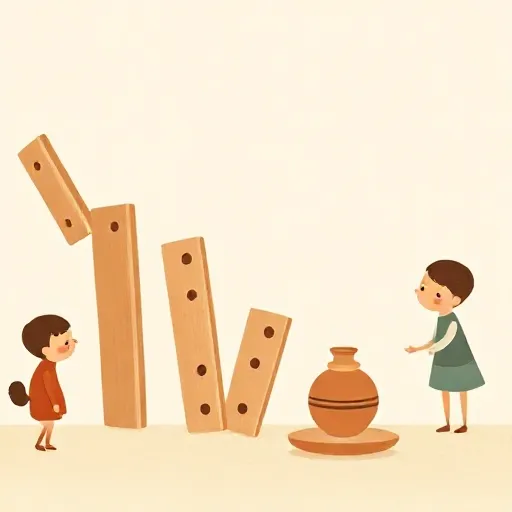
A star athlete trains for years, sacrificing everything. At the last second, the competition is cancelled. She deserved a chance to compete, but no rulebook promised her one. That’s desert without entitlement. The opposite happens in the grandfather’s will: legal entitlement without desert. Throughout this article, we’ll keep these two ideas separate. Our focus is desert — the thing you should get because of who you are or what you’ve done, not just because a system says so.
The Five W’s of a Desert Claim

Every desert claim has a structure, almost like a recipe. When you say “she deserves that prize,” you’re actually packing in several pieces of information. Philosopher Joel Feinberg (1926–2004) helped map these out.
The deserver is the one who deserves something. Usually it’s a person, but it could be a non-person too — an ancient city might deserve preservation, a ruined forest might deserve restoration. The desert (with one “s”) is the thing deserved: a grade, a reward, an apology, a punishment, or even just a neutral outcome like a C on a paper. Deserts aren’t always positive or negative; sometimes you deserve something neither good nor bad.
The desert base is the reason — the property or fact that makes you deserve it. If you deserve a high grade, the desert base might be that you produced excellent work. If you deserve punishment, the base is the crime you committed. This is where the real arguments happen, as we’ll see.
Often we also mention a distributor — the person or institution that should provide the desert. In the grade case, it’s the teacher; in a just society, the government might be the distributor of citizens’ rights. Some desert claims leave the distributor vague: “every person deserves the chance to live a healthy life” doesn’t specify who must make that happen, maybe because no single person can.
Desert can also have strength. You might deserve two things, but one more than the other. Two people might deserve the same limited resource, and one deserves it more. And desert has timing: you begin to deserve something at a certain moment, and you deserve to receive it at a certain time — for example, a taxpayer deserves a refund by April after overpaying all year.
Can You Deserve Something Just By Needing It?

What kinds of facts can count as desert bases? The simplest idea is the Aboutness Principle: you can only deserve something because of a fact about you. That sounds obvious, but it doesn’t filter much. A deeper principle many philosophers have defended is the Responsibility Principle: you deserve something only if you are responsible for having the desert base. You deserve a high grade because you worked hard; you deserve punishment because you chose to commit a crime. That seems to fit many cases.
But there are powerful counterexamples. Suppose you eat at a restaurant and get violently ill from spoiled food. You deserve compensation, but you are not responsible for the food poisoning — you’re an innocent victim. Someone who is deeply insulted deserves an apology, but she didn’t cause the insult. A child who falls gravely ill through no fault of his own deserves his parents’ care and sympathy. So responsibility doesn’t seem necessary for all desert.
Another proposed rule is the Temporality Principle: you must already have the desert base at the time you start deserving the thing. You cannot deserve punishment now for a crime you will commit next week. This principle is widely accepted, but tricky cases remain — a future criminal already has the property “being such that he will commit a crime.” Does he already deserve punishment? The debate continues.
No single principle perfectly captures all desert bases. Philosophers still argue about whether need, effort, talent, or contribution each ground desert, and in what mix.
Three Ways to Justify a Desert Claim (and Their Problems)

How do you prove that someone really deserves something? Over the years, philosophers have tried three main approaches.
Consequences. The utilitarian idea, described by Henry Sidgwick (1838–1900), is that saying someone deserves a reward just means it’s useful — it encourages good behavior. As Sidgwick put it, when someone is said to deserve a reward for serving society, what is meant is that it is beneficial to reward them, so that they and others will be motivated to provide similar services. But this fails. Imagine a popular criminal everyone believes is innocent. Punishing him would cause riots and huge unhappiness — low utility — yet he still deserves punishment because he did the deed. Worse, think of the famous “telishment” case: punishing an innocent person might scare others into obeying the law, producing great consequences, but the innocent person clearly does not deserve it. Utility and desert often pull apart.
Institutions. Some say a person deserves something if a social institution’s rules say so. That collapses desert into entitlement. Real institutions can be deeply unjust — slavery is an institution. A slave “entitled” to harsh labor by the slave code does not deserve it. An upgraded version appeals to what an ideal institution would give. But defining “ideal” without secretly relying on desert itself is hard. If we say an ideal institution maximizes happiness, the same utility problems return.
Fitting attitudes. Joel Feinberg suggested that desert is linked to our natural reactions: we admire great effort, we resent cruelty. A student deserves a high grade because that grade is the customary way of expressing the approval her work naturally provokes in reasonable people. But who decides which reactions are “reasonable”? A terrorist might admire a bomber, but that doesn’t make admiration deserved. And some deserts, like a sick child’s need for care, don’t seem to involve praise or blame at all. So this approach struggles too.
None of these justifications fully solves the puzzle. Desert seems to resist simple explanations.
The Geometry of Desert: Mountains of Worth

Suppose we agree it’s a good thing when people get what they deserve. How good, and why? Some philosophers build desert-adjusted theories of intrinsic value — mathematical models of how much a world is worth depending on how closely people’s well‑being matches their desert.
A simple attempt: treat each person’s deserved welfare level as a multiplier. If Smith deserves 10 units of happiness and gets 10, his contribution to the world’s value is 10 × 10 = 100. If Jones deserves 20 and gets 10, his contribution is 10 × 20 = 200. This tells us to give a limited resource to the more deserving person. But it backfires. Suppose Jones already has way more happiness than he deserves (100, while deserving only 20). Multiplying every bit by 20 means giving him even more extra happiness still boosts the world’s value a lot, even though he’s already over-rewarded. That seems wrong.
So philosopher Fred Feldman and others proposed measuring the fit: how close is your actual welfare to what you deserve? The smaller the gap, the better. This avoids the over-rewarding problem. Eric Carlson added that when everyone is equally deserving, equal distributions are best.
The most detailed theory comes from Shelly Kagan (born 1956) in his book The Geometry of Desert. Kagan pictures each person’s desert as a mountain. At the peak, the person gets exactly what they deserve — that’s best. If they get more or less, value slides down the slopes. But the slopes are not symmetrical. For someone who deserves a high positive level (a very good person), the eastern slope (getting more than deserved) is shallower than the western slope (getting less) — overrewarding is less bad than underrewarding. For someone who deserves a negative level (a very bad person), the shape is reversed: underpunishing is worse than overpunishing.
Kagan also explores comparative desert: if one person is overrewarded and you can’t fix it, what should happen to others? His “Y‑gap” view says the second person should be overrewarded too, but by just enough that the vertical drop from each person’s peak is equal. This keeps the world as balanced as possible from desert’s perspective.
All this geometry shows that desert is not just a vague intuition — it can be modeled with precision. Yet deep questions remain about whether the value of a world really works this way.
What Does Justice Have to Do with Desert?
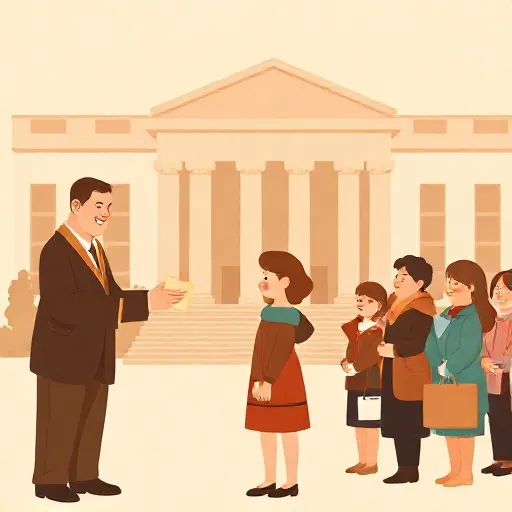
For centuries, thinkers have linked justice to desert. Aristotle, Gottfried Wilhelm Leibniz (1646–1716), and John Stuart Mill (1806–1873) all connected the two. Mill wrote: “It is universally considered just that each person should obtain that (whether good or evil) which he deserves; and unjust that he should obtain a good, or be made to undergo an evil, which he does not deserve.”
The dream of Universal Desertism — everyone gets every single thing they deserve, from grades to love — is impossibly vast and not really what political philosophers care about. They focus on narrower versions.
Leibniz proposed Divine Moral Desertism: God ensures that in the afterlife, each person receives happiness exactly in proportion to their moral virtue. That’s a theological idea. A more earthly version, Earthly Moral Desertism, says governments should match citizens’ happiness to their virtue during their lives. John Rawls (1921–2002) attacked this, partly because tracking and distributing happiness according to virtue seems beyond any government’s power.
A more manageable form is Political Economic Desertism: the state should ensure that people receive the political and economic goods they deserve — things like rights, tax refunds, police protection, educational access — based on desert bases like being a citizen, having been harmed, or contributing to society. This leaves out private goods like apologies and romantic luck.
Recently, philosopher T. M. Scanlon (born 1940) has argued that desert cannot explain why some citizens deserve more economic benefits than others. He thinks that if a just institution gives them different amounts, they are entitled to those differences, but the institution itself is justified by something other than desert — perhaps by what everyone would agree to. However, a desertist can reply: maybe the whole institution is justified because citizens deserve to live under a system that enables them to flourish, and that system must have certain rules. The debate is far from over.
Desert at Your Dinner Table

You make desert judgments all the time, even if you don’t notice. You feel that the student who studied hardest deserves the top grade. You think the teammate who shows up to every practice deserves a starting spot. When chores are divided at home, you might argue that you deserve a break because you already did the dishes yesterday.
These everyday thoughts pull on the same concepts philosophers wrestle with. Is a grade something you deserve only if you worked for it (responsibility principle), or also if you simply need it to get into a good school (need as a desert base)? Should pocket money be tied to chores done (desert), or given equally to all siblings regardless (entitlement)? When a coach picks a team, is raw talent a desert base, or only effort?
The grandfather’s will story reminds us that the legal rules often conflict with what we feel in our bones is deserved. That gap is why desert matters. It pushes us to ask whether our institutions — schools, families, governments — are not just rule‑following machines, but truly fair. The geometry of desert tries to capture mathematically what that fairness looks like. The philosophers haven’t finished the map, but the question — “What do you really deserve?” — is one you’ll keep answering every day.
Think about it
- If a new student joins your class and there aren’t enough desks, does she deserve one even if the school rulebook doesn’t mention her situation? What would it take for her desert claim to be stronger than another student’s?
- In a video game, you earn coins for every quest you complete. But sometimes the game randomly gives you bonus coins just for logging in. Are the bonus coins something you deserve? What’s the difference between earning and getting lucky?
- Imagine a world where everyone always got exactly what they deserved, from praise to punishment. Would that world be better than ours? What important things might be missing?