
Is That Really Your Dad? What Delusions Reveal About Belief
The Stranger You Know Best

Imagine waking up one morning and looking at your father. His face, his voice, his laugh — they are all the same. But something inside you screams that this man is not your real father. He is a double, an impostor who has taken his place. You feel it in your bones. Even when he shows you family photos and calls you by your childhood nickname, the feeling doesn’t go away.
This is not a horror movie. It is a real experience for people with a condition called the Capgras delusion. First described by the French psychiatrist Joseph Capgras (1873–1950), it is one of several monothematic delusions — false beliefs that stick to a single, strange idea. Someone with the Cotard delusion believes they are dead or have no body. A person with mirrored-self misidentification looks in the mirror and sees a stranger staring back, even though they know the reflection should be their own.
Philosophers are fascinated by delusions because they shake up everything we think we know about how beliefs work. When a belief floats so free of evidence, what is it made of? Is it even a belief at all? And what does that tell us about the minds of people without delusions — including yours?
What Makes a Belief Delusional?

Psychiatrists use manuals like the Diagnostic and Statistical Manual of Mental Disorders (DSM) to define delusions. For years, the DSM called a delusion a false belief based on incorrect inference about external reality, held firmly despite clear proof against it. The belief must also not be one shared by others in your culture or religion.
But this definition has problems. As the cognitive scientist Max Coltheart (20th–21st century) and others point out, what if a belief happens to be true, yet the person has no good reason to believe it? Imagine you are convinced your neighbor spies on you, and — by pure chance — it turns out he actually does. Your belief wasn’t based on evidence, but it was true. Should we still call it a delusion? And what about beliefs that are not about external reality at all, like a person with schizophrenia who says, “My thoughts are not mine, they have been inserted into my head by someone else”?
Another worry is that the DSM definition focuses only on rationality and truth, ignoring how the belief actually affects someone’s life. A widely accepted delusion is often distressing, isolating, and disrupts daily functioning. The British psychologist Daniel Freeman (late 20th–21st century) and others insist that delusions are multidimensional: they are not just unfounded, but are also preoccupying, painful, and socially damaging. Still, some delusions actually help a person make sense of a chaotic inner world — they can give meaning where none existed before. This complexity has led many researchers to say a sharp line between “normal” and “pathological” beliefs is too simple.
Belief or Something Else?
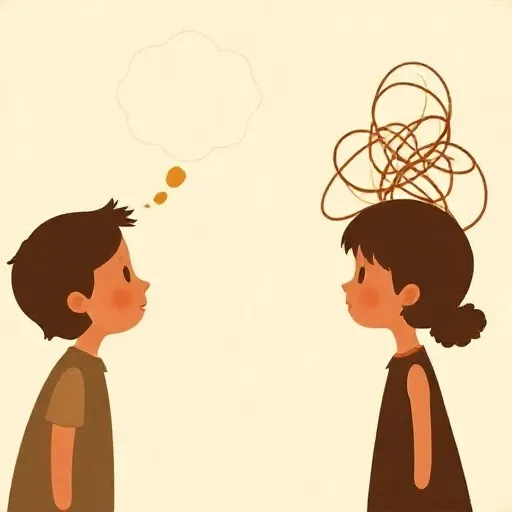
Suppose you truly believe your spouse has been replaced by an imposter. Yet, at dinner, you chat with them normally, laugh at their jokes, and help them with the dishes. How can this be? If you really believed they were a stranger, wouldn’t you run away or call the police?
This puzzle lies at the heart of the doxastic debate. Doxastic comes from the Greek word for belief, and the question is simple: are delusions actually beliefs? The standard view in psychiatry is yes — delusions are beliefs, just unusual ones. But some philosophers push back.
Greg Currie (20th–21st century) and his colleague Jon Jureidini suggest that delusions are more like imaginings that get mistaken for beliefs. When you imagine your dad is a superhero, you don’t act on it; you know it’s pretend. A person with Capgras might be doing something similar — their mind generates the fantasy “impostor!” but their behavior stays oddly calm, as if the idea never fully roots itself in their decision-making.
Other thinkers argue that delusions are not even full intentional states. The psychiatrist German Berrios (20th–21st century) once claimed they are “empty speech acts” — words with no real thought behind them, like a parrot squawking a phrase.
Defenders of the belief view point out that the supposed failures are exaggerated. Lisa Bortolotti (late 20th–21st century) and others note that plenty of non-delusional beliefs also fail to guide action. A person might believe sugar is unhealthy but still eat cake. And while some delusions seem to float apart from behavior, other cases are terrifyingly action-guiding: a man with the delusion that he had two heads once tried to shoot the “extra” one, injuring himself badly. So the link between delusion and action is messier than the critics claim.
A middle-ground position, championed by Eric Schwitzgebel (20th–21st century), is that delusions are in-between states. They partly match the profile of a belief — they can be stated with confidence — but they often lack the flexibility and integration we expect. The debate remains hot, because it forces us to ask: what makes any thought a belief in the first place?
Are Delusions Irrational?
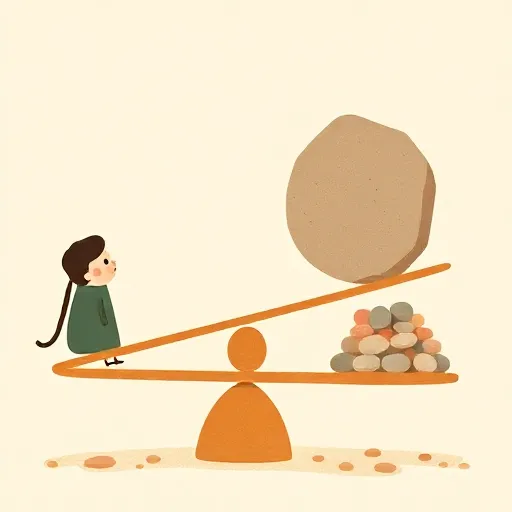
You might assume that delusions are the very definition of irrational. But the psychologist Brendan Maher (1924–2009) offered a surprising argument. He claimed that delusions are not irrational — they are “false but reasonable.” Suppose you have a brain glitch that makes your father’s face feel unfamiliar, even though you can recognize it perfectly. The most logical explanation jump into your mind: this person must be an impostor. Given your experience, the conclusion makes sense. The real strangeness lies in the unusual feeling, not in your reasoning.
Yet many philosophers find this too forgiving. For one thing, not everyone with the same brain damage develops a delusion. Some people have the same “impostor feeling” but reject it, saying, “That’s odd, my brain must be playing tricks.” So the step from weird experience to bizarre belief seems to need a second factor: a reasoning bias or a deficit in evaluating hypotheses.
In the two-factor theory, delusions arise first from an unusual experience (factor one), like a face that no longer triggers a warm feeling. Then a second factor — such as jumping to conclusions or ignoring counterevidence — locks the strange idea in place. This explains why delusions are so stubborn. When friends and doctors say “Look at the evidence!” the person with the delusion may simply reinterpret the evidence to fit the belief. It’s a lot like an extremely stubborn scientist who loves their own theory too much to let it go, even when new data doesn’t add up.
Interestingly, these reasoning glitches are not unique to deluded minds. Psychologists have found that people with delusions tend to “jump to conclusions” faster, but many non-delusional people have similar biases, just less intensely. There is no sharp cliff between irrationality in delusions and the everyday stubbornness you see when someone clings to a superstition. This hints at a larger theme: delusions might sit on a continuum with ordinary human thinking.
Delusions and the Rest of Us

Where does the line fall between a clinical delusion and a garden-variety irrational belief? Consider two phenomena that echo delusions: self-deception and beliefs in conspiracy theories.
Self-deception happens when you manage to believe something because it feels good or protects you from a painful truth. For example, a student might convince himself he aced the test, even though he barely studied, just to avoid feeling anxious. Some delusions, like the denial of paralysis in anosognosia, seem to work the same way. A woman who can’t move her left arm after a stroke might insist everything is fine, because facing the truth is too frightening. Philosophers such as Neil Levy (20th–21st century) argue that in these cases the person has two conflicting beliefs — “my arm is paralyzed” and “my arm is fine” — but the disturbing one is pushed out of awareness by a powerful motivation. This looks a lot like self-deception turned up to an extreme volume.
Conspiracy theories are another cousin. Both can seem bizarre, unsupported by evidence, and ridiculously resistant to facts. Both can be fueled by mistrust, a search for meaning, and a tendency to see patterns where there are none. Yet there are differences. While delusions often isolate a person and cause real suffering, conspiracy beliefs can actually bind a group together and reduce anxiety — at least in the short term. And many people who believe in conspiracies have no diagnosable illness; their thinking is not seen as clinically disordered.
This family resemblance matters. It suggests that the tools your mind uses to build strange beliefs are not alien to you. The same biases — jumping to conclusions, favoring pet explanations, closing your ears to counter-evidence — are part of being human. What shifts is the intensity and the cost.
Why This Matters for You

None of this is just a puzzle for doctors in white coats. Delusions force you to ask: how do you know your own beliefs are sound? You might be certain your best friend is loyal, that your memory of last summer is correct, or that your family loves you. But feeling certain doesn’t guarantee the truth. Your brain builds your reality using messy, improvised equipment — perception, memory, and emotion — and sometimes it gets it wrong.
There is also a social and ethical side. People who report delusions are often treated as if their entire mind is broken. The philosopher Havi Carel (late 20th–21st century) and others have warned about epistemic injustice — when someone is dismissed as a knower because of a label. If you tell a strange belief and others know you have a mental illness, they might ignore everything else you say, even when you are the expert on your own feelings. That is not just rude; it can be deeply unfair.
Understanding delusions doesn’t mean explaining them away. It means seeing them as extreme versions of processes that hum inside everyone’s head. It invites you to be curious rather than judgmental when you meet ideas that seem outlandish, and to check your own beliefs now and then with the same careful doubt you would bring to a claim about impostors in the mirror.
Think about it
- If someone holds a belief that is clearly false but makes their life feel meaningful and bearable, should we always try to correct it?
- Have you ever believed something strongly even after a friend showed you good evidence against it? What kept you from changing your mind?
- If a brain scan could predict with 90 percent accuracy whether a person’s belief is a delusion, should courts use it to decide if the person is responsible for a crime?