Why Does “And” Mean “And Then”?
A Hidden Message in Every “And”

Suppose your friend texts you: “I finished my homework and went to the park.” You instantly picture homework first, park later. You don’t stop to think about it — your mind just arranges the events in time. But look closely: the word and only connects two things. It doesn’t say then. Where did that extra meaning come from?
The philosopher Paul Grice (1913–1988) noticed that we often add unspoken information to the sentences we hear. He called these additions generalized conversational implicatures, or GCIs for short. Grice believed that certain implications pop up so reliably that they don’t depend on the details of the situation. They are our brain’s go‑to shortcuts — what many later thinkers started calling default interpretations. When you hear and, you default to and then. When someone says “Picasso’s painting,” you default to “the painting made by Picasso.” These defaults seem to happen automatically, without any effortful detective work.
But are they really automatic? Or do we always quietly check the context? The answer has divided philosophers for decades, because it reaches into how we understand words, thoughts, and each other.
The “Not All” Trick and Other Shortcuts
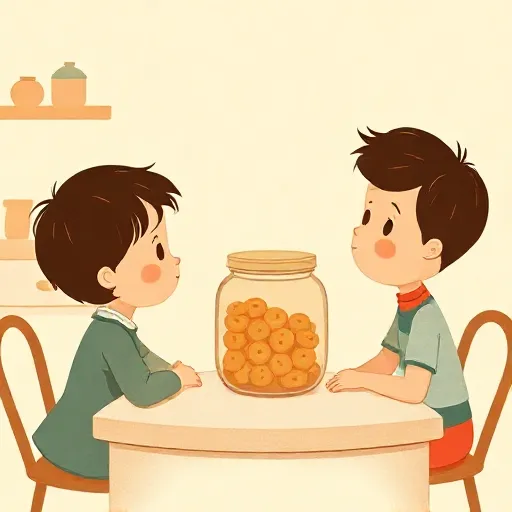
Default meanings aren’t just about time order. Imagine your sister says, “I ate some of the cookies.” You probably assume she didn’t eat all of them. If she wanted to admit she finished the whole jar, you’d expect her to say “all” — not “some.” Grice’s later followers developed this into a set of mental shortcuts.
The linguist Stephen Levinson (late 20th century–present) called them presumptive meanings and grouped them under three rough rules, or heuristics:
- Q-heuristic: What isn’t said, isn’t. If a speaker uses a weaker word (like some), they probably mean you to rule out the stronger one (all). So some implies not all.
- I-heuristic: What is expressed simply points to a typical example. When you hear “paper cup,” you assume cup made of paper, not cup for storing paper. The stereotype jumps into your mind.
- M-heuristic: If it’s said in an odd way, something’s odd. A phrase like “not unkind” suggests the speaker avoids calling someone directly kind.
These heuristics can feel like magic. They let you make sense of “tea cup” instantly — you know it’s a cup for drinking tea, not a cup made of tea. And yet, they also raise a puzzle. Do these shortcuts kick in the moment you hear a single word, or only after you’ve assembled the whole sentence? And what happens if the sentence takes an unexpected twist?
Cancelling the Shortcut
One of the most debated features of defaults is cancellability — the fact that you can cancel the extra meaning without sounding contradictory. If someone says, “Many people loved the novel — in fact, maybe all of them,” that’s perfectly fine. The default not all was flicked away. But some shortcuts are stickier. Try cancelling “paper cup” to mean cup for storing paper: “Those paper cups, I mean cups used for storing paper, are full.” It sounds bizarre, almost like a joke. That’s because the made of paper meaning has become part of the word combination, like a tiny phrase frozen in the language.
The real fireworks, though, come when context seems to change a default mid‑stream. Consider the number word “five.” If someone says, “You are allowed five attempts to get the prize,” you probably hear “at most five.” But in “Five votes are needed to pass the proposal,” you hear “at least five.” Your mind has to pick one interpretation, and sometimes the first guess — maybe exactly five — gets overruled the moment you hear “are needed.” This suggests that interpretation is incremental: we build meaning as we go, and early candidates can be knocked out. The debate is whether those early guesses truly count as defaults, or whether a true default should survive more information.
Two Roads to Automatic Meaning
If defaults exist, what makes them happen? Two major approaches give very different answers.
According to the philosopher François Recanati (b. 1958), some pragmatic processes are so direct and unconscious that they resemble seeing an object rather than solving a puzzle. He calls them primary pragmatic processes. They don’t need a chain of conscious reasoning. For instance, when you hear “The fence isn’t strong enough,” your mind automatically fills in to withstand the gales if gales were just mentioned. That’s saturation — plugging a gap the sentence leaves open. Other times you add something the sentence doesn’t demand, like understanding “John hasn’t eaten” as John hasn’t eaten dinner yet. That’s free enrichment, and Recanati says it’s the default, effortless path our brains take.
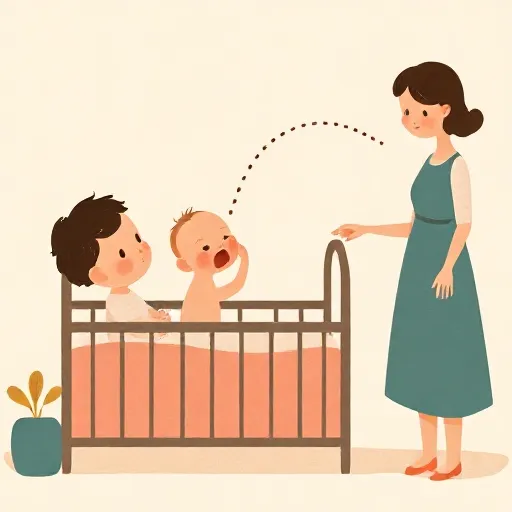
The philosopher Kasia Jaszczolt (20th/21st century) goes further. In her Default Semantics, meaning comes from several sources merging together like streams into a river. There’s word meaning and sentence structure, but equally powerful are cognitive defaults — patterns rooted in how our minds work — and socio‑cultural defaults — shared knowledge about the world. For example, if you hear “the architect who designed St Paul’s cathedral was a genius,” you don’t just picture an anonymous architect; your brain supplies Christopher Wren. That’s a cognitive default because our minds tend to refer to specific, known individuals when they can. Similarly, “The baby cried and the mother picked it up” automatically links the mother to the baby, thanks to a cultural script about caretakers. On Jaszczolt’s view, the most important meaning of an utterance — what she calls primary meaning — might not even resemble the literal words. If a mother tells her crying child, “You’re not going to die,” the primary meaning is “There’s nothing to worry about.” The surface sentence is just one contributor among many.
Why Shortcuts Matter: The Edge of the Truth
You might wonder: does any of this matter outside philosophy seminars? Absolutely. Defaults are the invisible partners in nearly every conversation, and they decide who gets blamed for what.
Think about lying. If you promise “I ate some candy” while actually eating every last piece, did you lie? Many people feel you did, because the word some strongly defaults to not all. But a clever speaker could argue: “I said some, and all is technically some!” This is exactly the kind of puzzle that courts, parents, and friends wrestle with. The question is whether you should be held responsible for the default meaning that your words trigger in other people’s minds.
There’s even a name for the move of ignoring a default while pretending to stick to the bare words: the fallacy of ignoring qualifications, or secundum quid. It’s a trick of argument where someone takes what you said out of its natural, expected meaning and twists it. Suppose you complain, “Doing five minutes of piano practice is useless,” and someone retorts, “Oh, so thirty minutes is also useless?” They’re stripping away the context and the normal scale the word five carries in that situation. Post‑Gricean philosophers argue that such manipulation works precisely because we rely on defaults to communicate smoothly. When someone refuses to play by the normal shortcut, they can make your words seem to say something you never intended.
The study of defaults reminds us that language is a shared, fast‑moving game. Much of what we “say” doesn’t live in the words alone — it lives in the leaps our minds make automatically. And that means being a fair speaker or an honest friend involves caring about what springs to mind, not just what can be defended in a dictionary.
Think about it
- If a friend says “I finished my homework and played video games,” and you later discover they played games first, are they lying? Why or why not?
- Imagine a sign in a store reads “Customers are allowed five free samples.” Could a customer take ten and claim they weren’t told otherwise? Where would you draw the line between the exact words and the understood limit?
- Some philosophers claim defaults happen without any conscious thought. Do you think you could ever catch yourself adding a meaning that wasn’t intended? What might that feel like?