

Can You Be Good Without One Big Rule? W.D. Ross’s Moral Juggling Act
The Tug‑of‑War of Right and Wrong

You promised to meet your best friend at the park. Halfway there you see a kid tumble off their bike, crying and clutching their arm. No one else is around. If you stop to help, you’ll break your promise. What should you do?
The Scottish philosopher W. D. Ross (1877–1971) spent his career thinking about moments exactly like this. He believed morality isn’t run by one big rule, like “always keep your promises” or “always do whatever produces the most happiness.” Real life, Ross noticed, is messier: different moral pulls can tug you in opposite directions. Being a good person isn’t about memorizing a simple slogan—it’s about learning to weigh those pulls carefully and honestly.
Why One‑Size‑Fits‑All Rules Fail

Ross looked at the two most powerful ethical systems of his time and found both of them over‑simplifying. The first belonged to Immanuel Kant (1724–1804). Kant insisted that some rules are absolute. Lying, for example, is always wrong—no exceptions. Imagine a would‑be murderer knocks on your door asking where your friend is hiding. Kant’s view says you must tell the truth. Ross thought that was absurd; common sense tells us lying to save a friend’s life is not only okay, it’s what you ought to do.
The second system was ideal utilitarianism, defended by G. E. Moore (1873–1958) and Hastings Rashdall (1858–1924). According to them, an act is right if it produces the greatest surplus of good—things like pleasure, knowledge, and virtue—over any other act you could have performed. On this view, you should always do whatever makes the world, on balance, the best place possible.
Ross pointed out that this too misses something important. Suppose you owe a friend money. You could repay the debt or give the exact same amount to a charity that would do slightly more good. Ideal utilitarianism says you must choose the charity. But most of us feel that the fact you already made a promise—a “retrospective” fact—matters in a way that a simple adding‑up of consequences can’t capture. Promises, debts, and personal relationships create moral reasons that don’t just vanish when a calculator clicks a higher number.
A Toolkit of Duties, Not a Rulebook

Ross’s breakthrough was the idea of a prima facie duty (say “pree‑muh fay‑shee”). The Latin phrase means “at first glance,” but Ross meant something stronger: a real, objective moral reason that counts in favour of—or against—an action. A prima facie duty is not an absolute command; it can be outweighed by other duties. Think of it as a moral pull that always matters, even when it isn’t the winner.
He listed five basic prima facie duties that he thought any thoughtful person would recognize upon reflection:
- Fidelity: keeping your promises.
- Reparation: making up for a wrong you’ve done.
- Gratitude: returning favours to those who helped you.
- Beneficence: making things better—promoting pleasure, knowledge, virtue, and justice for others.
- Non‑maleficence: not harming or injuring anyone.
These are not mysterious rules Ross invented; he claimed they are the deep‑down commitments that ordinary moral thinking already relies on. Your actual duty—what you finally ought to do, all things considered—is the act that has the greatest balance of prima facie rightness over prima facie wrongness.
Take the promise‑vs.‑accident dilemma. Keeping your promise is prima facie right (fidelity) but also prima facie wrong because it stops you from helping (beneficence). Helping the hurt kid is prima facie right (beneficence) but prima facie wrong because you break a promise (fidelity). You compare the two acts and judge which has the heaviest balance of rightness. Ross’s own verdict, and likely yours too, is that helping the injured child outweighs the broken coffee date. So your actual duty is to help—and then, importantly, you still owe your friend an apology or an explanation because the promise’s pull didn’t disappear; it was just out‑weighed.
Can We Weigh Duties Without a Master Scale?
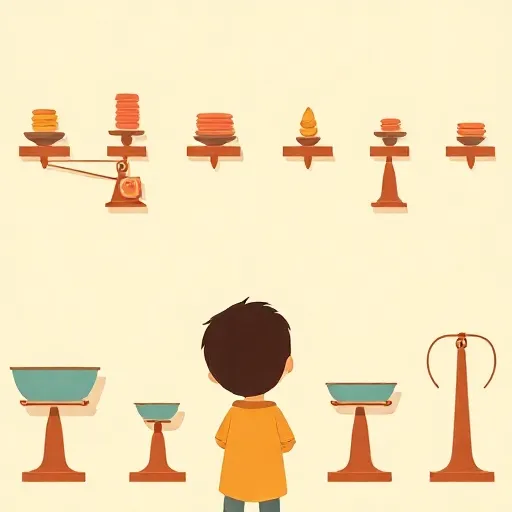
Here’s the hardest part of Ross’s view: he said there is no master rule that tells you exactly how much each prima facie duty weighs. You have to look at the whole situation and use your best judgment. And, he admitted, that judgment is fallible. You can never be certain you picked the right act; you only have a “probable opinion.”
Critics pounced. H. W. B. Joseph complained that “our obligations are not a heap of unrelated obligations.” John Rawls (1921–2002) later said that without a way to weigh duties using shared criteria, an intuitionist theory is “but half a conception.” If we can’t explain why one duty beats another, how do we reason together about hard cases?
Ross had a reply: loyalty to the messy facts of moral life is worth more than a neat‑looking system that ignores those facts. He also noted that his ideal‑utilitarian rivals like Moore were themselves pluralists about value—they admitted there are many different goods (pleasure, knowledge, virtue) that can’t be reduced to one. So why not be pluralist about rightness, too?
A different worry is whether Ross’s list is complete, or maybe too long. Some philosophers think there should be a separate prima facie duty of veracity—a basic duty to tell the truth, not just one explained by an implicit promise or by avoiding harm. Ross tried to handle lying by saying that entering a conversation creates a sort of silent promise to speak truthfully, and that lies “do a positive injury” to others. Many find that explanation a bit forced. On the other hand, David Phillips has argued that Ross’s duty of non‑maleficence can be dropped and its work done by treating harming as a special kind of badness. The shape of the toolkit remains a live argument.
The Battle Over Promises and the Greater Good

Ross’s strongest challenge came from ideal utilitarians who tried to capture promise‑keeping inside the good to be maximized. They said: what if keeping a promise is itself a good thing, or breaking one is an evil? Then when we aim for the greatest overall good, we naturally count promises as valuable.
Ross pushed back with a famous case. Imagine a dying man, A, entrusts his property to B, who promises to give it to C. C doesn’t know about the promise. If B gives the property to D instead, he could produce much more good. No one will ever find out; mutual trust isn’t damaged. Utilitarianism, Ross argued, would have to say B ought to break the promise and give the property to D. Ross called that “outrageous.”
Utilitarians have several responses. They can argue that competent people usually care about their promises being kept, so breaking a deathbed promise almost always causes a subtle harm. They can insist that, on reflection, our common‑sense verdict might need a nudge. Or they can add the value of promise‑keeping to the list of goods—making the theory more complex but still monistic about rightness.
Ross resisted adding promise‑keeping to his own list of intrinsic goods. He held that only states of mind (such as virtue, knowledge, and pleasure) or relations between them (like justice) have non‑instrumental value. An act of keeping a promise, he thought, isn’t the kind of thing that is good in itself. The debate is far from settled; it shows that even if you find Ross’s pluralism about duties appealing, you might still be pushed toward a version of utilitarianism that respects those duties as values.
Why Ross’s Messy Morals Still Matter

You don’t need to be a professional philosopher to meet Ross’s dilemma head‑on. When you decide whether to tell a friend an uncomfortable truth, you are silently weighing the duty of fidelity (be honest) against the duty of non‑maleficence (don’t needlessly hurt). Should you spend your Saturday helping at a community clean‑up or visit your grandmother who always remembers your birthday? That’s beneficence wrestling with gratitude.
Ross’s framework doesn’t hand you a cheat sheet. But it gives you a vocabulary for noticing all the moral features that matter—promises made, harm risked, favours owed, good that could be done—and it encourages you to think about them clearly, without pretending one always trumps the others. This is why doctors and nurses often use a version of Ross’s list when they face conflicts between saving a patient (beneficence), not causing extra pain (non‑maleficence), and respecting a patient’s wishes (fidelity). The messy, ordinary, human work of moral judgment is not a bug; it’s the whole point. The next time you’re pulled in two directions at once, you’re not just stuck—you’re doing philosophy, Ross‑style.
Think about it
- If breaking a promise would let you stop someone from being badly hurt, do you still owe the person you let down an apology? Why or why not?
- Can you think of a situation where being honest and being kind pulled you opposite ways? How did you decide—and would you decide the same way again?
- Ross thought you should never harm one person just to produce a small bit of extra good. But what if a tiny harm could save many people? Where would you draw the line?