
Can You Act Against Your Own Best Judgment?
Have You Ever Done Something You Knew You Shouldn’t?

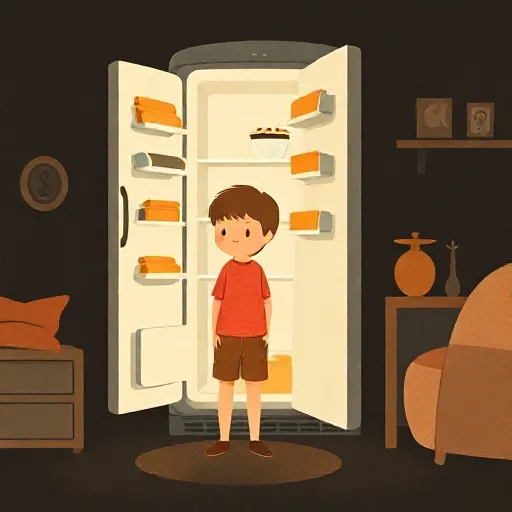
It’s a Sunday afternoon, and you have a big test on Monday. You know you should turn off the show and review your notes. You say to yourself, “Studying is the best thing to do right now.” Yet you keep watching. You know what the better choice is, but you don’t do it. Philosophers call this weakness of will, or akrasia (a Greek word meaning “lack of mastery”). It’s a familiar feeling, but it raises a surprisingly hard question: If you really believed, deep down, that studying was better, how could you possibly do something else? Some thinkers have argued that such an action is actually impossible. Others have argued that it’s possible but always irrational. And a few have even said that what we call weakness of will isn’t really about your judgment at all — it’s about breaking your own resolutions. This article explores those ideas and why they matter for understanding self-control.
Why Some Think It’s Impossible: R. M. Hare
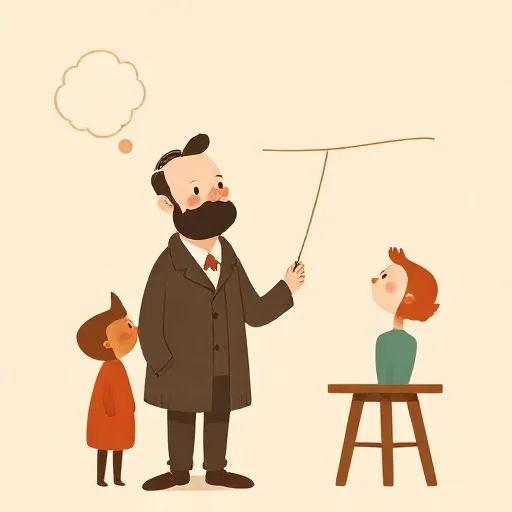
The British philosopher R. M. Hare (1919–2002) thought that weakness of will is simply impossible. He built his argument on the idea that evaluative judgments — judgments like “I ought to study” or “studying is better than watching TV” — have a special job: to guide what you do. If a judgment really is an evaluative judgment, it must, by its very nature, push you toward action. Hare reasoned that if you sincerely judge “I ought to do A,” you are effectively commanding yourself, “Let me do A!” And sincerely commanding yourself to do A means actually doing A, as long as you are physically and psychologically able to do it. This is an extreme form of internalism, the view that certain judgments about what you should do are internally linked to doing them. So if you don’t do A, you must not have truly judged that you ought to do it. You might have said the words, but you were only going along with what others think (what Hare called the “inverted-commas” sense), or you were literally unable to resist. Hare used the example of Medea, the Greek mythological figure, who was so overwhelmed by emotion that she could not resist her murderous urges. In such a case, you aren’t weak-willed; you are compelled. For Hare, all apparent weakness of will boils down to either compulsion or a failure to really make the evaluative judgment. The bottom line: everyone always does what they think they ought to, whenever they are able. If you find that hard to believe, you’re not alone.
How Donald Davidson Made Weakness Possible (But Irrational)

The American philosopher Donald Davidson (1917–2003) agreed that evaluative judgments have a special link to action, but he wanted to make room for weakness of will. His famous 1970 paper proposed that we can distinguish between two kinds of evaluative thinking. Imagine you are deciding whether to study or watch TV. You start by listing reasons for each option. “In light of the fact that studying will help on the test, studying seems better.” And then, “In light of the fact that the show is hilarious, watching TV seems better.” Davidson called these prima facie judgments — they are only about the “face value” of one consideration, not an overall verdict. They are like saying, “Looking at this piece of evidence, Colonel Mustard looks guilty,” without yet concluding he did it.
The crucial step comes when you try to pull all those considerations together. You might reach a judgment like, “All things considered, studying is better than watching TV.” But Davidson says that is still a conditional or relational judgment — it says that the balance of reasons tilts toward studying, not that you have unconditionally concluded, “Studying is better, period.” It’s like detective Hercule Poirot thinking, “All the evidence points to Mustard,” but still not being ready to declare, “Mustard is guilty.” A weak-willed person, on Davidson’s view, makes the all-things-considered judgment in favor of studying but never makes the unconditional, all-out judgment. Then they act on TV. That’s possible because Poirot can hesitate, and a person can too.
Davidson added that while weakness of will is possible, it’s always irrational. He proposed a principle of continence: you should perform the action that is judged best on the basis of all available reasons. The weak-willed agent violates that principle. They have a reason to watch TV (it’s funny), but by their own lights, they lack a sufficient reason to do that instead of studying. So their own action is, from their point of view, something “surd” — a kind of self-contradiction in practice. That’s why we find weakness of will puzzling and not fully intelligible, even though it happens all the time.
The Fight After Davidson: Is It Really Irrational?

Many philosophers after Davidson thought he hadn’t gone far enough. Michael Bratman imagined a man named Sam who says, in effect, “I don’t think it would be best to drink. Do you think I’m stupid enough to think that, given how strong my reasons for abstaining are? I think it would be best to abstain. Still, I’m drinking.” Sam seems to have reached the unconditional judgment that abstaining is better, yet he drinks. If Sam is possible, Davidson’s account is too narrow. This pushed some thinkers toward externalism, the view that evaluative judgments don’t have a necessary tie to motivation. Motivation can come from other sources — mood, cravings, or just the pull of a closer reward. If so, weakness of will is no mystery: your desires can simply overpower your judgment.
But externalism risks making weakness of will too ordinary. If there’s no special link between judgment and action, why is there anything puzzling about it? And it raises a deeper worry: if you act from desires that completely swamp your evaluation, that might look like compulsion, not weakness. So the debate raged.
A second twist came from philosophers who asked whether weakness of will is always irrational. Suppose your “better judgment” is actually wrong. In Mark Twain’s Huckleberry Finn, Huck believes he ought to turn in his friend Jim, an escaped slave, because he thinks property rights demand it. But his feeling of friendship pulls him to help Jim instead. Huck acts against his better judgment, yet we might think he did the right thing. Similarly, philosopher Nomy Arpaly described Emily, who thinks she ought to finish her Ph.D. in chemistry, but she feels restless and unmotivated. If she impulsively quits, she might actually be doing what she has most reason to do, because her talents lie elsewhere. Her judgment was mistaken. So perhaps weakness of will is not always a failure of rationality; it can even reflect a wiser part of yourself that your conscious reasoning hasn’t caught up with. These ideas challenge the long-held view that going against your better judgment is a clear mistake.
Resolutions and the Will: Holton’s Twist

In 1999, philosopher Richard Holton argued that we’ve been thinking about weakness of will all wrong. It isn’t about acting against your better judgment at the moment of choice. It’s about failing to stick to a resolution — a special kind of intention you form in advance to protect yourself from future temptations. You might decide on Monday that you will run five miles on Tuesday because you know you’ll feel lazy when Tuesday comes. If Tuesday arrives, you feel lazy, and you don’t run, you’ve shown weakness of will, regardless of what you think is best at that moment. Holton says ordinary people understand weakness this way: you broke a promise to yourself. It’s not about akrasia in the old sense, but about abandoning a plan.
This shift has important consequences. For one, we can distinguish weakness of will from a simple change of mind. Changing your plans can be reasonable; weakness involves giving in to the very inclinations the resolution was meant to defeat. And the rationality of weakness becomes more nuanced. Philosopher Alison McIntyre pointed out that sticking to a truly stupid resolution (like going without water for two days just to see what it feels like) would be far more irrational than giving in. So perhaps breaking a resolution is only a mild procedural flaw, not a major rational crime. Even more surprisingly, McIntyre argued that if you break a resolution to study but still admit that studying is best — that is, you don’t rationalize your failure — you might actually be more clearheaded than someone who changes their mind just to feel better. In some cases, akratic weakness could be a “modest accomplishment” of honesty with yourself. So the moral of the story has shifted: what started as an impossible act became a rational failure, then perhaps sometimes even something admirable.
Why This Matters: Self-Control and You

The debate about weakness of will isn’t just an academic puzzle. It connects directly to the struggles you face every day — procrastinating on homework, breaking a resolution to practice an instrument, scrolling on your phone when you meant to sleep. Philosophers today work with psychologists to understand how self-control actually works. Studies suggest that the most effective self-controllers don’t just grit their teeth and resist temptation. They arrange their lives so that temptations rarely appear: they leave their phone in another room, build study habits, or use apps to block distractions. This suggests that willpower is less like a muscle that gets tired and more like a skill of managing your circumstances.
And the question of whether weakness is irrational matters for how you treat yourself. If you believe that every time you break a resolution you are being irrational, you might feel ashamed. But if you recognize that some resolutions are unrealistic or that your “better judgment” can be mistaken, you might cut yourself some slack. You might also learn to form resolutions more carefully, or to forgive yourself and try again. The centuries-old debate reminds us that being a person is complicated — you can know what’s best, yet still struggle, and sometimes your struggle even points toward a better path you hadn’t fully grasped.
Think about it
- Think of a time you broke a resolution. Was it because you changed your mind about what was best, or did you still think the resolution was right but failed to act? How could you tell the difference?
- If a friend often says they want to stop a bad habit but keeps doing it, is it fair to call them weak-willed? What else might be going on?
- Is it better to stick to a resolution no matter what, even if it turns out to be a bad idea? Why or why not?