
Why Can’t You Tell Which Choice Is Better?
The Lawyer and the Clarinet

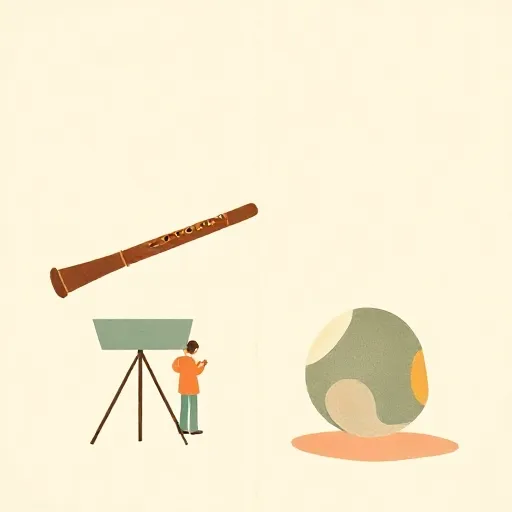
Imagine someone offers you two dream careers: you can become a successful lawyer or a professional clarinettist. Both seem wonderful. But when you try to decide, you get stuck. You don’t think one career is better than the other. Yet they don’t feel equally good either. If they were truly equal, a tiny improvement would break the tie. For instance, if the law career came with a free fancy mug, it would suddenly be better than the music career. But that doesn’t feel right — a mug doesn’t make a life in law clearly better than a life in music.
The philosopher Joseph Raz (1939–2022) introduced this puzzle in 1986. He suggested that some things are incommensurable. Two options are incommensurable when none of our usual value words fit: one isn’t better, isn’t worse, and isn’t equally as good. We simply cannot place them on the same ranking scale at all.
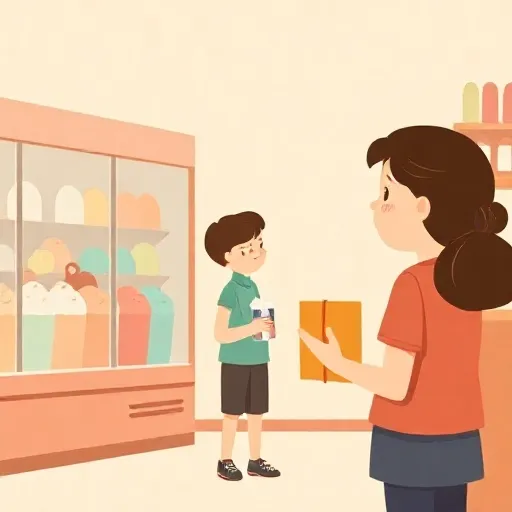
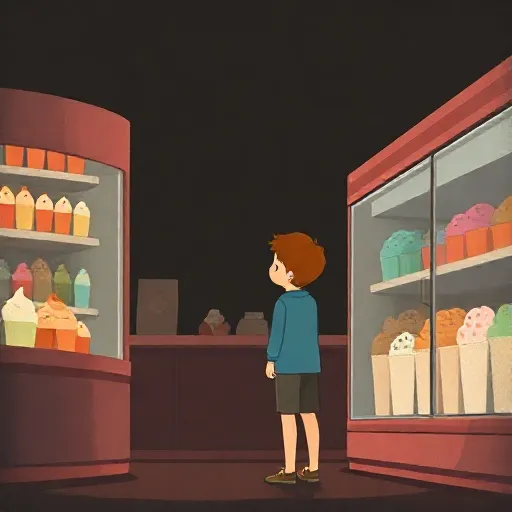
Usually, we compare things using three relations: better than, worse than, and equally good. If you pick a flavor of ice cream, you can often say, “Vanilla is better than lemon,” or “They’re equally good.” Incommensurability says those three aren’t enough. Some pairs of valuable things just refuse to line up.
The Small Improvement Argument

Why should we believe that incommensurability exists? The main reason is the Small Improvement Argument. It goes like this: suppose you’re comparing two things, A and B. You honestly can’t say A is better, and you can’t say B is better. Now imagine A is improved just a little — call it A+. Clearly, A+ is slightly better than A. But is A+ now better than B? Often the answer is “no.” If it were, that tiny improvement would have decided the whole contest, and that doesn’t match how we feel.
Take a dessert duel: a scoop of vanilla ice cream versus a rich chocolate mousse. You struggle to call one better. Are they equally good? If they were, then vanilla with a single raspberry on top (A+) would be better than plain vanilla, so it would automatically be better than the mousse. But that seems wrong — the raspberry isn’t enough to tip the scale. If you still wouldn’t judge the raspberry-vanilla to be better than the mousse, then the two desserts weren’t equally good to begin with. And since neither is better or worse, they must be incommensurable.
Raz, Derek Parfit (1942–2017), Walter Sinnott-Armstrong (born 1955), and others have put forward examples like this. The structure is always the same: a tiny improvement won’t break the stalemate. That pushes us to say the options stand in a relation beyond “better,” “worse,” or “equal.”
Maybe It’s Just Vagueness

Not everyone agrees that there’s a new, mysterious relation at work. Some philosophers think the apparent puzzle is actually just old-fashioned vagueness. A word like “bald” is vague: some people are clearly bald, some clearly aren’t, and others fall into a borderline where it’s not quite true or false that they’re bald. Counting hairs doesn’t remove the fuzziness — it’s built into how we use the word.
John Broome (born 1947) and others argue that comparative words like “is at least as good as” are vague in exactly this way. So when you say the law career isn’t better, worse, or equally as good as the music career, maybe the truth is that it’s simply indeterminate which of those three relations holds. One of them does apply, but language and facts don’t pick out which one for sure. What feels like incommensurability is really just a blurry borderline — like a case where someone is neither definitely bald nor definitely not bald.
If this view is right, the Small Improvement Argument doesn’t prove a new kind of value relation. It just reveals a gap in our ability to place things precisely on the usual scale. The vagueness account is appealing because it’s simpler: we already know language is fuzzy, so we don’t need to invent a fourth relation. But many philosophers think the borderline cases of “bald” don’t fully capture the feeling of a career-versus-career choice. The debate stays open.
On a Par: A Fourth Way to Compare
Ruth Chang (born 1963) takes a different path. She agrees that the Small Improvement Argument shows the three standard relations aren’t enough, but she doesn’t want to give up on the idea that the options are positively related. She proposes a fourth relation: parity. Two things are on a par when neither is better, their differences prevent them from being called equally good, yet they aren’t completely incomparable either. You can still say something positive about how they stand to each other.
Chang asks us to compare Mozart and Michelangelo in terms of creativity. Is one more creative than the other? Most people don’t think so. But because their creativity shows up in such different ways — music versus sculpture — it seems wrong to call them precisely equally creative. Still, we can compare them. Mozart is clearly more creative than a mediocre sculptor. Now imagine a chain of sculptors, each slightly worse than Michelangelo, until you reach one who is obviously less creative than Mozart. Since Mozart is comparable to that worst sculptor, Chang argues, Mozart must also be comparable to each sculptor in between — including Michelangelo. The relation that holds is parity.
Earlier philosophers had similar hunches. James Griffin (1933–2019) and Derek Parfit spoke of things being “roughly equal” or “imprecisely equal.” Parfit pictured two poets and a novelist competing for a literary prize: the first poet and the novelist might be roughly equal, so a slightly better second poet doesn’t automatically beat the novelist. Chang’s parity, however, is meant to be a fourth genuine relation, not a roughened version of equality.
If parity exists, then in many hard choices you aren’t facing a complete failure of comparison — you’re noticing a different kind of comparison. That can make a big difference for how you decide.
So How Do You Choose When Nothing Is Best?
If options really are incommensurable or merely on a par, what does that mean for making decisions? According to optimization, you should always pick the best option. But if no option is best, optimization says you can’t make a justified choice at all. That sounds alarming — it would mean a lot of everyday decisions are baseless.
Other philosophers defend maximization: you are justified as long as you don’t pick something that is clearly worse than another option. Since incommensurable options are never worse than each other, either one is permissible. You’re free to pick.
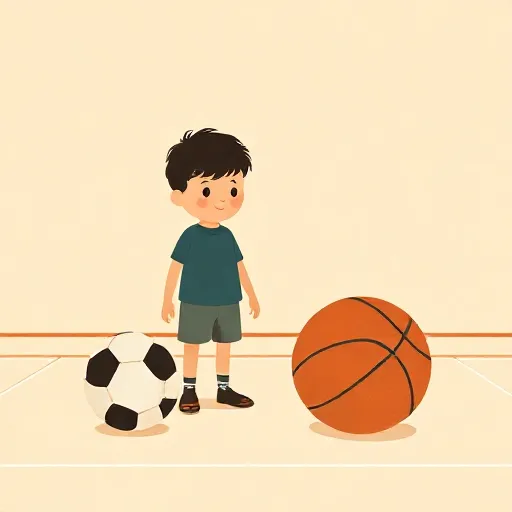
Ruth Chang adds that parity offers something richer. When options are on a par, the given facts don’t settle which is better. That’s where your will comes in. You can create a reason by committing to one path. If you choose basketball over soccer, and you really throw yourself into it, your commitment can make basketball the right choice for you. In that moment, you aren’t just discovering a value — you’re partly making it.
Philosophers also point out that incommensurable choices give you space to express yourself. If everything had a clear “best” answer, you’d merely be a calculator. Real life turns you into an agent who can shape what matters by deciding who you want to be.
Why This Puzzle Follows You Every Day

You meet incommensurability much more often than you might think. Choosing between a science club and a drama club. Deciding how to spend a free afternoon with two good friends who want to do different things. Picking a video game world to explore when both seem endlessly fun. In each case, you might not be able to say that one is better, yet the decision still matters.
Philosophers care about this puzzle because it changes how we understand value itself. It suggests that the world’s goods aren’t all arranged on a single ladder from worst to best. Some stand side by side, and you have to pick without the comfort of a clear winner. That doesn’t mean you can’t choose wisely — it means wisdom sometimes means committing wholeheartedly, not just calculating.
So the next time you’re stuck between two perfectly good options, remember: you might be facing incommensurability. No amount of measuring will give you an answer. But you can still step forward and make one path your own.
Think about it
- Think of a time you couldn’t decide between two things. Did they feel equally good, or did they feel like they just couldn’t be compared at all?
- If two activities are on a par, does it make sense to pick one randomly and then stick with it no matter what? Why or why not?
- Would a life where every choice had a single “best” option be easier or harder than a life with genuinely unrankable decisions?