Can You Throw a Spear Past the Edge of the Universe?
A Spear at the Edge of the Universe
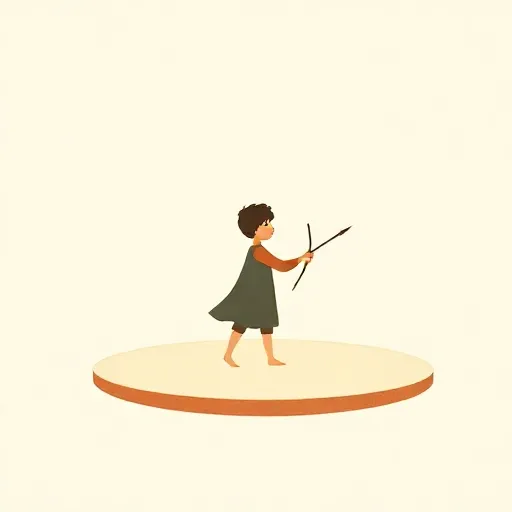
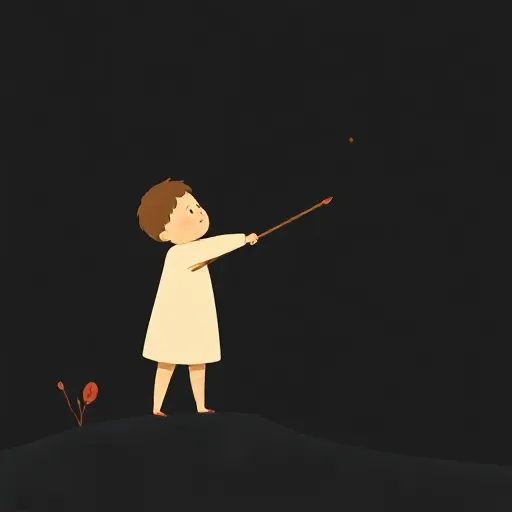
Imagine you are standing at the very edge of everything — a wall marking the end of the universe. You pick up a spear and hurl it as hard as you can. What happens next?
That question was asked over two thousand years ago by the Roman poet and thinker Lucretius (c. 99–c. 55 BCE). If the spear sails right through, then the “boundary” wasn’t really the end — there is more space on the other side. If the spear bounces back, then something must be out there to bounce it, some cosmic wall, and that wall itself is in space. Either way, the universe cannot have an edge. Space must be infinite.
This is one of the oldest and most elegant thought experiments — a kind of investigation you carry out entirely in your mind. You set up a situation, “run” it in your imagination, observe what happens, and draw a conclusion. No lab coat required.
Yet the story also shows that thought experiments can mislead. Lucretius couldn’t imagine a space that is finite but has no boundary — like the surface of a perfectly round ball. Walk along a sphere and you never hit an edge, but the sphere’s surface is still finite. The universe might be a three‑dimensional version of that same idea. Even the cleverest mental pictures can miss possibilities we haven’t learned to see yet.
What Makes an Experiment a “Thought” Experiment?

A thought experiment is a deliberate imaginary scenario you run like a simulation in your head. You might ask: if I did this, what would happen? The result can feel as convincing as a real‑world trial, even though you never touch a single object.
The physicist and philosopher Ernst Mach (1838–1916) argued that thought experiments are not a strange trick; they are simply a different point on the same spectrum as ordinary experiments. According to Mach, you draw on a vast store of “instinctive knowledge” — patterns you have soaked up from experience — and use them to predict what would occur in an unreal situation.
One of Mach’s favorite examples comes from the mathematician Simon Stevin (1548–1620). Picture a smooth, frictionless triangular block with a chain draped over the top, links dangling down both sides. How will the chain move? At first, it seems hard to say. Now imagine adding a few extra links so that the chain forms a closed loop, as in a necklace. Any motion would create a perpetual motion machine — a device that runs forever with no fuel — and your whole experience of the world screams that such a thing is impossible. So the original chain must have been in perfect balance all along. You didn’t need to build a frictionless slope (which nobody can do anyway). The conclusion arrives with a satisfying “aha.”
Philosophers and scientists have run this kind of experiment in every field that asks big questions: physics, ethics, mathematics, and theology. Some thought experiments simply make a difficult idea clear. Others are meant to provide actual evidence for or against a theory, putting the mind on equal footing with a laboratory.
A Violinist, a Fetus, and a Right to Life

In 1971, philosopher Judith Jarvis Thomson invited her readers to imagine something unsettling. You wake up to find that a society of music lovers has kidnapped a world‑famous violinist. He has fallen into a coma, and you are the only person whose body can keep him alive. While you were sleeping, they hooked you to him. If you unhook him, he will die.
The music lovers present an argument: the violinist is an innocent person, all innocent persons have a right to life, and unhooking him would cause his death. Therefore, unhooking is morally wrong.
Most people feel, strongly, that something is off about this argument — even though it has exactly the same structure as a popular argument against abortion. Thomson’s thought experiment pulls apart two ideas that often get tangled together: “a right to life” and “a right to whatever your body needs to stay alive.” The fetus and the violinist may each have the first right, but it is far from obvious that either has the second. So even if a fetus has a right to life, abortion might still be morally permissible in some cases.
This example reveals a key feature of thought experiments: they can be “rethought.” Opponents can propose a different version. Daniel Dennett, for instance, replied with a scenario where a color scientist who knows everything physical about color sees a bright blue banana. In his story, she isn’t surprised — she already knew what to expect. Dennett’s version aims to cancel the power of the original. Like a lawyer raising reasonable doubt, a counter thought experiment doesn’t have to be perfectly convincing; it just has to make you uncertain about what the first scenario really proved.
Galileo’s Cannonball: Thinking Without Looking

For centuries, people believed Aristotle’s claim that heavy objects fall faster than light ones. Galileo Galilei (1564–1642) imagined an experiment that shattered that belief without dropping a single pebble.
Picture a heavy cannonball and a light musket ball. According to Aristotle, the cannonball falls faster. Now tie them together. The light ball should act as a drag, so the combined object falls slower than the cannonball alone. But the combined object is heavier than the cannonball, so it should fall faster. You have a contradiction: the tied‑together pair must be both faster and slower than the cannonball. Aristotle’s theory collapses. And from the wreckage, a new insight springs into view: all bodies fall at the same rate.
Some philosophers, like James Robert Brown, see cases like this as evidence that thought experiments can give us a priori knowledge — knowledge that does not depend on new sense experience. Brown’s view is a kind of Platonism: just as you might “see” mathematical truths with your mind’s eye, you can sometimes grasp deep facts about nature.
John D. Norton strongly disagrees. He argues that every thought experiment is really an argument in disguise. The vivid images and the “aha” feeling are psychologically helpful, but they are not necessary. Strip away the story, and you are left with premises drawn from experience and ordinary logic. On this view, you never learn something from a thought experiment that you couldn’t, in principle, learn by spelling out the argument on paper.
The Big Fight: Can Thinking Alone Discover Truth?
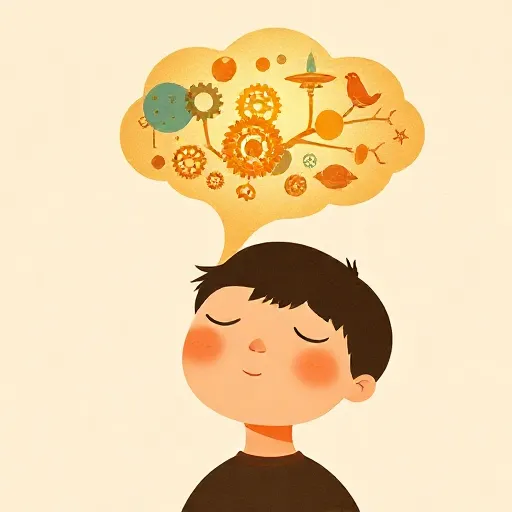
So we are back to the central puzzle: how can merely thinking about an imaginary scenario teach you anything about the real world? This is not a settled question; it is the heart of a lively, ongoing debate.
One cluster of views, the intuition‑based account, holds that thought experiments work by triggering intuitions — those quick, gut‑level judgments that feel obviously right. For a Platonist like Brown, these intuitions are a kind of mental perception that can reach genuine facts. For a naturalist like Elke Brendel, intuitions are shaped by evolution and membership in intellectual communities; they are fallible but still indispensable. The worry is clear: intuitions can vary across cultures and can be dead wrong. Yet without them, it is hard to explain why Galileo’s imagined cannonball convinced anyone at all.
Another approach, experimentalism, follows Mach in treating thought experiments as a limiting case of real experiments. When you mentally rotate an object or predict how a chain will drape, you are using the same brain machinery that makes sense of physical tests — only you are running them on memory and instinct instead of on a lab bench.
A more recent and widely discussed view is the mental‑model account. On this view, you construct a mental model — a kind of rich, picture‑like simulation — and manipulate it the way you might spin a globe with your fingers. That model is non‑propositional: it isn’t made of words or sentences. The narrative of a thought experiment works like a set of building instructions. The biggest challenge is explaining how such a silent, image‑driven process can lead to a new belief you can put into words.
The different accounts are not just dusty museum exhibits; they are living tools philosophers still test and sharpen. And each reminds us that even the most abstract armchair activity is rooted in concrete mental skills you already use every day.
Why Your “What If” Questions Are Smarter Than You Think

You have been doing thought experiments your whole life. When you ask “what if I skip practice?” or “what would change if everyone could read minds?” you are building a miniature world and testing it in your head. That is what makes this topic so personal.
Philosophers use elaborate, carefully crafted scenarios to chip away at stubborn confusions — about justice, consciousness, identity, and the fabric of space. But the basic move is the same as yours. You imagine, you run the scene, you learn something — and sometimes you realize that what seemed obvious was only a trick of the picture.
The mystery of why thought experiments work has not been solved, and that is excellent news. It means you get to wrestle with the same live question that keeps researchers up at night: how much can a mind really discover all by itself? And when the answer pops into your head with a satisfying “aha,” should you trust it, test it, or toss it away?
Think about it
- If you imagined a world where stealing was always allowed, would that help you decide whether stealing is actually wrong? What details might your imagined world accidentally leave out that could change the answer?
- A scientist builds a perfect computer simulation of a ball rolling down a hill. Is that simulation the same as doing a real experiment with a real ball? Which one would you trust more — and why?
- Think of a question you care about that no one could answer by running a physical test (maybe about fairness, friendship, or what makes something funny). Could a thought experiment get you closer to an answer? How would you know if it was misleading you?