Do You Have a Yesterday‑You and a Tomorrow‑You?
The Puzzle of Change: How Can a Banana Be Both Unripe and Ripe?
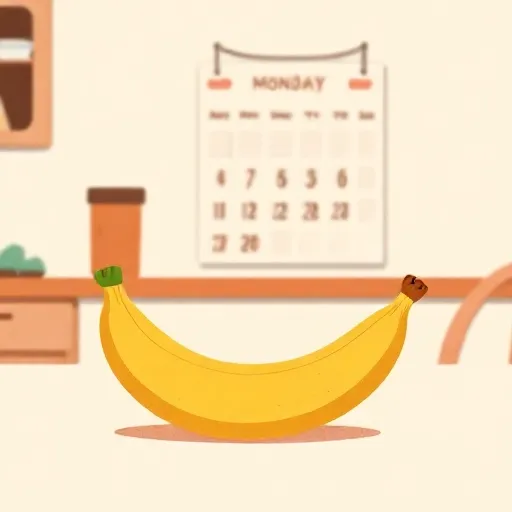
Last Monday, the banana in the fruit bowl was green and hard. Today it is spotted brown and squishy. An unripe banana and an overripe banana seem like opposites — nothing can be both at once. Yet it is the very same banana. How is that possible?
Philosophers call this the problem of change. It asks: how can one and the same thing have opposite properties over time?
Your own body gives a clue. Right now your feet are on a cold tile floor, but your head is up near a warm heater. You are cold and warm at the same moment, because you have different spatial parts: cold feet and a warm head. Having different parts lets a single thing have different properties at the same time, without any contradiction.
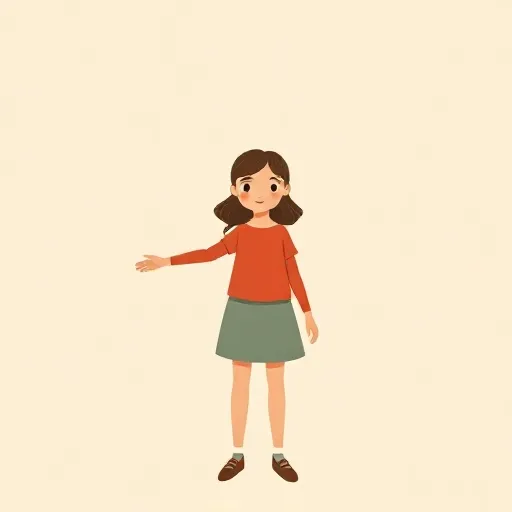
Some philosophers, called perdurantists, think the same trick explains change through time. Just as you stretch through space by having spatial parts, you stretch through time by having temporal parts. Your temporal parts are things like you‑yesterday, you‑today, and you‑tomorrow. The banana has a Monday‑banana that is unripe and a Friday‑banana that is overripe. Change is just the difference between those time‑slices.
Other philosophers, called endurantists, reject this picture. They say you do not have temporal parts at all. Instead, you are wholly present at each moment you exist. It is the whole you who was ignorant yesterday, is reading this today, and will be an expert tomorrow. Endurantists think talk of “you‑yesterday” is just a loose way of referring to you and what you were like yesterday — not a separate object.
The debate traces back through centuries, but the names “endurance” and “perdurance” were introduced by the philosopher David Lewis (1941–2001), who was a famous perdurantist. A leading endurantist is Peter van Inwagen (born 1942). Today, the fight over temporal parts is one of the liveliest in metaphysics.
Temporal Parts to the Rescue (or Not)
If you are a perdurantist, change stops being mysterious. The banana’s Monday part has the property being‑unripe. Its Friday part has the property being‑ripe. Different parts have different properties, exactly like your cold feet and warm head. No contradiction.
But endurantists object. They say variation between different parts is not genuine change — after all, the whole four‑dimensional banana is never itself unripe or ripe, and each momentary part is stuck with its one property forever. Perdurantists reply by distinguishing two ways of talking: atemporally (looking at all times at once) and temporally (relative to a particular time). In temporal talk, the whole banana is unripe on Monday because its Monday part is unripe.
Endurantists also have their own explanations of change without temporal parts. One popular approach is the relations‑to‑times view. There is no absolute fact about the banana’s ripeness; instead, the banana stands in the being‑unripe‑on relation to Monday, and the being‑ripe‑on relation to Friday. The banana itself never changes its relations to times — so critics wonder whether anything really changes.
Another endurantist idea is adverbialism. Instead of splitting the object into parts or splitting the property, we split the way the object has the property. The banana has being‑unripe in a Monday way and lacks it in a Friday way. Objections to adverbialism ask whether this just pushes the puzzle into the mystery of what “ways of having” a property are.
A more radical endurantist move is presentism: the view that only the present exists. If past and future do not exist, then the banana’s unripe state does not exist now, so there is nothing to contradict. But many philosophers think presentism is a drastic fix that needs its own strong justification.
No side has a knock‑out victory. Perdurantists seem to have a clean story; endurantists have several options, each with costs. The debate remains open.
When Two Things Share One Space: The Statue and the Lump
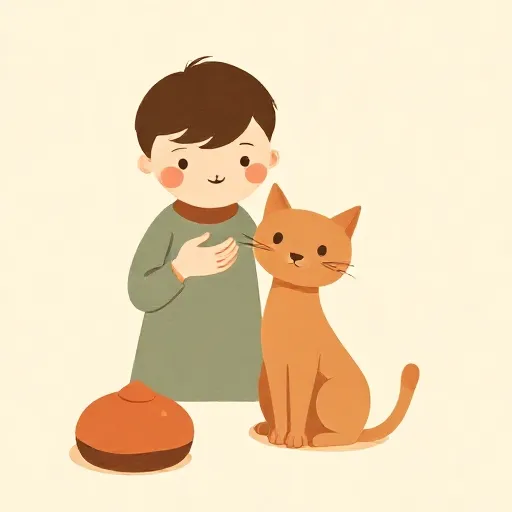
On Wednesday you take a lump of clay and mould it into a statue. You place it on a plinth. What is sitting there? The statue, obviously. But is the original lump of clay still there too? You didn’t destroy any clay; you only changed its shape. If both the statue and the lump exist, then two different things occupy the same place at the same time.
Philosophers use Leibniz’s Law to test identity: if two things differ in any property, they cannot be one and the same thing. The lump of clay is older than the statue. The statue is “well‑made”; the lump was just dug up. Those differences suggest they are two objects that temporarily coincide.
A similar puzzle involves Tibbles the cat. Tibbles has a tail and a tail‑complement — a slightly weird object consisting of all of Tibbles minus the tail. Call the complement “Tib.” One day Tibbles loses her tail in an accident. Now Tibbles and Tib fill exactly the same space. Are they two things or one? Tibbles has been a cat for years; Tib hasn’t. Tibbles is the owner’s favourite animal; perhaps Tib isn’t. Again, Leibniz’s Law suggests two coinciding objects.
Perdurantists explain temporary coincidence by appealing to temporal parts. The lump of clay is a week‑long four‑dimensional object; the statue is a five‑day‑long object that shares many of its temporal parts with the lump. On any given day, a single temporal part sits on the plinth — which is why we feel there is only one thing there. But the whole lump and the whole statue are different four‑dimensional objects, so they can differ in age and other properties. There is nothing spooky about two objects partially overlapping by sharing parts — think of your left foot and you sharing the same sock. Tibbles and Tib are handled the same way: they are two long‑lasting objects that, after the accident, share their temporal parts.
Endurantists often respond by accepting the standard account: two distinct objects can wholly occupy the same location at the same time. The relationship is called constitution — the lump constitutes the statue, but they are not identical. Constitution explains why they don’t jostle for space, yet differ in age. Some endurantists restrict their ontology, denying that tail‑complements or even statues truly exist, to avoid the coincidence. Others argue that identity itself can be temporary, or that objects are destroyed more easily than we think. Each solution comes with philosophical costs, and perdurantists keep pointing to the neatness of the temporal‑parts picture.
Are You a String of Momentary Selves?

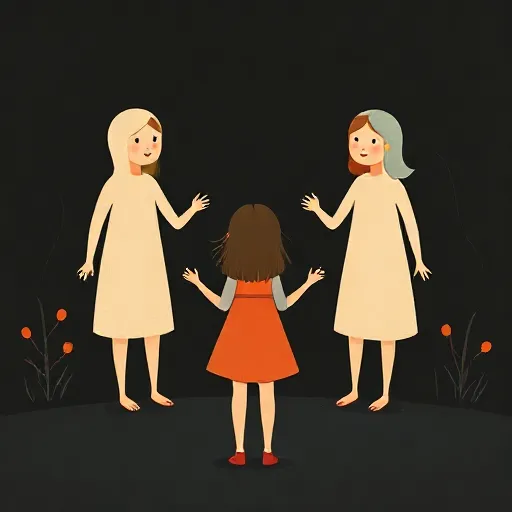
People make the debate about temporal parts personal. Literally. You have a special concern for your future: you study now so that you‑tomorrow can pass the test. You feel pride or shame about your past actions. The way you relate to your past and future selves seems to depend on whether you are identical with them or merely closely connected.
If you are an endurantist, it is the very same whole person who took the exam and who feels proud later. That straightforward identity makes self‑concern easy to justify. If you are a perdurantist, the person is a four‑dimensional worm, and your current actions are done by a brief temporal part. Self‑concern must be based on the intimate causal relations linking your distinct temporal parts. Both sides try to tell a satisfying story, but the debate digs into the root of what makes you you.
Puzzle cases sharpen the issue. Imagine surgeons remove the two halves of your brain and implant them into two different (brainless) bodies. After the operation, each resulting person has memories and personality that seem continuous with yours. Are both you? Did two coincident people walk around inside your head before the operation, only now separated? Perdurantists can describe this by saying that two overlapping four‑dimensional people existed all along, sharing earlier temporal parts and diverging later. Endurantists must decide whether to accept coincident wholly‑present people, deny that the operation really divides a person, or restrict their ontology so that there were never two candidates to begin with.
These questions link directly to the “too many thinkers” problem. Suppose you coincide with a human organism that began at conception and may persist even if you lose consciousness permanently. If both you and the organism exist, which one is really thinking right now? Both seem to share your brain, so both would be thinking — and that multiplication of conscious beings strikes many as bizarre. Debates about temporal parts and coincidence are not just about statues and cats; they are about you.
Why This Fight Matters to You, Right Now

You make a promise to a friend — to help them next week. You keep a diary so your future self will remember. You decide to eat less sugar now so you will be healthier later. All these ordinary actions assume something about your persistence through time: that there is a single you who will benefit, remember, and be held accountable.
Perdurantists and endurantists give different accounts of what that “single you” really is. If you are a string of tightly connected time‑slices, then honouring a promise means a later temporal part follows through on what an earlier part said. The connection matters, but it is not strict identity. Stage theorists — a related group — go further: they say you are only a momentary stage, and your past and future selves are different objects linked by special causal ties. Your promise is kept by a “counterpart,” not by you. If that sounds unsettling, you are feeling the weight of the dispute.
The law, morality, and ordinary life all work with a rough‑and‑ready notion that you are the same person from cradle to grave — or at least from breakfast to dinner. Yet philosophy asks whether that notion can survive the puzzles of change, coincidence, and split brains. Figuring out whether you have temporal parts may not change what you have for lunch, but it shapes deep answers to “Who am I?” and “What do I owe my future self?”
Think about it
- If you could step into a time machine and meet your past self, would that be different from meeting a stranger? Why?
- Suppose you promise your mom to clean your room tomorrow. If you are not the same person tomorrow, is it still your promise to keep?
- Imagine a perfect clone with all your memories. Are you both “you”? Would it matter which one gets punished for something you did before the cloning?