
What Does It Really Mean to Pay Attention?
The Professor Who Went to the Factory
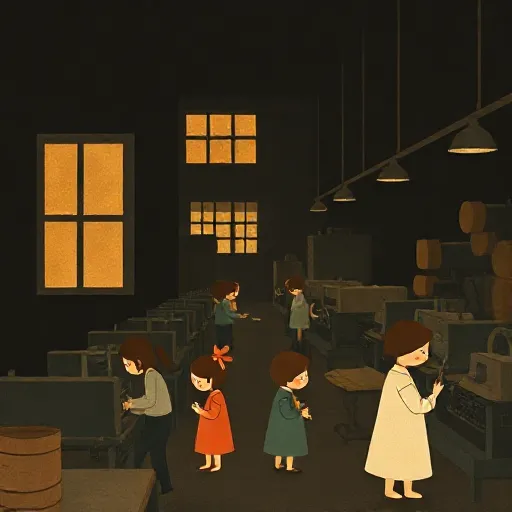
In the winter of 1934, a 25-year-old philosophy teacher named Simone Weil (1909–1943) walked into a factory in Paris. She wasn’t there to give a lecture. She had asked her school for a year off so she could work on an assembly line, pressing metal parts, packing boxes, and following the orders of supervisors — just like the most powerless workers in France.
Weil already cared deeply about politics and justice. She had studied the ideas of Karl Marx (19th century) and believed that modern society was built to crush certain people. But reading about oppression wasn’t enough. She wanted to feel it in her own body. What she discovered in the factory changed her thinking forever — not only about politics, but about how we see other people at all.
Oppression Isn’t Just Cruelty

Most of us think oppression means one person being mean to another. Weil saw something different. In her early essays, especially the important 1934 piece “Reflections Concerning the Causes of Liberty and Social Oppression,” she argued that oppression is a kind of unstoppable machine.
The real problem, she said, is the struggle for power. When people fight for control — in a workplace, a government, or even a friendship — the fight itself takes over. Both the powerful and the powerless get trapped. Weil wrote that power “weighs as pitilessly on those who command as on those who obey.” A boss who must constantly push workers faster becomes a slave to the system too.
She noticed something else: modern factories, with their endless orders and speed-ups, didn’t just tire people out. They stopped people from thinking. A worker following the same motion for ten hours couldn’t ask why she was doing it or how it connected to the whole project. Weil called this loss of thoughtful action uprootedness — being cut off from the meaning of your own life.
When Suffering Stopped Being a Theory
Weil kept a journal during her factory months. She didn’t describe heroic struggle. She described humiliation. Time became “an intolerable burden.” She felt less like a person and more like a thing. The constant orders, the impossibility of slowing down, the sense that no one cared who she was — it all added up to something she began calling affliction (malheur in French). Affliction wasn’t just physical pain. It was pain mixed with social shame and inner numbness.
And then something surprising happened. In 1935, while visiting a fishing village in Portugal, Weil saw a religious procession for the patron saint of fishermen. The villagers, poor and exhausted like the workers she had met, walked together with candles. In that moment, she later wrote, “the conviction was suddenly borne in upon me that Christianity is pre-eminently the religion of slaves, that slaves cannot help belonging to it, and I among others.”
This didn’t mean she suddenly believed all the doctrines. But she started to see that suffering people might need something beyond political revolution. They needed to be seen — truly seen — by others. And that required a skill most of us never practice.
How to Empty Your Mind
In her later writings, especially during the early 1940s when she was fleeing Nazi-occupied France, Weil developed her most famous idea: attention (l’attention). She didn’t mean the kind of attention you pay in class when the teacher might call on you. She meant a radical openness to another person — a silence inside you that lets the other person’s reality enter.
Attention, Weil said, is not about straining or trying really hard. It’s a negative effort. You stop filling the space with your own thoughts, your own plans, your own importance. You wait. The French word attente means waiting, and Weil made a connection: true attention is waiting with an empty mind, ready to receive “the object that is to penetrate it.”
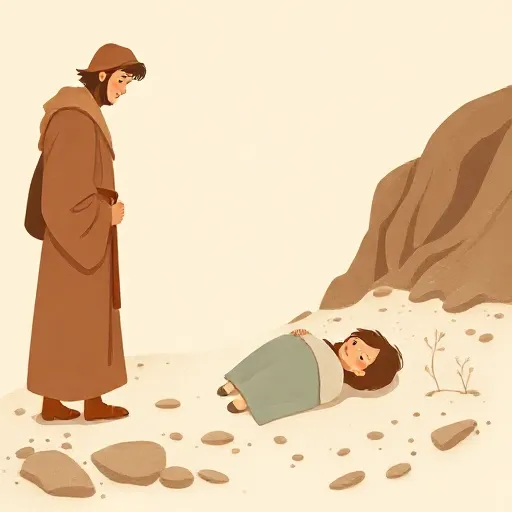
She used the story of the Good Samaritan to explain. A man is beaten and left on the road. Other people pass by, busy with their own lives. The Samaritan stops and turns his attention toward the stranger. He doesn’t first decide what to do. The act of attention itself — the moment of really seeing the wounded man — makes the caring action almost automatic.
Force Makes Everything a Thing
At the same time, Weil was thinking about force — the power that turns people into objects. In her essay “The Iliad, or the Poem of Force,” written in 1940 under a false name to avoid antisemitic censorship, she offered a startling reading of Homer’s ancient war epic. The real main character of the Iliad, she said, is not Achilles or Hector. It’s force itself.
Force, for Weil, is what happens when someone can kill or break another person, or when someone lives under that threat every moment. The person holding the weapon and the person facing it are both deformed. Force changes human beings into corpses, or, even before that, into things that don’t think or feel. She wrote that force “does not kill just yet. It will surely kill, it will possibly kill, or perhaps it merely hangs, poised and ready, over the head of the creature it can kill, at any moment, which is to say at every moment.”
This wasn’t only about war. Weil saw force operating in any system where one group could humiliate or erase another — in colonialism, in poverty, and even in the way people use words like “Nation” or “Progress” to bully others.
Roots, Needs, and Why It Still Matters

In her last years, working for the Free French in London, Weil wrote her longest book, The Need for Roots (published after her death in 1943). She argued that human beings have needs of the soul, just as we have needs of the body. One of the deepest needs is for roots — a living connection to a community, a place, a history, and work that has meaning. When people are uprooted, they become vulnerable to force, to propaganda, to treating others as things.
Weil’s ideas sound as if they’re about huge systems — factories, wars, governments. But they start with a single, everyday choice. Do you fill every quiet moment with your own plans, your phone, your self-importance? Or do you sometimes let the world be empty, uncomfortable, and open — so another person can actually appear?
Many philosophers and writers, from Iris Murdoch to T. S. Eliot, found Weil’s concept of attention to be one of the most challenging ethical ideas of the twentieth century. They saw that she had described something rare and real: a way of being with others that doesn’t try to control them, fix them, or impress them.
Think about it
- Can you think of a time when someone really listened to you without rushing to give advice or a solution? What did that feel like?
- Is it possible to pay attention in Weil’s sense while scrolling through social media, or does the speed of the screen make that impossible?
- If a victim of bullying and the bully are both partly trapped in the same “struggle for power,” does that change how we should respond to bullying? Why or why not?