Can Science Resolve Any Disagreement?
The Trial of Trotsky: Science Meets Politics

In 1937, in a quiet house in Mexico, a trial began that had no legal power but would make philosophical history. The judge was John Dewey (1859–1952), then America’s most famous philosopher. The defendant was Leon Trotsky, the exiled Russian revolutionary, accused by the Soviet Union of treason. The philosopher who made it all happen was Sidney Hook (1902–1989).
Hook believed that the disagreements tearing the world apart could be settled the same way a scientist settles a question in a lab: by collecting evidence, forming a clear hypothesis, and checking the consequences. He wasn’t naive—he knew politics was messy. But he followed his mentor Dewey in thinking that the scientific method, the habit of testing ideas by what they lead to in experience, was the best tool humans had for reaching reliable knowledge about anything, including right and wrong.
Hook was a pragmatist. Pragmatism is the view that the meaning and truth of an idea are tied to its practical effects. It started with Charles Peirce (1839–1914) and William James (1842–1910), who argued that philosophy should stop looking for mysterious “first causes” behind experience and start asking what difference a belief would make if it were true. Hook’s life became one long experiment: could that same method guide not only how we discover scientific facts but how we resolve moral, political, and social fights?
Knowledge as a Tool, Not a Mirror

Before Hook could bring science to the courtroom, he needed to show what knowledge really is. He set up a showdown between two older theories of truth.
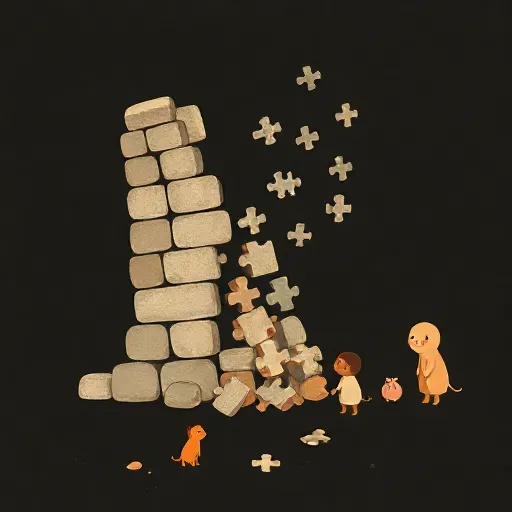
The correspondence theory says a belief is true if it “copies” reality, like a photograph that matches a scene. The coherence theory says truth means fitting perfectly with all your other beliefs, like a jigsaw puzzle with no missing pieces. Hook, like Dewey and James before him, thought both missed something essential.
Imagine you think a certain plant food makes flowers grow faster. According to correspondence, you’d just compare your mental picture of super-growth to what happens out there—you’re a spectator. According to coherence, you’d check whether the claim clashes with what you already know about plant biology. But neither picture captures what you actually do in a real test: you feed the plant, observe, predict, and change your next move. Knowledge, for the pragmatist, is an instrument. It gives you the power to predict and control aspects of your environment. That’s why Darwin’s picture of the mind as an evolved organ for survival felt so natural to Dewey and Hook.
Hook argued that only the pragmatic view explains why obtaining knowledge matters at all. It transforms you from a passive mirror into an active problem-solver. And he insisted this wasn’t just a story about nature—it applied to social life too. A policy is like a scientific hypothesis: you propose it, you try it, and you let the consequences tell you whether it worked.
Can Science Settle a Moral Fight?

But moral arguments feel different from feeding a plant. If two people disagree about whether a movie is “good,” can an experiment settle it? Hook’s answer was a careful yes. Defending a view called ethical naturalism, he said moral judgments are not just gut feelings or absolute commands handed down from above. They are hypotheses about what would satisfy human desires after intelligent, critical inquiry.
Take the word good. Hook, following Dewey, argued that calling something “good” means it would be desirable—not just that someone actually desires it right now, but that it would be desired by people who understand their own needs, the available means, and the consequences of satisfying those desires. That turns a moral claim into a prediction: “If thoughtful, well-informed people consider this action, they would judge it worthwhile.” Such predictions can be confirmed or disconfirmed by unfolding experience.
This put Hook in direct conflict with a powerful rival called emotivism, championed by thinkers like C.L. Stevenson (1908–1979). Emotivists said that moral statements aren’t really true or false at all—they’re expressions of attitude, like cheering “Hoorah for kindness!” When two people clash over a value, Stevenson claimed, the dispute is ultimately a disagreement in attitude, not in factual belief. No amount of evidence, he thought, could logically force someone to change their basic feeling.
Hook fired back. He argued that you can never be certain you have all the relevant facts. A new fact—about the long-term effects of a policy, or about someone’s hidden motives—might shift attitudes. He also noticed that people often defend even their ugliest prejudices by giving reasons. If you show those reasons are false, attitudes sometimes soften, even if slowly. So drawing a sharp line between “fact disputes” and “attitude disputes” was, in Hook’s view, premature.
Defending Democracy with a Scientific Method

Hook didn’t keep his pragmatism in the library. Throughout the 1940s and 1950s, he became a public intellectual who used his ideas to defend liberal democracy—especially against Soviet communism.
His most controversial tool was the distinction between heresy and conspiracy. In a free society, Hook argued, any heretical belief—even one that wants to change the whole system—deserves full protection. But when a group acts as a disciplined conspiracy, trained to seize power and crush all future free inquiry, a democracy may legitimately limit its influence. The idea was to protect the open-ended testing of ideas, just as you would protect the integrity of a laboratory. Hook helped found organizations like the Congress for Cultural Freedom to support writers and thinkers who opposed totalitarianism.
Later, as campus protests erupted in the 1960s, Hook turned his critical method toward American universities. He insisted that a classroom should be a community of inquiry, not a rally for any political orthodoxy. For Hook, education meant training students to test claims against evidence—whether those claims came from a textbook, a politician, or a movement. He even applied the same thinking to his own past allegiances: Hook had once tried to interpret Marxism as an experimental hypothesis about history, but when the predicted consequences failed to materialize—when Soviet practice turned brutal—he concluded the evidence refuted the theory and abandoned it. That, to him, was pragmatism in action.
Why the Critics Said Science Isn’t Enough

Not everyone bought Hook’s optimism. One persistent objection came from the emotivists themselves: even if two people have access to exactly the same facts about, say, the death penalty, they might still arrive at opposite policy conclusions because their basic attitudes diverge. That suggests moral disagreements may not always be resolvable the way a lab controversy is.
A deeper challenge concerned the tragic sense of life. By the 1970s, Hook found himself facing the charge that Deweyan pragmatism was too cheery—that it failed to reckon with the kind of irreparable loss one finds in Greek drama, or in the horrors of total war and genocide. Can scientific method really “solve” a situation where every option leaves someone devastated?
Hook took the criticism seriously. In his presidential address to the American Philosophical Association, he insisted that pragmatism did recognize tragedy. It did not promise inevitable progress. It only held that, here and now, using intelligence and shared testing could make things better—and that giving up on reason was a “failure of nerve.” Still, many critics thought he underestimated how deep, how permanent, and how painful genuine moral conflict could be. The argument remains alive today whenever we ask whether values are open to evidence or whether some commitments just have to be chosen and lived with, no matter what the data say.
What Hook’s Big Gamble Means for You

Hook’s life—from the Trotsky trial to his fights over academic freedom—was one long bet. The bet was that the method of asking “What if we tried this, and watched what happens?” could be stretched far beyond beakers and microscopes. You can see the same bet in action today when people debate climate policies, new school rules, or how to make a video game community less toxic. Proponents of each side often appeal to evidence, propose plans, and argue that their approach will lead to better consequences. That is, whether they know it or not, the pragmatist’s move.
But the critics’ warning hasn’t gone away. There are times when two people look at the same information and still feel differently about what is fair or kind. Figuring out when to trust evidence and when to admit we are in a deeper clash of attitudes is a skill no formula can hand you.
So when you face a heated argument—about a friendship, a broken promise, or even a big messy issue in the news—you might borrow a page from Hook. Ask: “What would count as evidence that one side is working out better? Can I imagine an observation that would change my mind?” That habit doesn’t guarantee agreement, but it was Hook’s stubborn hope that it could at least make disagreement more honest.
Think about it
- If two people agree on all the facts about a new school rule but still argue about whether it’s fair, can an experiment settle their dispute? What would such an experiment look like?
- Could a society use scientific methods to decide when to limit free speech for safety, while still protecting the openness needed for future discoveries? Where would you draw the line?
- Think of a time you changed a strong opinion because of new information. Did that feel like testing a hypothesis, or did something else have to shift first?