What If 'Plus' Really Meant 'Quus'? The Rule‑Following Puzzle
A Strange Question in Math Class
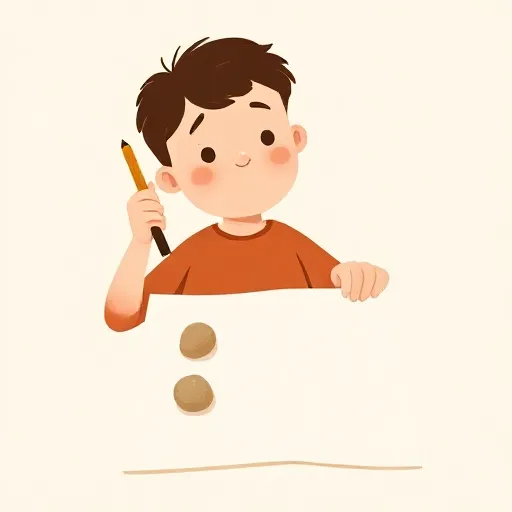
Imagine you’re in math class. The teacher writes “68+57=?” on the board. You’ve added numbers your whole life, so “125” pops into your head without a second thought. But then a strange kid — call her the skeptic — leans over. “What if,” she whispers, “the plus sign has always meant something different for you? What if, for any sum with numbers below 57, it works like normal addition, but as soon as a number is 57 or higher, the answer is just 5?” You’d probably laugh. But can you prove she’s wrong? What fact about you — your past, your brain, your understanding — makes it true that “+” means addition and not this twisted function she calls quaddition?
This is not just a trick question. It is a version of a famous argument from the philosopher Saul Kripke (born 1940), inspired by Ludwig Wittgenstein (1889–1951). The argument says that when you look closely, there seems to be nothing at all that pins down what you really mean by a word or a symbol. If the skeptic is right, then meaning itself might be an illusion.
Words, Rules, and Mental Maps
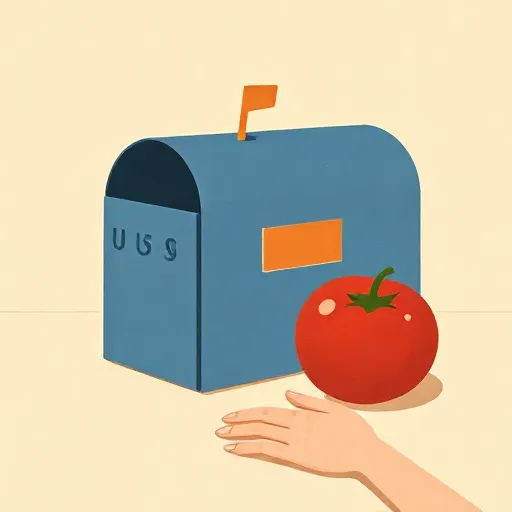
To see why the math case matters, think about ordinary words. When you learn the word blue, you learn a rule: “Apply ‘blue’ to things that are blue, and don’t apply it to things that aren’t.” A US mailbox counts; a ripe tomato does not. In philosophy, linguistic meaning is often understood as a set of correctness conditions — a standard that tells you which uses are right and which are wrong. Saying that you mean blue by “blue” is a lot like saying you are following a rule.
The same idea shows up beyond language. Your thoughts have mental content — they are about things in the world. When you believe the cat is on the mat, the state of the world that makes your belief true (the cat on the mat) accords with your belief. When you intend to finish your homework, the action that fulfills your intention (actually finishing) accords with it, and goofing off does not. In all these cases — words, beliefs, intentions — there is a pattern of accord and failure. That pattern is what the rule-following puzzle puts under a microscope. If there is no fact about which rule you are following, then there may be no fact about what your words mean or even about what you are thinking.
The Skeptic’s Challenge: What Fact Decides?
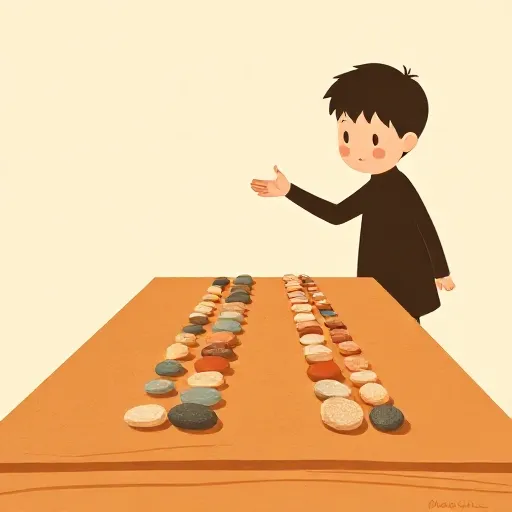
Kripke’s skeptic does not claim you are bad at math or that your memory is faulty. She grants that your mind works perfectly and that you can recall every past use of “+”. Her question is: what fact about you makes it the case that you were using the addition function rather than the quaddition function? The function of addition maps pairs of numbers to their sum: <57, 68> → 125. Quaddition maps them the same way as long as both numbers are below 57, but otherwise gives 5: <57, 68> → 5.
If you cannot point to a fact that selects addition over quaddition, then there is no fact that you meant one rather than the other. And if there was no such fact in the past, there is none now either. Meaning seems to vanish.
To be a convincing answer, any candidate fact must meet two conditions. First, the extensionality condition: the fact must determine the full set of correct applications. It has to say “125 is right” and “5 is wrong” for 68+57, and similarly for every other pair, no matter how large. Second, many interpreters add a normativity condition: meaning facts are not just about what you will do; they are about what you should do. If you mean addition, then you ought to answer 125, even if you are tired or distracted and actually blurt out something else.
The Dispositional Answer: Are You a Adding Machine?
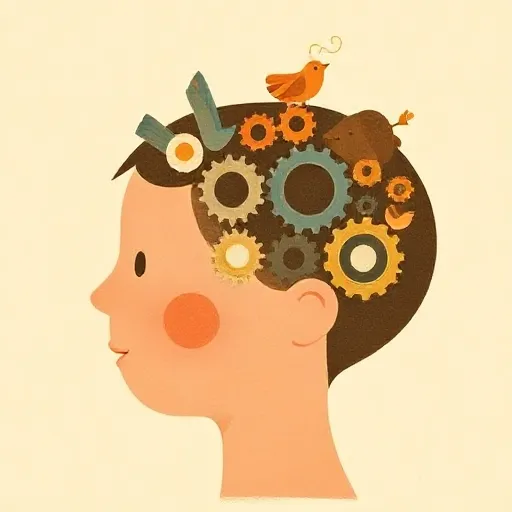
One natural reply is dispositionalism: the fact that you mean addition is simply the fact that you are disposed to give the sum when asked. For everyday numbers, that seems right. But the skeptic immediately hits back with the finitude problem. There are infinitely many possible sums, and your brain is finite. For numbers so huge you could never even think of them before dying, you have no real disposition to give the sum — you would just freeze or guess randomly. So your dispositions cannot tell addition apart from a quaddition-like function that acts weird only on those unreachable numbers.
The error problem is even more vivid. Suppose you are a learner who systematically makes a mistake: whenever you see a problem like 19+19, you forget to carry and write “28.” If your meaning were fixed by your actual dispositions, then you wouldn’t mean addition at all; you’d mean some strange non-standard function, and your answer “28” would be… correct! But that can’t be right. We want to say you mean addition and simply go wrong sometimes.
The normativity problem tightens the screw. A dispositional fact describes what you would do under certain conditions. But meaning does not just predict; it commands. A person who means addition ought to say 125. If they say 5, they have broken a norm, not merely surprised us. Dispositions, the skeptic argues, can never turn a “would” into an “ought.”
The “Just Is” Answer: Is Meaning a Basic Fact?
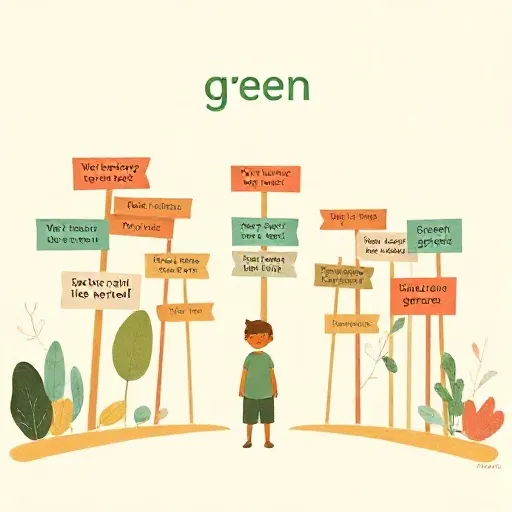
Faced with these difficulties, some philosophers adopt non-reductionism. They say that facts about meaning and rule-following cannot be explained in terms of non-semantic facts (like brain states, dispositions, or behaviors). Instead, meaning is a primitive state — a basic ingredient of the mental world. Just as you cannot explain what an electron is in terms of something simpler, perhaps you cannot explain what it is to mean addition except by using the notion of meaning itself.
The non-reductionist view has its own hurdles. One worry is that it seems to make meaning mysterious: if meaning is a basic fact, how does it guide you when you actually add? How do you know that 125 is the right answer without already knowing what you mean? Defenders of the view reply that guidance does not have to be a separate extra step; following a rule can be immediate and non-inferential. But the skeptic’s challenge does not just disappear — it forces us to reflect on how, from the inside, we can be so sure we are following one rule and not another.
Why It Still Matters: The Floating World of Words

You might think this is just a quirky puzzle about math symbols. But the rule-following paradox reaches into every corner of your life. Whenever you use a word — “fair,” “game,” “friend” — you rely on the idea that it has a stable meaning, that there is a right and wrong way to apply it. If the skeptic is right and meaning facts are impossible, then every conversation becomes a floating game where nothing is really fixed. That’s why Kripke himself called the idea that meaning vanishes “incredible and self-defeating.” Even the skeptic has to use words to make her argument.
Philosophers continue to debate whether dispositionalism, non-reductionism, or some entirely different approach can tame the puzzle. In the meantime, the next time you get into a friendly argument about whether a tomato is a fruit or a vegetable, remember: you are grappling with one of the deepest mysteries of language and thought. What does it take for a word to mean one thing and not another? The answer, it turns out, is anything but obvious.
Think about it
- If you had lived your whole life using the word “blue” to talk about the sky, could someone ever prove that you actually meant “grue” (green before the year 2100, blue after) all along? What kind of fact would settle it?
- Imagine a robot that always gives the sum when asked “x + y.” Does the robot mean addition, or is it just programmed to behave that way? What’s the difference?
- If there were no fact of the matter about what any word means, would it still be possible to have a real disagreement with a friend? Why or why not?