Did Your Soul Come in Pieces? The Archbishop Who Said Yes
The Ban That Shook Oxford
On March 18, 1277, the Archbishop of Canterbury did something universities do not forget. Robert Kilwardby (c. 1215–1279) walked into Oxford and issued a list of thirty forbidden propositions. Any master who taught them would lose his job; any student who defended them would be expelled and never become a teacher. The Oxford Prohibitions became the most famous case of academic censorship in the Middle Ages.
The list covered grammar, logic, and especially natural philosophy — the study of how the world and living things work. But some onlookers immediately guessed the real target behind many of the banned statements. A famous thinker, Thomas Aquinas (1225–1274), had argued that the human soul is a single, simple form. Kilwardby, by contrast, thought the soul is a composite: three essentially different parts that work together as one whole. He believed the one‑form view was not just a religious mistake; it was a philosophical mistake, too. And he was willing to close mouths at the brightest university to stop it.
Kilwardby wasn’t a simple anti‑science villain. He had studied logic and natural philosophy in Paris, enthusiastically teaching Aristotle’s works. Over time, though, he found himself drawn more and more to the ideas of Saint Augustine (354–430), the great North African thinker who stressed the richness of the inner human world. Kilwardby spent the rest of his life trying to harmonize Aristotle and Augustine — to be faithful to both a system of the natural world and a deep account of the soul. The ban at Oxford was part of that effort.
Is Your Soul Simple or a Team? Kilwardby’s Big Idea
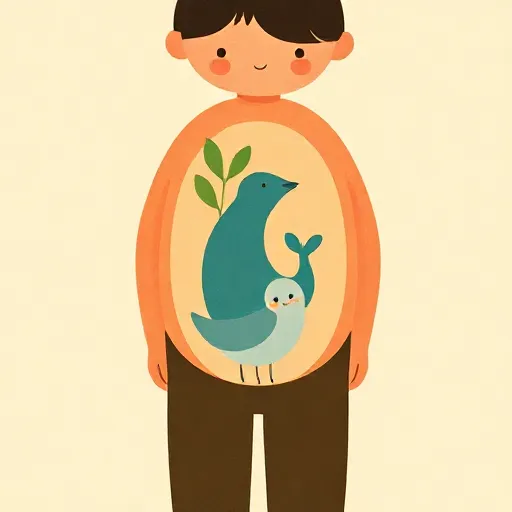
So what exactly was he defending? Kilwardby held a theory called the plurality of substantial forms. In plain terms, a human being is made of body and soul, but the soul itself is not one simple thing. It is a composite of three substantial potentiae (parts or principles): the vegetative, the sensitive, and the intellective.
Each part does a different job. The vegetative part takes care of life‑maintaining operations: growing, digesting food, reproducing — exactly the kind of soul a plant has. The sensitive part is responsible for perceiving the world through the senses, feeling, and moving from place to place — the sort of soul a non‑rational animal has. The intellective part is what makes you specifically human: understanding, abstract thinking, and grasping universal truths. It is a spiritual substance, and according to Kilwardby it is created directly by God and infused into the developing human body only when the embryo’s material organization is ready.
These three do not replace one another; they stack. The vegetative and sensitive parts are naturally generated — they are “educed” from the active potentiality of matter, like a sprout emerging from a seed passed on by your parents. The intellective part arrives as the perfection of the sensitive body, turning the whole into a fully human being. Kilwardby loved to draw a geometrical analogy: imagine a quadrangle made of two triangles. If you add a third triangle to one side, you get a pentagon. The earlier triangles are not destroyed; they are completed and held together in a new, unified shape. In the same way, the intellective soul completes the vegetative and sensitive parts, making one human soul — composite yet truly unified.
Why Not Just One Form? Kilwardby’s Arguments

Kilwardby gave sharp reasons for rejecting the idea that the human soul is one simple essence that does everything.
First, consider where the powers of the soul show up in nature. The vegetative power exists in plants without any sensitive or intellective power. The sensitive power exists in animals without an intellective power. And intellective power, he argued, exists in angels without the lower two. If, in humans, all three were one and the same simple essence, then you would have to say that plants secretly have an intellective part, too — after all, “the same essence” that vegetates in humans also vegetates in plants. That would mean plants have intellective souls without having bodies fit for thinking. As Kilwardby put it, a perfection would exist without that which it is supposed to perfect. That, to him, was manifestly false.
Second, he pointed to the origin of the soul. If the three are one simple essence, they must all come into being in the same way: either all by creation out of nothing, or all by natural generation from the parents. But both options lead to absurd consequences. If creation: a plant’s soul would be created directly by God and could never be corrupted. If generation: your human soul would be hereditary and perishable like your body. Neither picture fits what we observe or what Christian faith holds. Instead, Kilwardby insisted on a double origin: the lower parts arise by nature, the intellective part by a special act of creation — and therefore they are essentially distinct.
Third, he appealed to operations. Understanding and digesting are radically different kinds of acts. One requires no bodily organ; the other is all about organs. If the same simple form performed every action, then the same soul would have to work both through bodily instruments (in growing and sensing) and without them (in abstract thought). Kilwardby thought this violated an Aristotelian principle that different kinds of objects and operations point to different powers, and different powers point to different substantial forms.
The Rival View: Thomas Aquinas and the Single Soul
The position Kilwardby was fighting is often called the unicity of substantial form. Although the exact target of the Oxford Prohibitions is still debated, many at the time — including a student of Aquinas — assumed the thirty articles were aimed at Aquinas’s doctrine. In Kilwardby’s own description, that theory says: when the last form (the rational soul) arrives, it corrupts and replaces all earlier forms, so that only one form remains in the whole being. That one form then single‑handedly performs all operations: vegetative, sensitive, and intellective.
Kilwardby piled up objections against this. If the incoming form sweeps away all earlier forms, then the body is reduced to bare prime matter, and nature’s patient work of building up the body becomes useless. Moreover, Christian doctrines about transubstantiation, incarnation, and bodily resurrection become much harder to explain if the corpse after death has no form at all except “naked” matter. And, as above, he thought the single‑form view broke the rule that operations that are totally different — like seeing a color and grasping a mathematical proof — must be rooted in really different powers belonging to really different forms.
What Happens When You Die? Kilwardby’s Puzzle
Kilwardby was certain that the intellective part of the soul, being created by God and spiritual, is immortal. But what about the vegetative and sensitive parts? Here his confidence wavered, and he gave two opposite accounts without picking a winner.
Following Aristotle, he said that the vegetative and sensitive forms operate only through the body, so they cannot remain after the body dies. Like a naturally generated lamp that goes out when its fuel runs dry, they perish and will be restored later at the bodily resurrection. But following Augustine, he took a different path. Augustine held that the bond uniting all the parts of the soul is so tight that not even death can break it. The whole soul remains in the disembodied state, able even to form images using memory rather than fresh sense experience.
Kilwardby never declared one answer the final truth. For him, the deepest facts about the soul might be composed of both Aristotle’s physics and Augustine’s psychology — and finding the exact harmony between them was a lifelong project.
Why It Still Matters: Are You More Than a Brain?
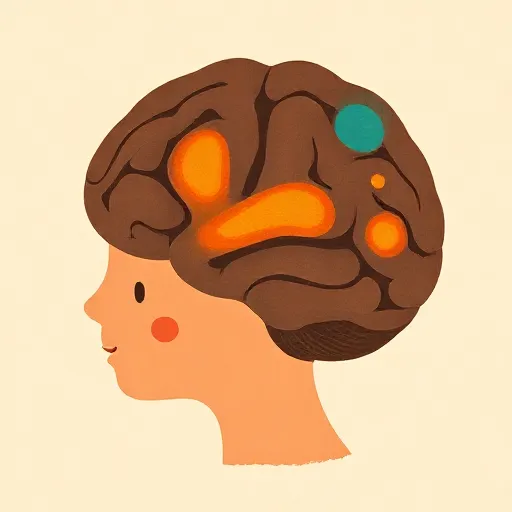
Heavy medieval debates about the number of substantial forms can sound dusty. But the core question is absolutely alive: Is you — your mind, your personhood — ultimately one simple thing, or is it a unified team of distinct parts working together?
Today, neuroscientists see that different brain regions carry out distinct jobs. The systems that keep your heart beating and your body growing are evolutionarily ancient; the networks that let you recognize faces and feel pain are more complex; and the prefrontal circuits for abstract reasoning and moral judgment are relatively recent. We are, in a sense, a layered structure. That doesn’t make us less unified as persons, but it does mean “the mind” is more like a well‑coordinated orchestra than a single flute note.
Kilwardby’s pluralism reminds us that complexity and unity can go hand in hand. He worried that a simple‑form view could not do justice to the rich variety of human life, from digesting lunch to wondering about infinity. Whether you call the parts “forms,” “potentiae,” or “brain networks,” the puzzle he faced is still yours: what holds these different layers together in the single, irreplaceable “you”?
Think about it
- If you woke up tomorrow and could only do one kind of activity — just sensing the world but not reasoning, or just reasoning but never feeling — would you still be the same person? Why or why not?
- Suppose a brilliant neuroscientist could show that your “thinking” self and your “feeling” self are handled by completely separate brain systems that never touch. Would you still call your mind one thing? What would have to hold them together?
- Imagine a person who suffers a brain injury and loses the ability to form new memories but keeps their sense of right and wrong and their physical skills. Is it fair to say part of them died? How would you describe what’s left?