If You Saw God, Should Anyone Believe You?
What If You Saw a Bush That Burned Without Burning Up?
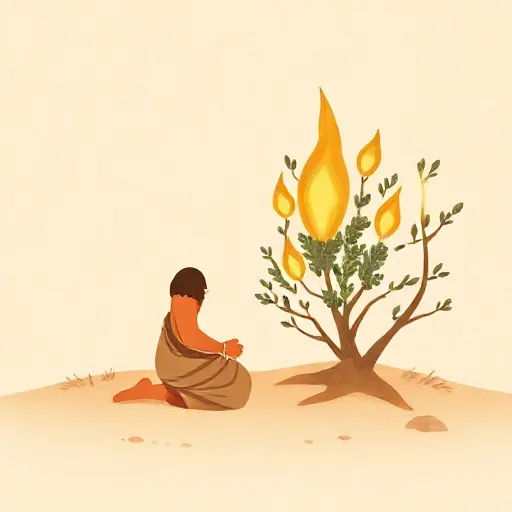
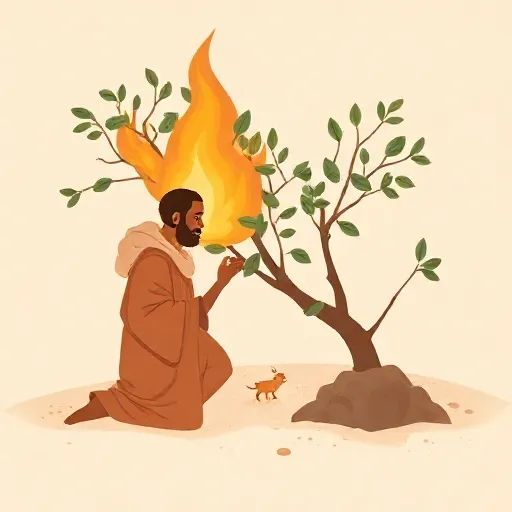
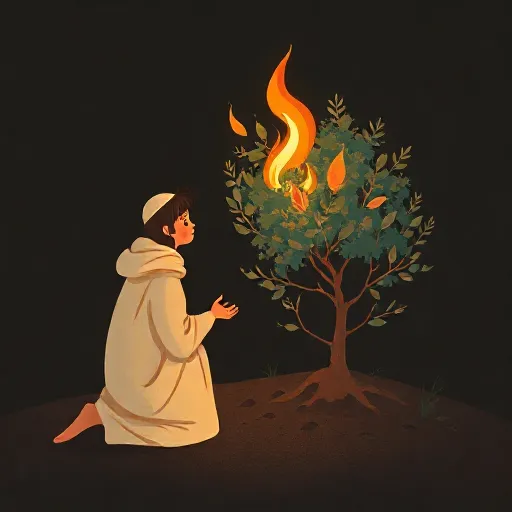
The story of Moses and the burning bush is well known. According to tradition, Moses was alone in the wilderness when he saw a bush engulfed in flames, yet the bush was not burning up. He believed God was speaking to him. If you had been standing there, you would have seen the same bush. But would you have experienced God? And if Moses told you about it, should you believe him?
That’s the puzzle of religious experience. A religious experience is a moment when someone feels directly aware of a divine being, a sacred reality, or an ultimate truth. Some people describe visions, voices, or a powerful sense of unity with everything. Others say they simply “see” that everything is empty, or that they are one with the deepest reality. Philosophers ask: Are these experiences real glimpses of something beyond the ordinary world, or are they only happening inside the person’s mind? And if you haven’t had one, can you trust someone else’s report?
Philosophers have debated these questions for centuries. The answers touch on how we treat all kinds of evidence, from seeing a tree to hearing a friend’s story.
The Many Shapes of Religious Experience
Religious experiences come in more varieties than you might think. Some are dramatic visions, like a person “seeing” an angel without using their physical eyes. Others are ordinary sights that suddenly carry extra meaning—looking at a starry sky and feeling God’s presence, even though the person next to you sees only stars. There are also experiences that are completely ineffable, meaning they can’t be put into words. The person insists they touched something real, but they can’t describe it in sensory language.
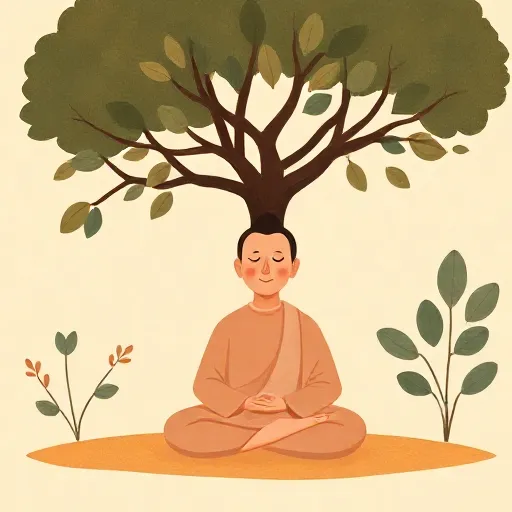
Thinkers from different traditions point to different objects of experience. In Judaism, Christianity, and Islam, people often report encountering a personal God who speaks or acts. In Hinduism, a yogi might directly experience Brahman, the ultimate reality, and realize their own self is identical with it. In Buddhism, the goal of vipassana meditation is to “see things as they are”—to directly grasp that all things are impermanent, unsatisfactory, and not a permanent self. This insight, called nirvana or enlightenment, extinguishes craving and suffering. In Daoism, the sage experiences unity with the Dao, the natural flow of the universe, and learns to act without forcing.
Despite the wide differences, the people who have these experiences often treat them as direct contact with something real. Philosophers call an experience veridical if it truly reveals something outside your mind. The big question is whether religious experiences are veridical.
The Big Argument: Your Vision Is Just Like Seeing a Tree

If you see a tree in broad daylight, you are justified in believing there is a tree. Philosopher Richard Swinburne (born 1934) says we all follow a Principle of Credulity: if it seems to you that something is present, you should believe it is, unless you have a special reason to doubt. For a tree, doubts might arise if it’s dark, or you’re hallucinating, or someone tells you it’s a mirror. Swinburne argues that the same principle applies to religious experiences. Unless a defeater—a reason that cancels the trust—is always present, a religious experience can justify the person who has it.
Alvin Plantinga (born 1932) approaches it differently. He notes that we treat many beliefs as properly basic—they don’t need proof from other beliefs to be reasonable. Your belief that you had breakfast this morning is properly basic because you remember it. Plantinga says that if God exists, humans might have a special faculty, what John Calvin called the sensus divinitatis (sense of the divine), that lets them perceive God directly. Beliefs formed this way would be properly basic too, just like memory or sense perception. So if someone has a powerful experience of God, they don’t need extra arguments to be justified.
William Alston (1921–2009) developed a broader theory of doxastic practices—whole systems of forming beliefs, like the practice of trusting your senses. He argues that a practice is rational if it’s firmly established, produces consistent beliefs over time, and doesn’t clash massively with other practices we trust. Alston says the Christian practice of forming beliefs based on religious experiences meets those conditions. So it’s reasonable to trust it, even though you can’t prove it from the outside.
All three philosophers admit that their arguments could work for other religious traditions too. That leads to the first major challenge: the problem of diversity.
But What About All the Different Gods?

If religious experiences really connect to a single reality, why do they disagree so much? A Christian may experience a personal God who loves them; a Theravada Buddhist meditator may experience that there is no self and everything is momentary; a Hindu may experience identity with Brahman. These reports seem to contradict each other. This is the defeater from religious diversity.
John Hick (1922–2012) offered one solution. He suggested that there is one ultimate reality—call it the Real—but every human experiences it through the lens of their own culture, concepts, and spiritual training. It’s like how a mountain can look completely different from different angles, yet it’s the same mountain. But critics say the differences are not just about viewpoint; some claims just can’t all be true at the same time. If one experience reveals a personal creator and another reveals no creator at all, they can’t both be veridical.
Alston and Plantinga respond that a person inside a religious tradition can still be justified. Suppose you grow up in a tradition and have experiences that others in your community also report. Over time, you build up internal checks, just like a jungle explorer learns to identify birdsong that outsiders can’t hear. From within, your practice is reliable. So you don’t have to reject your own experiences just because outsiders have different ones. Whether that response fully works is still hotly debated.
Could It Just Be Your Brain?
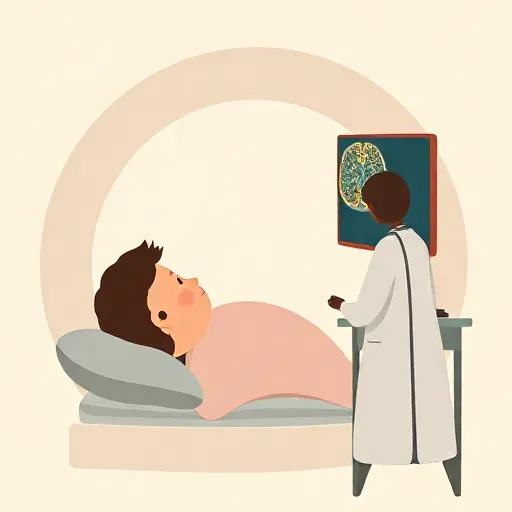
Another major challenge comes from naturalistic explanations—explanations that appeal only to natural causes, not to anything supernatural. Sigmund Freud (1856–1939) argued that religious experiences are wish-fulfillments rooted in childhood feelings. Karl Marx (1818–1883) thought religion arose from economic suffering. Today, brain scans show that during deep meditation or prayer, certain brain areas become active, similar to what happens during some seizures or under certain drugs. Some people conclude that religious experiences are nothing but brain quirks.
However, philosophers like Jerome Gellman point out that most psychological and social theories were just guesses—hypotheses, not proved facts. As for brain science, every experience has a corresponding brain state. When you see a real tree, your brain is active in ways similar to when you hallucinate a tree. The brain state alone doesn’t tell you if the experience is veridical. So a brain scan can’t settle the question. The naturalistic defeater works only if you already assume religious experiences aren’t real—which is exactly what’s up for debate.
Why This Matters for You (Even If You’ve Never Had a Vision)

You may never see a burning bush or sit in deep meditation. But you will meet people who say they have had moments of deep spiritual insight. Should you believe them? The philosopher William James (1842–1910) argued that while such experiences are authoritative for the person who has them, they don’t automatically give the rest of us strong evidence. Testimony about an ineffable experience is hard to check. On the other hand, if we completely dismiss others’ profound experiences, we might miss something true—just like someone who refuses to believe in electricity because they’ve never seen a spark.
This question mirrors everyday life. When a friend tells you something surprising about their inner life—like a sudden insight or a feeling that changed them—you weigh their honesty, the strangeness of the claim, and whether it fits with other things you know. There’s no single rule. The debate about religious experiences reminds us that deciding what to believe is a skill, and that even the deepest disagreements often come from differences in experience, not just bad logic.
Think about it
- If your best friend said they felt the presence of a divine being but couldn’t describe it, would you believe them? What might make you trust or doubt their report?
- Suppose a brain scientist can perfectly trigger a religious experience by stimulating a part of your brain. Does that prove the experience isn’t pointing to something real, or could it be like tuning a radio to pick up a signal?
- Imagine you grow up in a religion that encourages meditation and many people around you report similar experiences. If you later meet someone from a different tradition with equally strong but opposite experiences, does that weaken your confidence in your own? Why or why not?