Can Your Senses Be Wrong About the World?
The Fish That Wasn’t There
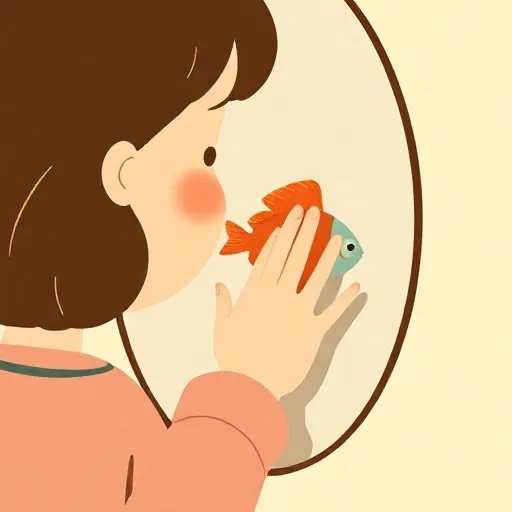
Imagine you’re looking in a big mirror, and you spot a bright orange fish. You’d swear the fish is swimming right in front of you. But in reality, the fish is behind you, and there’s nothing but empty air in front of your face. Your senses have tricked you. But who exactly is doing the tricking — your eyes? Or your brain’s decision about what the eyes are showing you?
Philosophers have wondered for centuries whether our experiences themselves can be accurate or inaccurate. Can seeing, hearing, or touching tell you a lie? Or are they just raw feelings, while lying only happens when you form a belief? This question sits at the heart of a lively debate about the contents of perception — what your experiences are actually telling you about the world.
Can an Experience Be True or False?

When you read a news story, the words have a meaning that you can check. The story says “a red fish is in front of you.” If there really is a red fish there, the story is true; if not, it’s false. Many philosophers think your visual experience works the same way. It has accuracy conditions — conditions the world must meet for the experience to be correct.
Here’s a simple test. Suppose you’re at an aquarium and you see a fish that looks bright blue. If someone later tells you the fish was actually bright red (maybe a weird light made it look blue), most people have a strong gut feeling: your experience was inaccurate. It told you something that wasn’t true. Philosophers who trust this gut feeling say experiences themselves can be evaluated as veridical (true) or falsidical (false), just like beliefs or newspaper reports.
But not everyone agrees. The 18th‑century philosopher Thomas Reid (1710–1796) argued that experiences are nothing like statements. He thought the sensory part of seeing — the colors, shapes, and sounds — is just a raw feel, a private sensation that doesn’t claim anything about the world. On this view, the raw feel of blue can’t be wrong; it’s just there. Only the separate judgment you make (“that fish is blue”) can be mistaken. So if you’re fooled by a mirror, it’s your belief that got it wrong, not your eyes.
Another version of this idea is called adverbialism. Instead of saying you see a blue fish, an adverbialist says you are “appeared‑to bluely.” The experience isn’t about a fish at all — it’s a way that you, the subject, are being modified. Since it doesn’t point to the world, the question of accuracy never even comes up. (Thinkers like C. J. Ducasse (1881–1969) and Roderick Chisholm (1916–1999) developed early versions of this view.)
The Debate: Raw Feelings vs. News Reports

So who’s right? The “news report” side points out how naturally we talk about experiences being correct or incorrect. If you hear a voice when the room is silent, you don’t just say you formed a false belief — you say you heard something that wasn’t there. That suggests the auditory experience itself was misleading.
A more recent defender of the raw‑feel side, the philosopher Charles Travis (born 1943), offers a different kind of example. Imagine you see two people, Sid and Pia, touching hands at the dinner table. You might take this to mean they’re secretly in love, but the experience itself — the simple scene of two people’s hands touching — doesn’t come with a built‑in “meaning.” Before you jump to conclusions, what you’ve been given is just a chunk of the world: Sid, Pia, the table, their touching hands. Travis says an experience is more like a lawn chair on a porch than a newspaper: a chair can’t be true or false, but it can be part of what makes a statement true. In the same way, your experience presents you with a situation, but it’s only your taking of the situation that can be right or wrong. Until then, the experience has no accuracy conditions.
The news‑report camp responds that even in Travis’s example, there’s a difference between seeing the hands touch and seeing them five feet apart. That difference seems to anchor some minimal claim the experience makes — namely, that hands are touching — which could be accurate or not. So the argument is far from settled.
If Experiences Are Reports, What Are They Made Of?
Suppose experiences really do have accuracy conditions. Then we can ask: what exactly is the “content” of an experience? What is it saying?
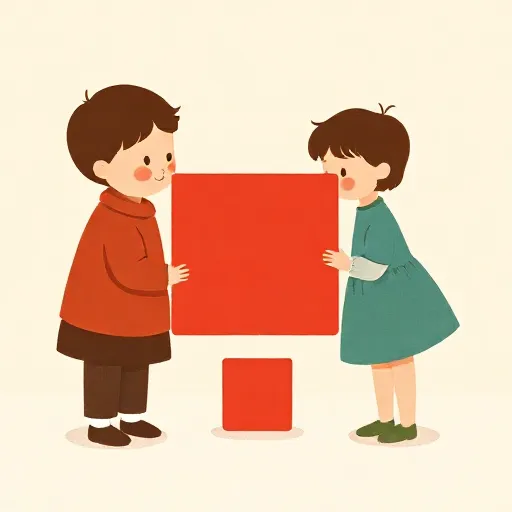
The philosopher Bertrand Russell (1872–1970) proposed a strikingly direct answer: when you see a red cube, the content of your experience includes the very cube you’re looking at and the very property of redness. This is called Russellian content — it’s like the experience hands you the actual object and its actual color. If the cube is blue but looks red, the experience would be inaccurate because the real object doesn’t have that property.
But think about twins. Suppose two completely identical red cubes sit in two different rooms, and you see one of them. Your friend sees the other. Your experiences feel exactly the same. A Russellian content that includes the specific cube would make the two experiences different, because they contain different cubes. Many philosophers find that awkward — they want the content to capture what’s the same when the world looks the same to you.
That’s where Gottlob Frege (1848–1925) comes in. He suggested that contents are made not of objects themselves, but of modes of presentation — ways the objects and properties are presented to your mind. The classic example: the planet Venus can be presented as the morning star or as the evening star. Same planet, two different modes. Similarly, two people seeing the same cube from different angles have experiences with different modes of presentation of that cube. A Fregean content can explain why the experiences feel different without claiming the object itself is different. It also helps with hallucinations: you might have an experience with a mode‑of‑presentation that typically picks out a red cube, even if no cube is there at all.
Can You See Sadness?

The question about contents spills over into everyday seeing. When you look at a friend’s face and think she looks sad, did your experience itself represent sadness? Or did it only represent a certain shape of the mouth and a certain slant of the eyebrows, leaving your mind to add the emotion afterwards?
Some philosophers argue that only low‑level properties — colors, shapes, textures, depths — can appear directly in visual experience. On this view, you don’t literally see sadness any more than you see “being a chair.” You see the wooden parts and infer the rest. Others say that high‑level properties — like being a face, trying to reach something, or being sad — can be right there in the experience from the start. After all, doesn’t a close friend’s face look different to you now than it did when you first met? That change might be part of your experience, not just an extra thought.
This debate influences how we think about illusions and learning. If experiences can contain high‑level information, then what you “see” can be shaped by what you know. If not, your basic sensory picture stays the same, and only your interpretations change.
Why This Matters Every Day

You might not spend your afternoons arguing about Russellian contents, but the ideas here show up all the time. Every time you mishear someone’s words, see a mirage on a hot road, or feel a phantom phone buzz in your pocket, you’re stepping into this philosophical puzzle. If experiences are nothing but raw feels, then they can’t be wrong — they’re just sensations. The mistake is purely in your head. But if experiences themselves make claims about the world, then sometimes your senses really do let you down.
This isn’t just a curiosity. It matters for eyewitness testimony, for understanding how we learn from experience, and for deciding when we should trust our own perceptions. It also shapes how scientists think about the brain: if experiences have content and can be accurate, then the visual system is constantly making tiny “reports” that might be right or wrong. If not, the brain’s job is more like producing a picture that we later interpret.
The next time you look in a mirror and see something that isn’t really there, you can ask yourself: did my eyes lie, or was it just my jump to conclusions? That question is still wide open — and you’re now equipped to chew on it.
Think about it
- If a friend hears a voice in an empty room, would you say her experience was wrong, or only her belief that someone was there?
- Suppose a scientist could perfectly explain why a red cube looks red to you, right down to the last brain cell. Would that change whether you think your experience is “about” a real cube?
- Imagine a creature that can see shapes and colors but can’t form any beliefs. Could its visual experience still be mistaken? Why or why not?