

Does 'Wisdom' Exist? The Radical Idea of Reism
The Day “Team Spirit” Became a Problem

You’re slouched in the back of the classroom when two friends start to argue. “We won because of team spirit!” one says, clutching the match ball. The other rolls her eyes. “Team spirit? I didn’t see anything out there. I saw eleven players running, passing, shouting. That’s all.” So: is team spirit a real thing, like the ball? Or is it just a word that sums up how a group of people acted?
Philosophers have spent centuries asking the same question about many things — wisdom, justice, redness, the number seven, even the shape of a table. If you can’t weigh it or poke it, does it really exist? Some radicals gave a blunt answer: No. Only concrete, piece‑by‑piece objects exist. Everything else is a convenient way of speaking. This view is called reism, from the Latin res meaning “thing.” Two thinkers in particular — Franz Brentano (1838–1917) and Tadeusz Kotarbiński (1886–1981) — tried to banish abstract entities from the world and show that only real things are real.
Franz Brentano: From a Crowded Universe to Just Things
Brentano began his career as a Catholic priest and philosopher. At first, he followed Aristotle and thought the world was packed with many kinds of being: substances, modifications, circumstances, and more. Later he added a second category of “irrealia” — thought‑objects, relations, collections, and other items that seem to hover between our minds and the world. These were entia rationis, beings that exist only in the mind.
But late in his life, Brentano made a dramatic U‑turn. He decided that all those irrealia were mental figments, not real things. Finally, he rejected them entirely. He declared: being = real things. Only concrete, fully determined individuals that exist in time are real. He split those real things into two kinds: bodies (which stretch through space and time) and souls (which stretch only through time, not space). So souls were real but not material. His reism was a dualist view — two sorts of basic stuff, but no abstract objects at all.
Brentano didn’t just make a claim; he offered a way of rewriting sentences that seem to talk about abstracts. Take the idea that redness is a colour. It looks as if it names two abstract things, redness and colour. Brentano would say that the sentence really means that all red things are coloured things, and from that we can infer that some coloured things are red. The whole weight lands on concrete red objects — apples, fire engines, roses — not on a mysterious universal called Redness. Words like “redness,” he argued, are not genuine names. They belong to the family of expressions he called syncategorematica — words like “and,” “or,” “if” that don’t point to anything on their own but only gain meaning inside a full sentence. Only names of particulars (like “Socrates” or “that rock”) are categorematic — they genuinely refer to something. Abstract nouns simply streamline our language; we could get by without them.
He also had a deep argument from the nature of thinking. When you think, you always think of something. The word “something” must refer to a being, because there’s no blanket term that covers both things and non‑things. If “something” always means a being, and being is the widest category, you can’t think of a “non‑thing.” Therefore, Brentano concluded, whatever we talk about must be a real thing. Many philosophers have questioned this argument: it might only show that everything we refer to belongs to a single category, not that the category is “physical objects.”
Tadeusz Kotarbiński: The World is Made of Bodies — Period

Kotarbiński was a Polish philosopher and logician who reached his own version of reism in the 1920s, independently of Brentano. He went even further. Kotarbiński stated reism in three blunt theses:
- Any object is a thing.
- No object is a state of affairs, a relation, or a property.
- A thing is a resistant and extended object — a material body.
He called this last thesis pansomatism (from the Greek soma, meaning “body”). In his picture, everything that exists is a physical body — including you, your brain, the chair you sit on, and every grain of sand. There are no souls separate from bodies. While Brentano had been a dualist, Kotarbiński was a full‑blown materialist.
Like Brentano, Kotarbiński paired his ontology with a theory of language, which he called semantic reism. He divided all names into two groups. Genuine names are names of things — bodies that are resistant and extended. Apparent names, or onomatoids, look as if they refer to something but don’t. Consider “wisdom” or “property.” When we say “Wisdom is a property of some people,” we seem to be talking about two abstract entities. But Kotarbiński argued we can fully express the same thought by saying “Some people are wise.” That sentence has only genuine names (people, who are bodies) and no apparent names. So the first sentence has meaning only because it can be translated into a purely reistic sentence — one that uses only words for concrete things.
If a sentence with onomatoids cannot be rephrased like that, it is simply meaningless. For example, “States of affairs are abstract objects” cannot be turned into talk about concrete bodies; Kotarbiński would call it a string of words without sense. Empty names like “centaur” don’t bother the reist, because “Centaurs are horses” is already a sentence about (fictional) bodies and needs no translation. Onomatoids are sneakier: they pretend to name a kind of thing that, by reist standards, cannot exist.
Why Bother? The Arguments for Reism
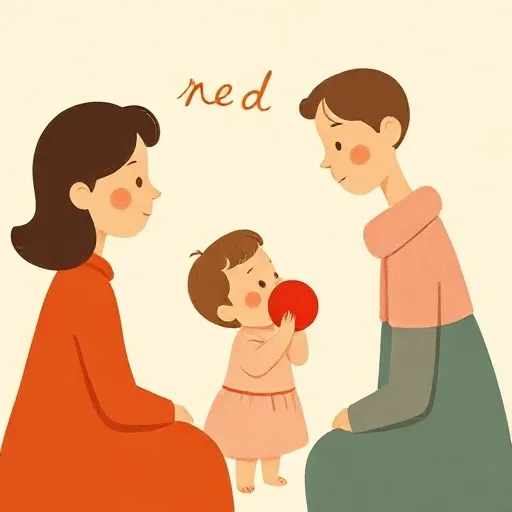
Both philosophers offered reasons for reism, but Kotarbiński leaned especially on practical ones. He noticed that children pick up words for concrete bodies — “mama,” “ball,” “dog” — long before they learn abstract nouns like “justice” or “probability.” Our everyday experience is filled with resistant, extended bodies; you bump into tables, not into “tableness.” Reism, he thought, takes ordinary experience seriously and refuses to add invisible entities.
More importantly, reism is a weapon against hypostatisation. That’s a long word for a very common mistake: taking a word that is just a useful abbreviation and pretending it names a real, independent object. Philosophy, Kotarbiński warned, is stuffed with such phantoms. People argue endlessly about the “nature of states of affairs” or the “existence of Platonic forms” because they treat abstract nouns as if they were solid things. If we stick to a language of bodies, many traditional puzzles dissolve. Reism promises to clean up philosophy by showing that a great deal of disagreement is really confusion about words.
Brentano’s argument from thinking adds a logical twist. Since every mental act is directed at something, and “something” always picks out a being, we can never genuinely refer to a non‑being. So when we try to talk about an abstract object, we are probably just thinking of a concrete particular — a red patch, a wise person — and misdescribing it.
Storm Clouds: The Problems Reism Faces
Reism is bold, but it ran into trouble almost immediately. Look at thesis (R2): “No object is a state of affairs, relation, or property.” Wait — that very sentence uses the apparent names it tries to ban! By reist standards, it might be meaningless. Kotarbiński wrestled with this difficulty and eventually said that (R2) should be read as a rule for speaking correctly, not as a statement that describes reality. Still, it’s awkward.
Harder challenges came from mathematics, logic, psychology, and the humanities. How can a reist make sense of set theory, with its talk of infinite sets? Kotarbiński hoped to use mereology — a formal theory of parts and wholes — as a substitute. A collection could be treated not as an abstract set but as a whole made of concrete parts. But that only went so far. Explaining the meaning of a sentence, the rules of a society, or the beauty of a poem without appealing to any non‑bodily entities proved enormously difficult. Where exactly is a social rule located? How does a material body “mean” something?
By the end of his career, Kotarbiński admitted that reism was more like a research programme — a goal to aim for — than a fully achieved theory. He still believed that every bit of progress toward a reist language was a real cognitive success. But many philosophers remained unconvinced. Even Alfred Tarski, the great logician who sympathised with reism, continued to use Platonist methods in his work on mathematical truth, as if numbers and sets were genuine objects.
One Rule, Three Worlds: Leibniz, Brentano, Kotarbiński

Here’s a fascinating twist. Although Kotarbiński was the loudest champion of reism, the core rule — only concrete particulars exist — was shared by other philosophers with wildly different pictures of reality. Gottfried Wilhelm Leibniz (1646–1716) held that only spiritual, soul‑like units called monads truly exist; bodies are just appearances that arise from monads. Brentano believed in both souls and bodies. Kotarbiński believed in bodies only. All three subscribed to a single formal thesis, but they filled their world with entirely different inventories. So reism is a nominalist position: there are no universal properties or abstract objects, only individuals. Its content depends on what you count as a “thing.”
Coupled with the logical tools of Leśniewski’s Ontology — a system where true sentences like “Socrates is a human” require that “Socrates” names a single thing and “human” refers to an individual — reism becomes an unusually strong version of nominalism. It insists that even common nouns like “sportsman” be cashed out as pointing to some particular sportsman. That is a radical reshaping of how language and logic work.
Why It Still Matters: Your Words Make Your World

So what does this old debate have to do with you? Every time you say “Team spirit got us through” or “Justice demands we act,” you are using words that might be onomatoids. Reism doesn’t order you to stop using them — both Brentano and Kotarbiński admitted that abstract terms are convenient. But it asks you to stay alert. When an argument feels stuck, ask: Am I treating a word as if it were a separate object? If someone says “The economy is ruining families,” a reist might translate: “Some business owners and lawmakers are making decisions that cause specific families to lose money.” You haven’t denied the facts; you’ve just stopped pretending “the economy” is a ghostly force.
Learning to spot onomatoids also protects you from hypostatisation in everyday life. Advertising says “Luxury redefines comfort.” Politicians say “History will judge us.” Abstract nouns can sound impressive while hiding the concrete details — who exactly is doing what to whom. Reism is a mental tool: it pushes you to look for the actual bodies, the specific people, the touchable things behind the grand words.
Brentano and Kotarbiński may not have solved every puzzle, but they left us with a healthy suspicion: just because we have a noun doesn’t mean there is a thing it names. In a world where words fly fast, that’s a truth worth holding on to.
Think about it
- If someone says “Justice requires us to punish this criminal,” try to rephrase it without using the word “justice.” Is the new sentence just as good? If not, what is missing?
- Can you imagine a world where numbers like “three” don’t exist as abstract objects, but only as a feature of groups of things (three apples, three chairs)? Would mathematics still work?
- Which seems more real to you: the red colour of a bicycle, or the bicycle itself? Why do you think so?